



Making custom cutting tools
Unlike cutting tool manufacturers that produce the same products and stock-keeping units year after year, engineer-to-order — or ETO — cutting tool manufacturers constantly manage revisions to meet one-of-a-kind customer demands.
Unlike cutting tool manufacturers that produce the same products and stock-keeping units year after year, engineer-to-order — or ETO — cutting tool manufacturers constantly manage revisions to meet one-of-a-kind customer demands.
More than a third of cutting tool manufacturers build custom cutting tools in two to six weeks from the day that a customer presents a cutting tool concept. Engineers at these manufacturers have built thousands of unique cutting tools over the past several decades.
Recognizing that there may not be an off-the-shelf solution available, custom-built cutting tools require special attention. Many original equipment manufacturers provide high-quality, cost-effective cutting tool solutions.
Cutting tool manufacturers produce solutions specifically designed for streamlining workflow. The ETO manufacturing process means that engineers constantly make new, different components as opposed to high-quantity repetitive manufacturing. For cutting tool engineers using SolidWorks, integration is vital and even stronger if paired with SolidWorks PDM. New assemblies with many shared, yet never the same, components are ideal when looking to streamline the engineering-to-production flow.
Cutting tool industrial engineers are able to synchronize SolidWorks and enterprise resource planning data in real time, ensuring that production, purchasing and engineering continuously are aligned. Failure to synchronize a fully integrated ERP solution will introduce human error.
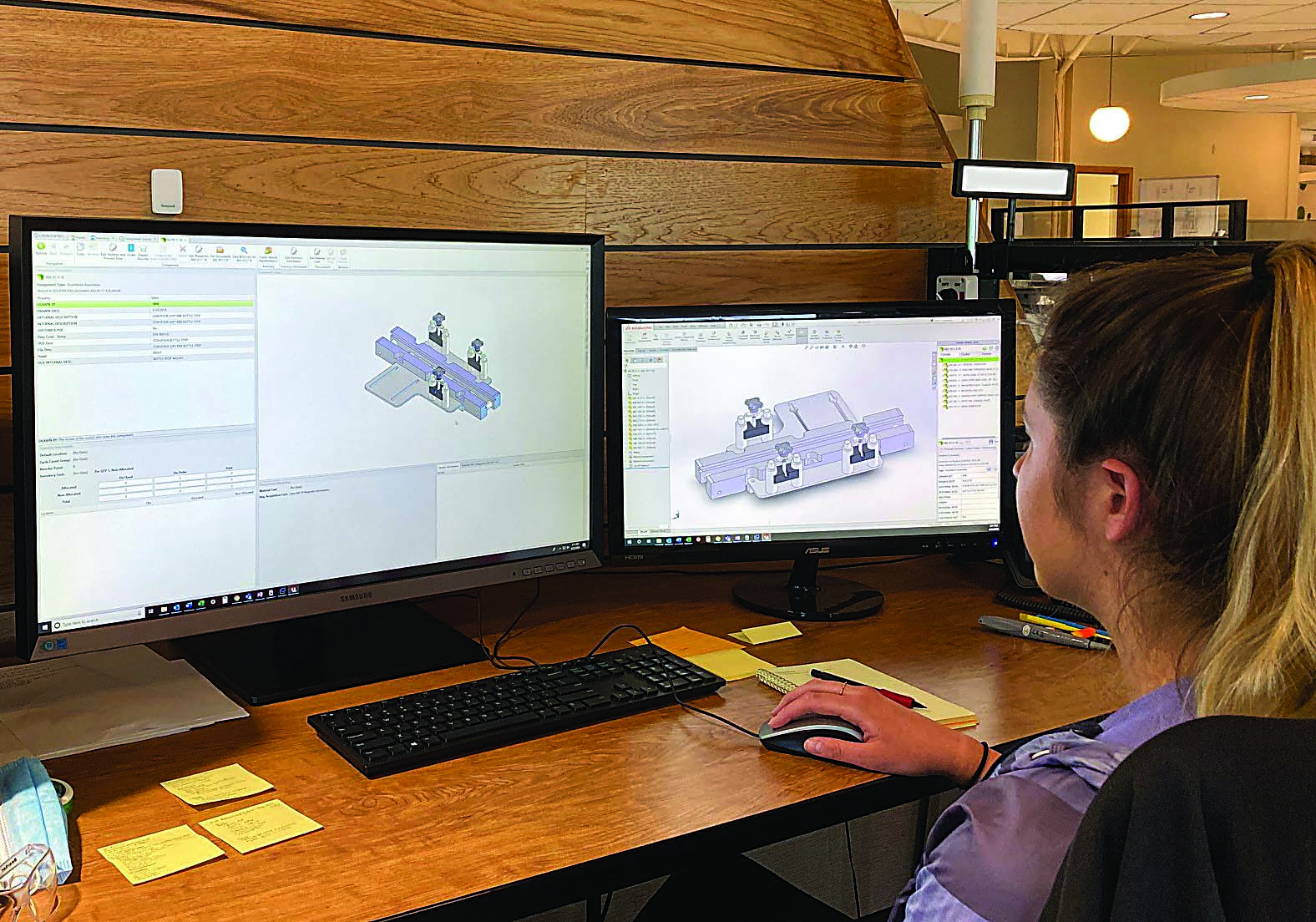
From a CAD print, hand sketch or concept, best-in-class tool designers design precision cutting tools to do the job. Image courtesy of Counterpart ETO ERP
Most custom cutting tool manufacturers operate on thin margins and must create a competitive edge, reduce costs and improve profit margins. In the ETO environment, reducing duplications and eliminating errors can happen only by gaining control of manufacturing processes.
Small and large operations need to offer unmatched tooling services, ensuring that customers receive premier custom cutting tools manufactured to exact specifications. The buying process may start by browsing an extensive portfolio of custom tools or submitting a part print or sketch.
From a computer-aided design print, hand sketch or concept, best-in-class tool designers design precision cutting tools to do the job. Whether the application is for production, a prototype or a short run, technical ETO teams create timesaving, productivity-increasing cutting tools.
Many companies can manufacture from a blank or standard tool in both carbide and high-speed steel ground to exact specifications, meeting the strictest of tolerances to serve a wide range of industries. Each custom cutting tool is given an approval print for review, and the digital files are maintained to ensure accurate repeatability.
The ETO cutting tool manufacturing process is complex. First, the project design is finalized, approved by the customer and manufactured. Second, the customer requests an updated design, which requires an additional slide. Third, the engineering team must know and communicate to purchasing and manufacturing what is changed — to stop manufacturing the older version. This typically is a manual process prone to error.
Hours of duplicate data entry for engineers is a huge waste of time. Cutting tool engineers using SolidWorks alone are challenged to create and maintain ERP data. Only with effective integration can engineering teams prevent production disruptions due to revision discrepancies. Once a uniquely designed cutting tool enters manufacturing, providing the correct version of the SolidWorks CAD is extremely important. This synchronicity is especially critical because engineers continue working on updated designs.
Data integration allows engineers to drill into the bill of materials and item-level discrepancies for each model. Automation for ETO cutting tool makers ensures that highly paid engineers with unique skill sets are more productive. Contemporary ETO ERP solutions reduce routine work so experienced engineers design better cutting tools and quote more business. Automating nonvalue-added functions guarantees increased productivity and profits for cutting tool equipment manufacturers.
Related




Subscribers can use MFGAxis notes, saves and discussion tools with their innoNET account.


