



Measuring the cutting force: General Industry Coverage
The Machine Technology column in the August 2011 issue of Cutting Tool Engineering takes a close look at measuring the cutting force.
Careful experiments have shown that the tangential component of the cutting force (FT) in metalcutting is approximately proportional to the frontal area of the uncut chip. The constant of proportionality is material specific and is typically called the specific power (Ks). That is,
FT = Ksbh
where b is the chip width, and h is the chip thickness.
Nominal values for Ks have been tabulated for a large number of workpiece materials. The normal component of the cutting force (F) is typically about 30 percent of the tangential component. That is,
F = 0.3FT
Interestingly, the same constant of proportionality, Ks, expresses the relationship between material-removal rate and power. That is,
P = Ks(mrr)
The cutting zone is a very inhospitable place. The moving tool, chips, coolant and heat make the installation of some kind of sensor a real challenge. So how are these cutting force measurements made? Is it feasible to make the measurements all the time during machining? If the cutting force were available during production, it would be possible to detect tool wear, broken teeth, contact between the tool and workpiece, for example, and easy to determine Ks for a new material.
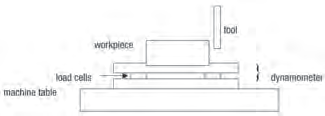
Figure 1. A table-type cutting force dynamometer.
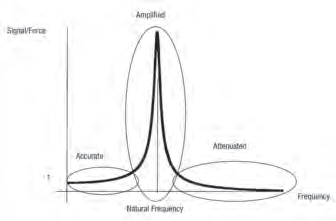
Figure 2. A simplified table-type dynamometer frequency response function.
The cutting force is usually measured a short distance from the cutting zone, using a cutting force dynamometer (Figure 1). For milling, the dynamometer often consists of two flat plates sandwiching three or four piezoelectric load cells. The sensing elements in the load cells are flat pieces of a ceramic crystal. The ceramic pieces exhibit the piezoelectric effect, which means that, as they are deformed, they produce an electric charge that can be amplified into a voltage proportional to the force that caused the deformation. The bottom plate of the dynamometer is clamped to the table, and the workpiece is mounted to the top plate. To ensure that the load cells are always in contact with the plates, they are installed with a very large preload force.
The load cells are quite stiff, but not infinitely stiff. The cutting force between the tool and the workpiece causes small motions of the top plate relative to the bottom plate (proportional to the stiffness of the load cells). That small motion deforms the load cell, and the deformation produces the measurement signal.
As useful as the table-type dynamometer is, it has limitations. It consumes some of the workspace. The piezoelectric components are sensitive to the presence of fluids, so the gap between the plates must be sealed. The piezoelectric crystals are all slightly different, and the differences combined with the slight misalignments of the load cells change the resulting sensitivity of the dynamometer in the coordinate directions of the table. Therefore, the dynamometer must be calibrated.
However, the most vexing problem—bandwidth—derives directly from the principle of operation. Because the piezoelectric elements must deform to produce a signal, they are flexible but stiff springs. The top plate has mass, so the dynamometer is a mass sitting on springs. It has a natural frequency at which it would like to vibrate. It has a frequency response function, which means that the dynamometer amplifies or attenuates the signal, depending on the frequency of the cutting force (Figure 2).
If the frequency of the cutting force is low, then the cutting force signal is faithfully transmitted by the dynamometer. If the frequency of the cutting force is close to the natural frequency of the dynamometer system, the cutting force signal is amplified—sometimes greatly. If the cutting force is far above the natural frequency of the dynamometer system, the cutting force signal is attenuated—sometimes greatly. Therefore, dynamometer builders try to place the natural frequency as high as possible. They choose very stiff load cells and install them with a high preload. They try to make the mass of the top plate as low as possible. Typical dynamometer manufacturers quote bandwidths (the range of the useful leftmost oval in Figure 2) from 2,000 to 3,000 Hz.
Dynamometer users should be aware, however, that the quoted band width is with no load on the top plate. The workpiece and mounting hardware add mass to the top plate and lower the natural frequency, moving the peak in the figure to the left and reducing the useful bandwidth.
For practical aplications, the natural frequency with the workpiece mounted is often well below 1,000 Hz. For a spindle rotating at 24,000 rpm, and holding a tool with two teeth, the tooth passing frequency is 800 Hz, so the peak in the figure needs to be substantially higher than that. The dynamometer bandwidth limitation is one of the major reasons that cutting force measurements are not typically available in production machine tools. CTE
 About the Author: Dr. Scott Smith is a professor and chair of the Department of Mechanical Engineering at the William States Lee College of Engineering, University of North Carolina at Charlotte, specializing in machine tool structural dynamics. Contact him via e-mail at kssmith@uncc.edu.
Glossary terms in this article
Related



Subscribers can use MFGAxis notes, saves and discussion tools with their innoNET account.


