

Personalization vs. Customization: People & Companies
How often do you use software that offers canned reports designed with someone else in mind—software that doesn't get you any closer to solving real problems? How often does an application tell you how to run your business when software designers have no idea about what you do or your objectives?
How often do you use software that offers canned reports designed with someone else in mind—software that doesn’t get you any closer to solving real problems? How often does an application tell you how to run your business when software designers have no idea about what you do or your objectives? Companies frequently design software to meet the needs of a few customers while assuming that everyone operates the same way. But every company is unique and has a particular set of processes.
At the other end of the spectrum, hypercustomizable software allows maximum flexibility by providing an empty shell and expecting the customer to do all the work. You might as well work for the software developer because now you have a full-time job managing the customizations and configurations.
There is thankfully a midpoint between generic software packages and hypercustomization.
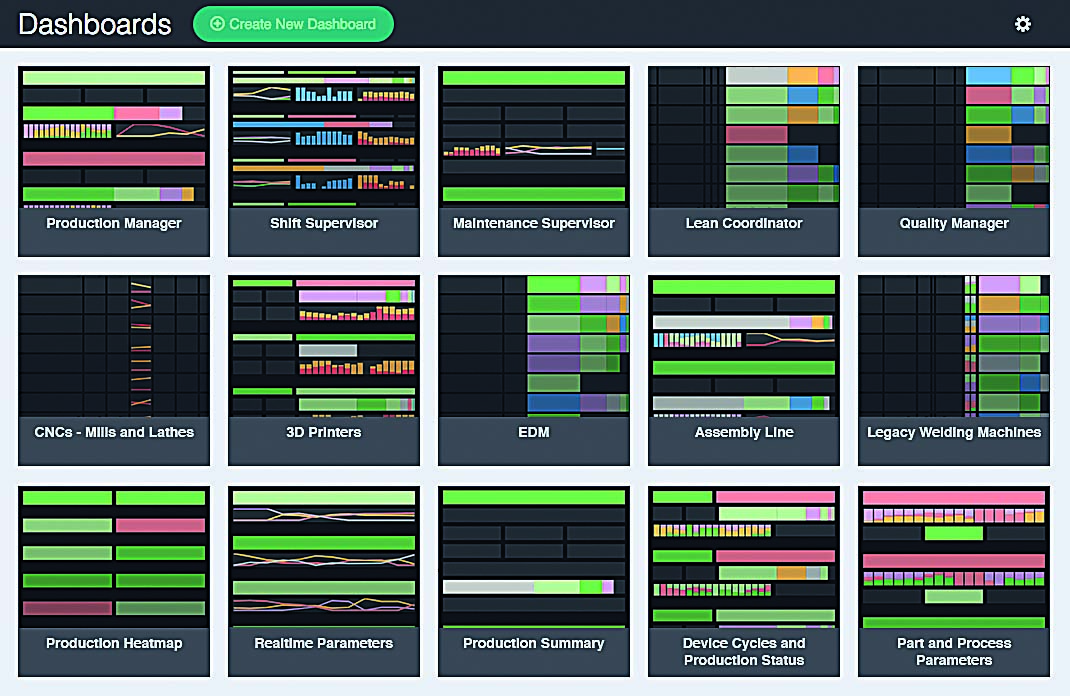
Data is displayed the way a user wants to see it with Vimana’s real-time configurable dashboards. Image courtesy of Vimana
Within an organization, each employee has a set of responsibilities and a specific role. Every role has a particular viewpoint of the business and operations, leading each person to develop a unique perspective of the organization. Business intelligence and operational software must accommodate those viewpoints to deliver precisely the information needed to efficiently do one’s job.
Applications can provide this capability in two ways: personalization and customization. Personalization is when software adapts to users without intervention. Customization is when control is given to users to adjust software as needed. Think of Amazon tailoring suggestions to your buying habits versus the preferences you can set for menus and toolbars in Microsoft Word.
We generally need both approaches—software that can be customized to roles in a company but personalized based on the usage and processes being analyzed. Manufacturing has complex sets of roles and responsibilities, with different requirements for every individual, from plant leaders to operators and maintenance engineers. Employees must have information at their fingertips to help them make the best decisions possible for resolving issues and managing unexpected disruptions.
Review the print ads from this magazine to continue
This quick advertiser review unlocks the rest of the article and keeps the full-screen reader focused on the ads instead of the page chrome.
Advertisers included in this article experience
Print placements connected to this article
Nachiamerica
IMPROVE TOOLING COST
REDUCE CYCLE TIME NACHI IS YOUR CUTTING TOOL SOLUTION.
IMPROVE TOOLING COST REDUCE CYCLE TIME NACHI IS YOUR CUTTING TOOL SOLUTION www.nachiamerica.com 888-340-8665
Visit Nachiamerica View this placement in the issue recordPrint ads from this magazine
REDUCE CYCLE TIME NACHI IS YOUR CUTTING TOOL SOLUTION.
IMPROVE TOOLING COST REDUCE CYCLE TIME NACHI IS YOUR CUTTING TOOL SOLUTION www.nachiamerica.com 888-340-8665
Continue reading
October 2018
For example, plant managers need a quick overview of a plant’s operation. They need to be informed if anything could impact delivery schedules. They need to quickly assess the root cause of any issues so they can prevent problems from repeating. On an ongoing basis, continuous improvement requires managers to get actionable metrics that help them understand if processes have increased a company’s ability to make a profit.
An operator’s viewpoint is often overlooked, but it is essential to running an effective operation. Operators require a user interface that focuses analysis on their equipment and minimizes the time they need for entering data and reviewing reports.
Given the large variety of machines and processes, operators must have custom views of processes that let operators annotate time intervals and associate processes with the objective data and analytics from equipment. The software must be customized and personalized to operators’ requirements and workflow so operators need to add only minimal annotations. As operators annotate the intervals, the software further refines its personalization by learning each operator’s input.
The maintenance viewpoint is another area for which few tools provide comprehensive information where and when it is needed. Maintenance employees must understand the criticality of each problem so they can triage quickly without wasting time fixing equipment that will not impact the business. This crosscutting viewpoint provides another example of how personalized views of business information systems combined with customized views of plant operations allow a maintenance engineer to focus on the most critical issues and keep equipment operating effectively.
Vimana Elevate is software that addresses both personalization and customization. The software provides the ability to customize its dashboards to meet the needs of each role in a manufacturing enterprise. This allows particular views for a line, cell, process and plant. Operators and maintenance managers can have specific interactive user interfaces that target equipment and operations.
Vimana also is personalized by service professionals to address the needs of the process and the machine tool’s capabilities. Personalization occurs behind the scenes where the rules and analytics adapt to all sources of data, the machine tool and the sensors. The manufacturing process and tooling data from manufacturing execution systems and enterprise resource planning are included. Personalization and customization allow the most relevant information to be presented to users for viewing in the best way for their roles, along with useful analysis of equipment.
Related




Subscribers can use MFGAxis notes, saves and discussion tools with their innoNET account.


