


Rise of multitasking: Turning Performance
The drive to reduce setup times and operator intervention has led to the proliferation of multitask machines. Multitask machines range in price and complexity from lathes capable of driving rotating tools to large machining centers that can effectively perform the turning and milling operations needed to complete complex parts in one setup.
Every shop, large or small, is constantly trying to improve productivity and part quality. The drive to reduce setup times and operator intervention has led to the proliferation of multitask machines.
Multitask machines range in price and complexity from lathes capable of driving rotating tools to large machining centers that can effectively perform the turning and milling operations needed to complete complex parts in one setup.
It is easy to understand how multitask machines can improve productivity, but the complexity that makes them more productive requires machinists and engineers to reconsider how they approach machining operations. Successful implementation of a multitask machine requires careful planning and consideration of key elements.
Multitask machines can have complex and expensive features, such as large tool magazines, probes, tool measurement systems and monitoring devices. These features allow users to maximize gains from the machine by limiting human interaction.
However, setup and learning to use these tools can be challenging. Shops should carefully consider training requirements needed to properly operate and program multitask machines. Gaining the maximum benefit requires efficient utilization of the features, and it is easy to overlook training. Training is rarely given on-site, which means employees must travel for training. Travel is expensive and negatively impacts shop production, making it likelier a shop will circumvent the training process. Insufficient training will result in less-than-efficient use of a machine and could lead to serious damage from misuse.
CAM software is required to efficiently program these machines. Proper utilization of CAM software requires training, which, like machine training, can be expensive and disrupt production.

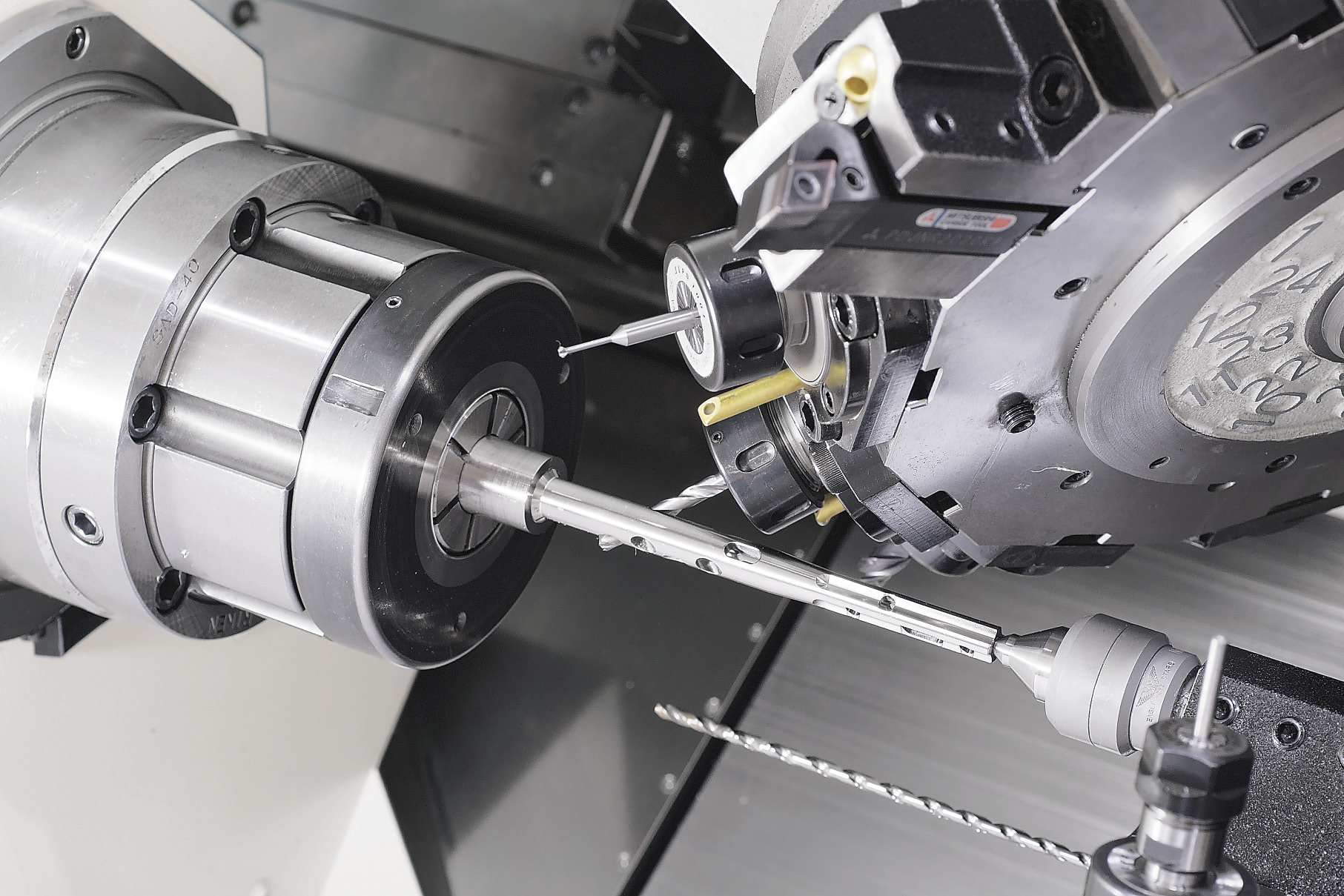
Multitask machines, such as this Nakamura-Tome NTJ 100 with a B-axis upper turret for machining features at any angle, are going to continue to grow in popularity as manufacturers push to increase productivity. Image courtesy Methods Machine Tools.
In addition, a significant amount of development time often is needed to get the post-processor for the CAM software to where it will provide the desired CNC code for the machine control. As machine complexity increases, so does the time needed to develop the post-processor. Development time can delay the return on investment while causing quality and delivery issues.
Verification software to accompany the CAM software is another consideration. When the machines are large, the parts are expensive or there are a large number of simultaneous operations, the risk of making a serious programming mistake rises. In these cases, verification software is needed to ensure the programs are proven out in the virtual world so that risk to the part and machine is minimized.
Verification software uses 3D models of the machines, fixtures and parts to simulate machining operations and highlight possible programming issues before the parts and program arrive at the machine. Many shops will not invest in verification software, deciding instead to rely solely on the simulation feature in the CAM software—a risky proposition. Without verification software, someone must carefully step through the program and look for and correct errors, which can be time-consuming. Minimizing development time for a new job is critical, and verification software allows much of the development to be done before a part goes to the machine.
Costs associated with verification software must also be considered. Like CAM software, verification software is an additional expense and requires training. It also requires a substantial amount of development time to create models of the machines, fixtures and cutting tools.
The machine-selection process should include planning each job intended for a machine to ensure the machine has enough and capability to run the job. At Mitsubishi, we have a multiple-axis lathe with live tools on the turret. When we put the first job on the machine, we found that the turret was incapable of 3-axis motion, which was disruptive to the development schedule as we had to completely rethink the machining operations. A little planning and some discussions with the machine tool builder’s application engineer would have helped us be more successful.
Planning for jobs should also include studying the time required to set up cutting tools in the machine. Reducing the number of setups and setup times is one of the prime motivators for investing in these machines.
Multitask machines are going to continue to grow in popularity as manufacturers push to increase productivity. However, if you’re in the market to buy such a machine, you need to plan carefully and conduct extensive research. You should discuss the machine’s capabilities in great detail with the builder to ensure it meets your needs.
Also, talk to the builder’s customers to get their input on the machine’s capabilities, and ask them to share any advice they can offer about multitask machining. You might be able to learn from their mistakes.
About the Author: Christopher Tate is operations manager, combustion shop, for Mitsubishi Hitachi Power Systems Americas, Savannah (Ga.) Machinery Works. Email: chris23tate@gmail.com.
Related



Subscribers can use MFGAxis notes, saves and discussion tools with their innoNET account.