

Sound Shakes Up Machining
With an assist from sound that humans can't hear, machining can be a cooler and faster process—and yield more accurate results to boot, according to the September 2016 Machine Technology column in Cutting Tool Engineering magazine.
With an assist from sound that humans can’t hear, machining can be a cooler and faster process—and yield more accurate results to boot.
So say fans of ultrasonic-assisted (UA) machining, the application of intense acoustic waves to conventional metalcutting operations. While the frequencies of these waves can vary, 20kHz is commonly used to stay above the audible range of most adults, according to Matt Short, technology leader for ultrasonics for EWI, Columbus, Ohio, which develops technologies aimed at helping companies bridge the gap between R&D and commercial implementation.

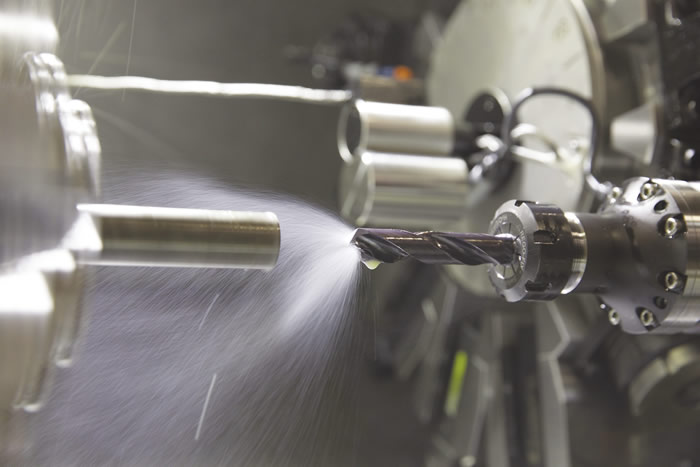
Acoustech Systems’ NRT module drills stainless steel. Image courtesy EWI.
Acoustic waves create an oscillatory motion along the tool axis, which Short described as an expansion and contraction that displaces the tool tip about 30µm (0.0012″). Like conventional ultrasonic machining, UA machining relies on an ultrasonic transducer to create acoustic waves. But unlike ultrasonic machining, which uses the oscillatory motion of a tool to essentially peck away material, UA machining techniques attempt to keep the oscillating tools—in this case, conventional cutting tools such as drills—engaged with the material during the cutting process, Short explained.
Ultrasonic energy introduced into machining processes changes the physics of these processes in a way that significantly reduces the cutting force, said Short. The lower cutting force reduces the amount of heat and plastic deformation produced during machining, making a tool more effective as it shears material.
“Every year, companies spend millions of dollars on ways to extract heat from the process,” Short said. “But … it is possible to leverage [UA machining] to not create heat in the first place.” He added that advantages related to reduced cutting force and heat include longer tool life, finer surface finishes, increased feed rates, tighter tolerances and fewer burrs.
Short believes UA machining is particularly well-suited for aerospace and nuclear applications, which often involve materials such as titanium, stainless steel and nickel-base superalloys. Why? The heat created by conventional machining produces a grain structure that makes these challenging materials even more difficult to cut, he explained.
Review the print ads from this magazine to continue
This quick advertiser review unlocks the rest of the article and keeps the full-screen reader focused on the ads instead of the page chrome.
Advertisers included in this article experience
Print placements connected to this article
removal, and reliable machining processes. www.hornusa.com
Dynamics at their peak
The economical way to mill grooves. Our carbide circular milling tools are used for groove milling, helical interpolation, thread milling, T-slot milling and special applications with cutting diameters ranging from 9.3 mm to 35.7 mm (.36699 to 1.40699). The vibration resistant carbide shanks, patented insert seating, and optimized geometries and grades ensure maximum cutting potential, outstanding chip.
Dynamics at their peak The economical way to mill grooves. Our carbide circular milling tools are used for groove milling, helical interpolation, thread milling, T-slot milling and special applications with cutting diameters ranging from 9.3 mm to 35.7 mm (.36699 to 1.40699). The vibration resistant carbide shanks, patented insert seating, and optimized geometries and grades ensure maximum cutting potential, outstanding chip www.hornusa.com removal, and reliable machining processes. www.hornusa.com HORN – EXCELL E N CE IN T E CH N O L O G Y GROOVING PARTING OFF GROOVE MILLING BROACHING PROFILE MILLING REAMING
Visit removal, and reliable machining processes. www.hornusa.com View this placement in the issue recordPrint ads from this magazine
The economical way to mill grooves. Our carbide circular milling tools are used for groove milling, helical interpolation, thread milling, T-slot milling and special applications with cutting diameters ranging from 9.3 mm to 35.7 mm (.36699 to 1.40699). The vibration resistant carbide shanks, patented insert seating, and optimized geometries and grades ensure maximum cutting potential, outstanding chip.
Dynamics at their peak The economical way to mill grooves. Our carbide circular milling tools are used for groove milling, helical interpolation, thread milling, T-slot milling and special applications with cutting diameters ranging from 9.3 mm to 35.7 mm (.36699 to 1.40699). The vibration resistant carbide shanks, patented insert seating, and optimized geometries and grades ensure maximum cutting potential, outstanding chip www.hornusa.com removal, and reliable machining processes. www.hornusa.com HORN – EXCELL E N CE IN T E CH N O L O G Y GROOVING PARTING OFF GROOVE MILLING BROACHING PROFILE MILLING REAMING
Continue reading
October 2016
For UA machining to work, however, the cutting tool must be resonant within the bandwidth of the transducer and power supply. So tool length and geometry, which impact operating frequency, must be considered when planning a UA machining process, Short noted.
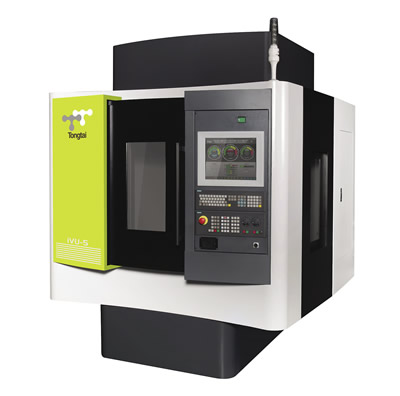
The new iVU-5 from Tongtai can operate with or without ultrasonic-assist. Image courtesy Absolute Machine Tools.
A significant development in UA machining technology, according to Short, is EWI’s “ultrasonic machining module.” Designed in the form of a conventional toolholder, the module can be attached to new and old machines. EWI’s module technology is the basis for the NFP and NRT units from Acoustech Systems, also of Columbus, for multiple-spindle machines and lathes that perform centerline work.
Another option for UA machining is the iVU-5 from Taiwan-based Tongtai Machine & Tool Co. Ltd. The dual-function iVU-5 can operate as a vertical machining center and perform rotary UA machining.
Rotary UA machining combines high-speed spindle rotation with high-frequency vertical vibration of the cutting tool to reduce the cutting force, boost productivity (in its UA mode, the iVU-5 cuts three to five times faster than conventional machine tools) and impart ultrafine finishes, according to Absolute Machine Tools Inc., Lorain, Ohio, which sells the machine in the U.S.
Applications for the iVU-5 include microdrilling and machining of hardened steel, aluminum and high-nickel alloys. Before the introduction of the iVU-5, “manufacturers would have to use a slower EDM approach for microhole production,” said Courtney Ortner, Absolute’s chief marketing officer.
On the downside, the iVU-5 costs more than a wire EDM. Then again, Ortner noted, buyers “are getting two machines in one.”
Glossary terms in this article
Related




Subscribers can use MFGAxis notes, saves and discussion tools with their innoNET account.


