

Trim waste with proactive environmental program
Industrial waste, its impact on the environment and regulation by governments have become significant areas of interest for medium and large manufacturing companies. One company's proactive approach to environmental sustainability also reveals ways to reduce waste.
Industrial waste, its impact on the environment and regulation by governments have become significant areas of interest for medium and large manufacturing companies.
Manufacturers continue to see an increase in the costs associated with waste management. These costs are driven by factors like disposal, risk mitigation and human resources. Managing waste (along with other environmental issues) has become such an important part of the business landscape that many manufacturers have formed teams dedicated to environmental management.
To drive continuous improvement and standardization, ISO (International Organization for Standardization) has put forth the 14001 standard. ISO says this standard “maps out a framework that a company or organization can follow to set up an effective environmental management system.”
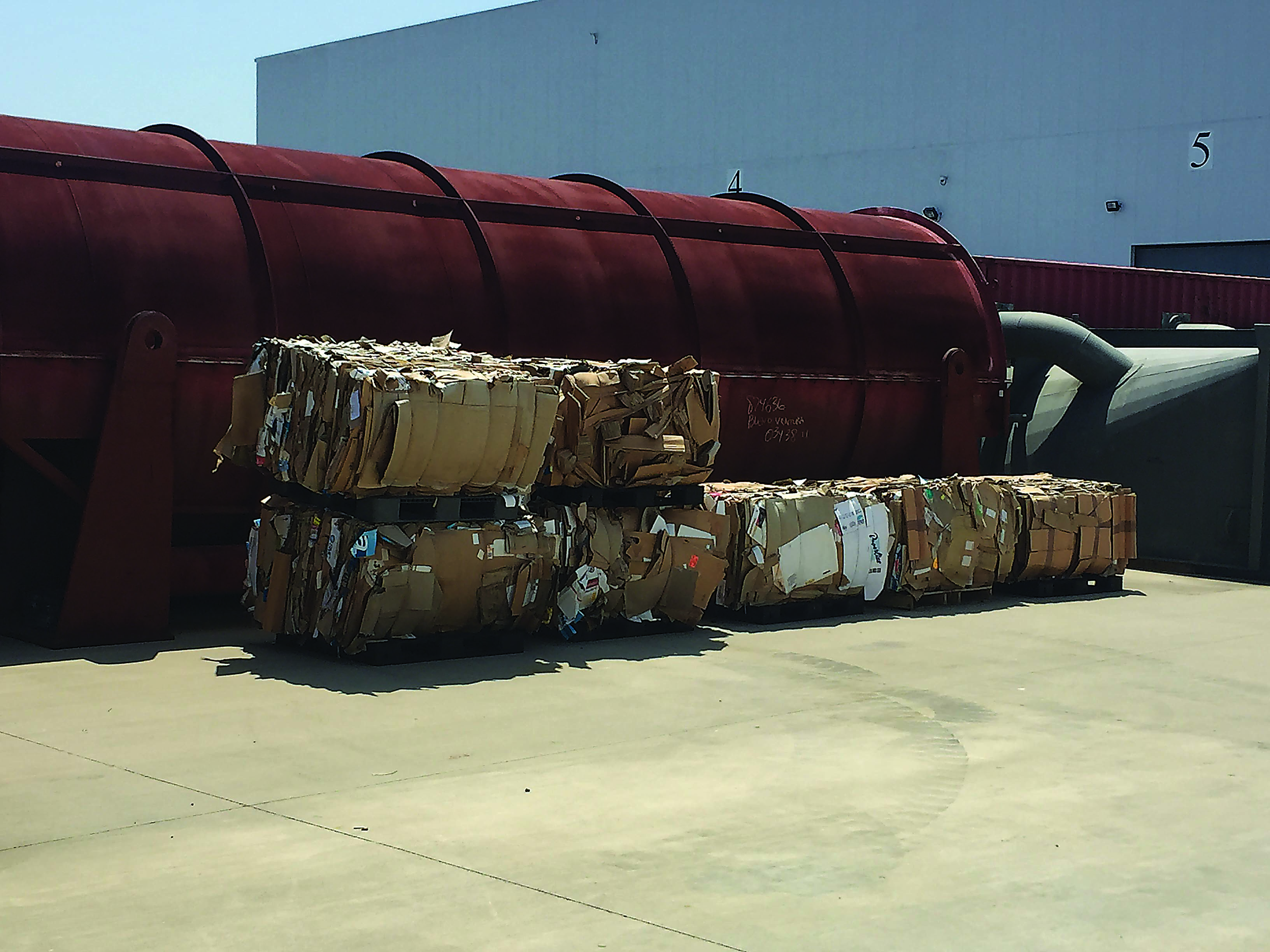
Cardboard has value as scrap if it is baled. We generate enough cardboard waste that the money generated from recycling offsets the cost of a bailing machine. Image courtesy of C. Tate.
Mitsubishi Hitachi Power Systems Americas (MHPSA) is dedicated to environmental sustainability. To ensure our approach is proactive, we have completed the actions necessary to be ISO 14001-certified.
The foundation of MHPSA’s environmental program is the identification, ranking and control of “significant aspects.” ISO 14001 defines a significant aspect as an “element of an organization’s activities, products or services that can interact with the environment.” The entire process is audited, along with the site, to verify we have identified all of them.
The significant aspects at MHPSA are electrical usage, waste oil, petroleum spills, solid waste, regulated waste and storm-water discharge. Each significant aspect must have an associated program that works to mitigate the impact. The company must provide evidence that the programs exceed minimum regulatory and statutory requirements. Companies that are certified must also demonstrate a spirt of continuous improvement related to the identified aspects.
Saving Power
Electrical consumption is MHPSA’s most-significant aspect. Most of our manufacturing space—more than 350,000 sq. ft.—has a beam height of 90′ (27.4m). Because of the precise nature of our work, all this space is climate-controlled. We also have a high-speed balance machine that uses an 8,000-hp (5,884kW) electric motor to rotate gas turbine rotors at 4,500 rpm. In short, we use a lot of electricity.
To mitigate this aspect, we have undertaken several power-saving initiatives. Some are simple. For example, we have motion sensors to control lights in office spaces and set our climate-control system to temperatures that consume less power. We also cut power to equipment that is not in operation and lower the operating pressure of the compressed air system.
Larger, more-complex projects include changing the lighting in the manufacturing bays from conventional florescent and metal-halide sources to high-efficiency LEDs. Energy conservation in the manufacturing environment is not much different than at home.
Reducing Fluids
MHPSA builds some of the world’s largest gas turbines. The very large machine tools we use to build these turbines require copious amounts of lubricating oil, hydraulic oil and cutting fluid. Because of the tens of thousands of gallons of petroleum products on-site, waste oils and petroleum spills are a significant aspect at MHPSA.
Review the print ads from this magazine to continue
This quick advertiser review unlocks the rest of the article and keeps the full-screen reader focused on the ads instead of the page chrome.
Advertisers included in this article experience
Print placements connected to this article
Toolflo
API Threading Specialist!
API Inserts Chasers Many API threadforms in stock! API Threading chasers! • Buttress • WW • NPT • Rounds... Superior coatings! Scarfing Tools For internal and external scarfing operations Holders & Bars We have standard holders and bars in stock! Special forms and chip breakers We can make any special you need! for your application!
API Threading Specialist! API Inserts Chasers Many API threadforms in stock! API Threading chasers! • Buttress • WW • NPT • Rounds... Superior coatings! Scarfing Tools For internal and external scarfing operations Holders & Bars
Visit Toolflo View this placement in the issue recordPrint ads from this magazine
API Inserts Chasers Many API threadforms in stock! API Threading chasers! • Buttress • WW • NPT • Rounds... Superior coatings! Scarfing Tools For internal and external scarfing operations Holders & Bars We have standard holders and bars in stock! Special forms and chip breakers We can make any special you need! for your application!
API Threading Specialist! API Inserts Chasers Many API threadforms in stock! API Threading chasers! • Buttress • WW • NPT • Rounds... Superior coatings! Scarfing Tools For internal and external scarfing operations Holders & Bars
Continue reading
June 2017
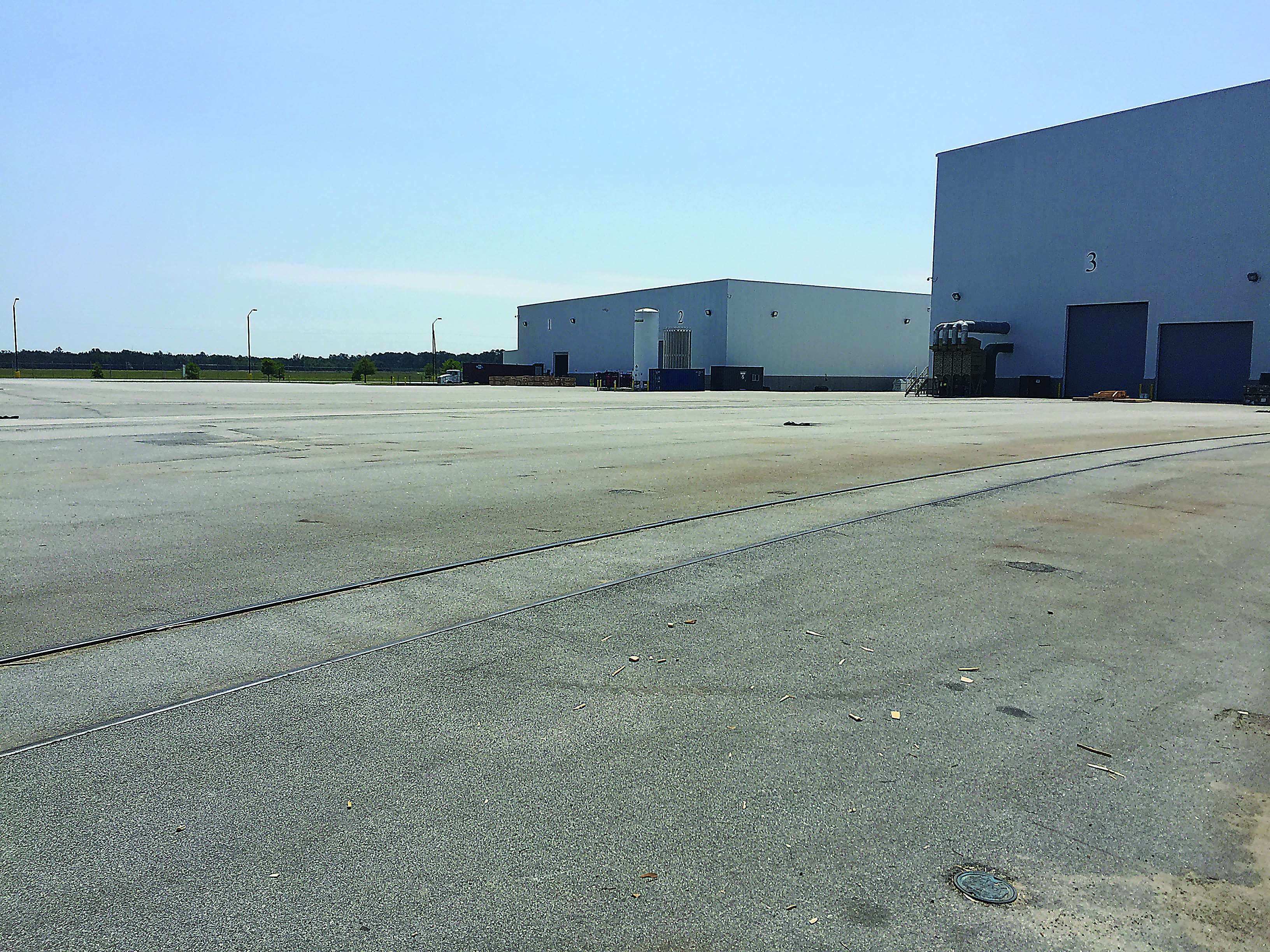
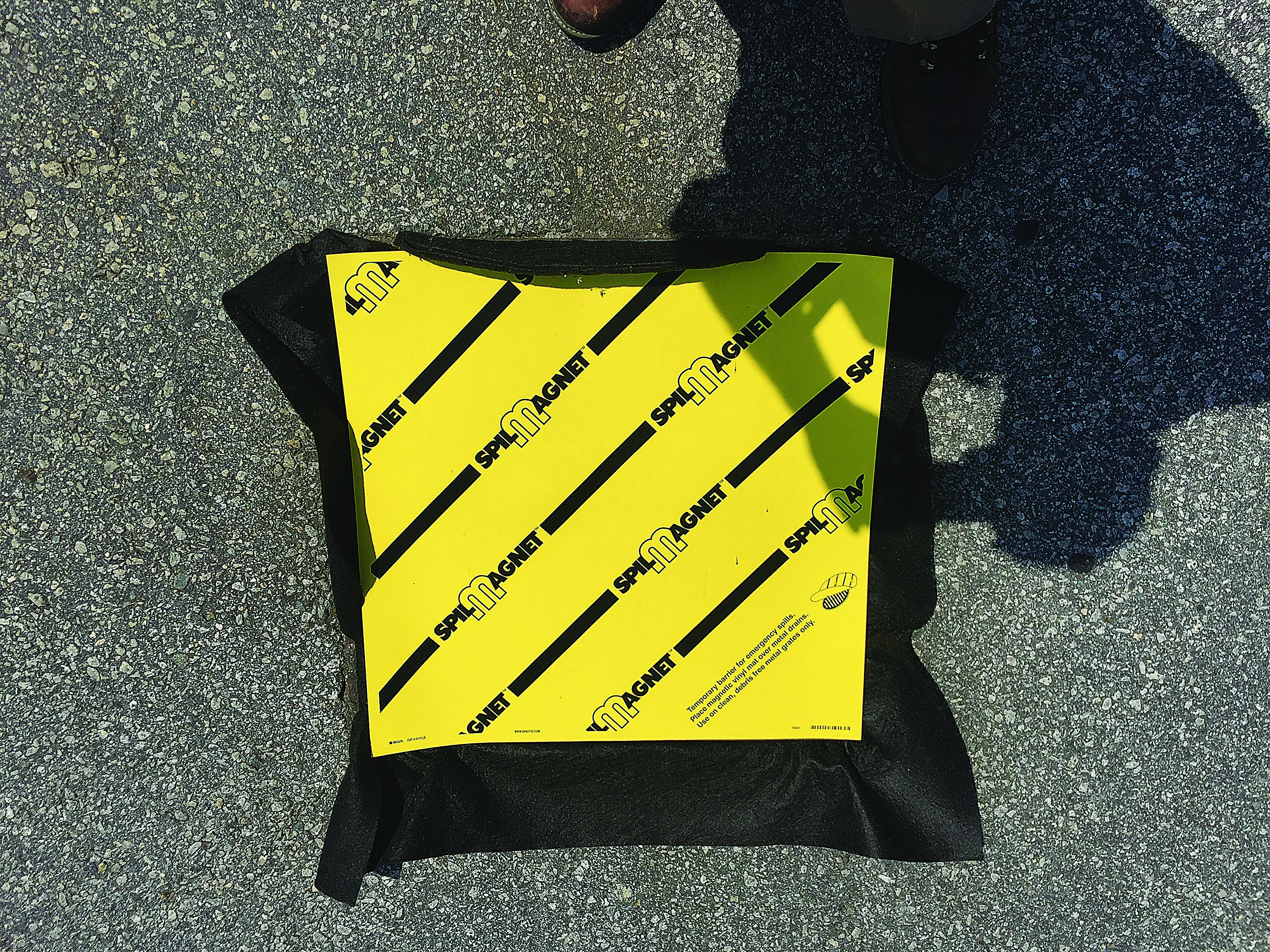
Mitsubishi’s campus has a vast amount of concrete, which creates millions of gallons of rainwater runoff each year. Each of the storm drains has a filter that captures silt and debris, preventing contamination of the watershed. Inset: Each storm drain has a magnetic cover, which can seal the drain if a chemical spill occurs. The filter paper is shown underneath the cover. Images courtesy of C. Tate.
We collect waste oils and hire licensed contractors to remove them from our site, but there is still an impact that we work to reduce. To lower the amount of discarded waste oils, we are examining minimum-quantity lubrication for some machining applications. MQL, which is also known as near-dry machining, applies very small amounts of bio-friendly cutting fluid directly to the cutting tool tip. This technology, when correctly implemented, will reduce the amount of coolants we discard.
Petroleum spills are a constant concern. We developed a rigorous program designed to prevent, contain and mitigate spills. Every employee in the organization receives annual spill-response training, and the maintenance team has a dedicated spill-response team. Preparedness is important in the event of an emergency. We map areas where large quantities of petroleum are stored and provide this information to the fire department. In this way, the department is aware of these areas if firemen must respond to an emergency.
A Solid Plan
Many of the components we assemble come from Japan by ship and arrive crated. We discard enormous quantities of crating and protective packaging at our facility. Previously, we would have numerous 30-yd. dumpsters of wood, cardboard and paper hauled away each month, making solid waste a significant aspect.
Reducing solid waste was rather simple—we introduced a comprehensive recycling program. We purchased a machine that bales cardboard and now sell those bales to a recycling company. Also, we chip old crates, skids and other wood, and sell those chips to a recycler.
These chipping and baling activities have reduced storage costs because we need less space to store materials and no longer need multiple dumpsters. Chipping and baling also make the materials desirable to recycling companies. As a result, the revenue stream offsets the cost of the equipment.
Regulated waste, such as oil-soaked rags, absorbent materials and aerosol cans, requires disposal through special contractors, much like waste oil. We reduce regulated waste by minimizing chemical usage and seeking bio-friendly cleaners and solvents. We significantly reduced it by simply cleaning and repairing machine tools. Repairing oil and coolant leaks reduced the number of oily rags, absorbent pads and used mop heads that were being added to the waste stream.
Containing Runoff
Mitsubishi has a large campus with lots of concrete that, when combined with annual rain fall of 50″ (1,270mm), produces millions of gallons of storm runoff. Large industrial sites must protect the water that flows off concrete areas and buildings from becoming contaminated and possibly impacting ecosystems.
We have programs in place to prevent chemicals, litter and other undesirable materials from getting into storm water. All outside chemical storage is covered and kept surrounded by dikes to prevent spills and leaks from escaping the storage area. Spill kits are kept not only in areas where chemicals are stored but also in the traffic lanes where the chemicals are transported. As additional protection, we install magnetic covers to prevent liquids from entering the storm drain if a spill occurs.
Trash that escapes from the site in storm water is also considered a contaminant. Preventing trash from washing away starts with good housekeeping. It also requires all trash containers to be tightly covered and secured during stormy weather.
Our environmental programs all mitigate risk and continually improve our impact on the environment. It is not good enough to dispose of waste according to regulations or adjust the thermostat to save a few dollars. We want to be an organization that continually reduces the amount of waste that is generated and proactively looks for ways to reduce power consumption. These programs and projects lessen our environmental impact. They also reduce operating costs, enhancing the bottom line.
Glossary terms in this article
Related




Subscribers can use MFGAxis notes, saves and discussion tools with their innoNET account.


