BIG Daishowa Hosts Breakfast & Learn Event
BIG Daishowa Hosts Breakfast & Learn Event
After a hiatus since 2019, BIG Daishowa Inc. in Hoffman Estates, Illinois, held its annual Breakfast & Learn event on April 30 and May 1. After serving guests a breakfast that included fresh fruit, scrambled eggs with toppings, French toast, Danishes, sausage, crisp Virginia bacon, and coffee, President and COO Jack Burley gave a presentation on "Why you need high-value tooling for high-value machines."
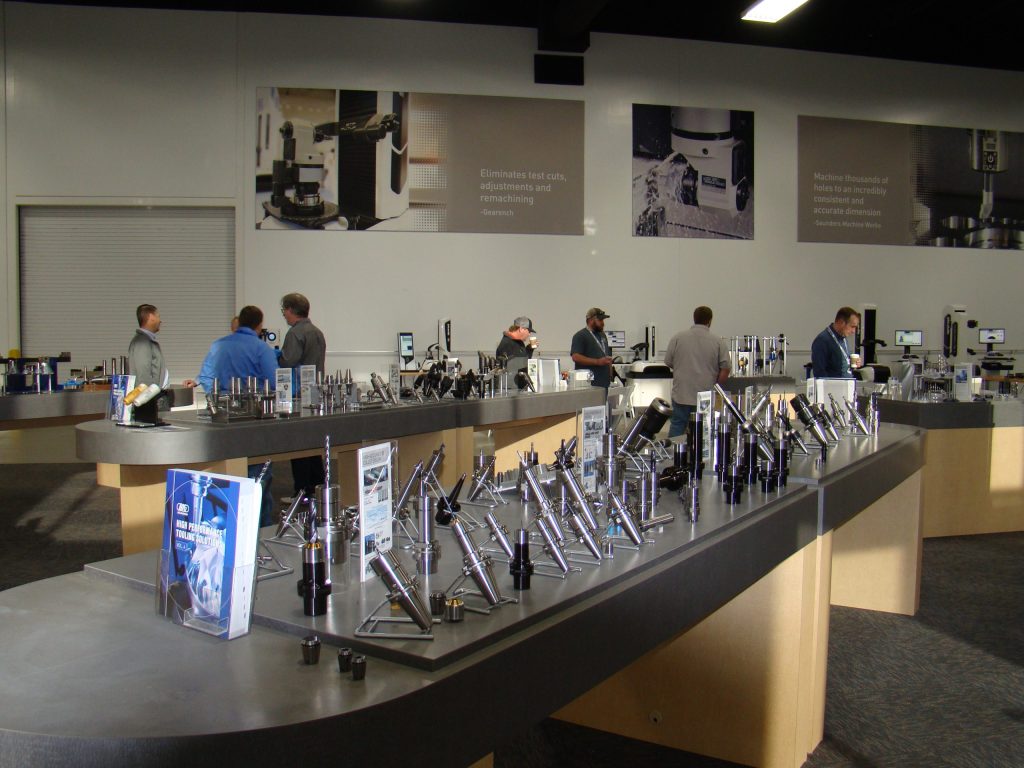
After a hiatus since 2019, BIG Daishowa Inc. in Hoffman Estates, Illinois, held its annual Breakfast & Learn event on April 30 and May 1. After serving guests a breakfast that included fresh fruit, scrambled eggs with toppings, French toast, Danishes, sausage, crisp Virginia bacon, and coffee, President and COO Jack Burley gave a presentation on "Why you need high-value tooling for high-value machines."
He started with a brief history of machine tools and tooling, beginning in the 1860s when tooling featured BS, MT, and NT shanks. The taper shank entered the picture in the 1940s with the CV, BT, and DV shanks, and the industry achieved higher precision tooling with the dual-contact system along with HSK and Capto toolholders in the 1990s. Multiple-axis equipment helped define machining in the 2000s with advances in milling, turning, grinding, and gear skiving as manufacturers of toolholders had to adapt them to multiple operations.
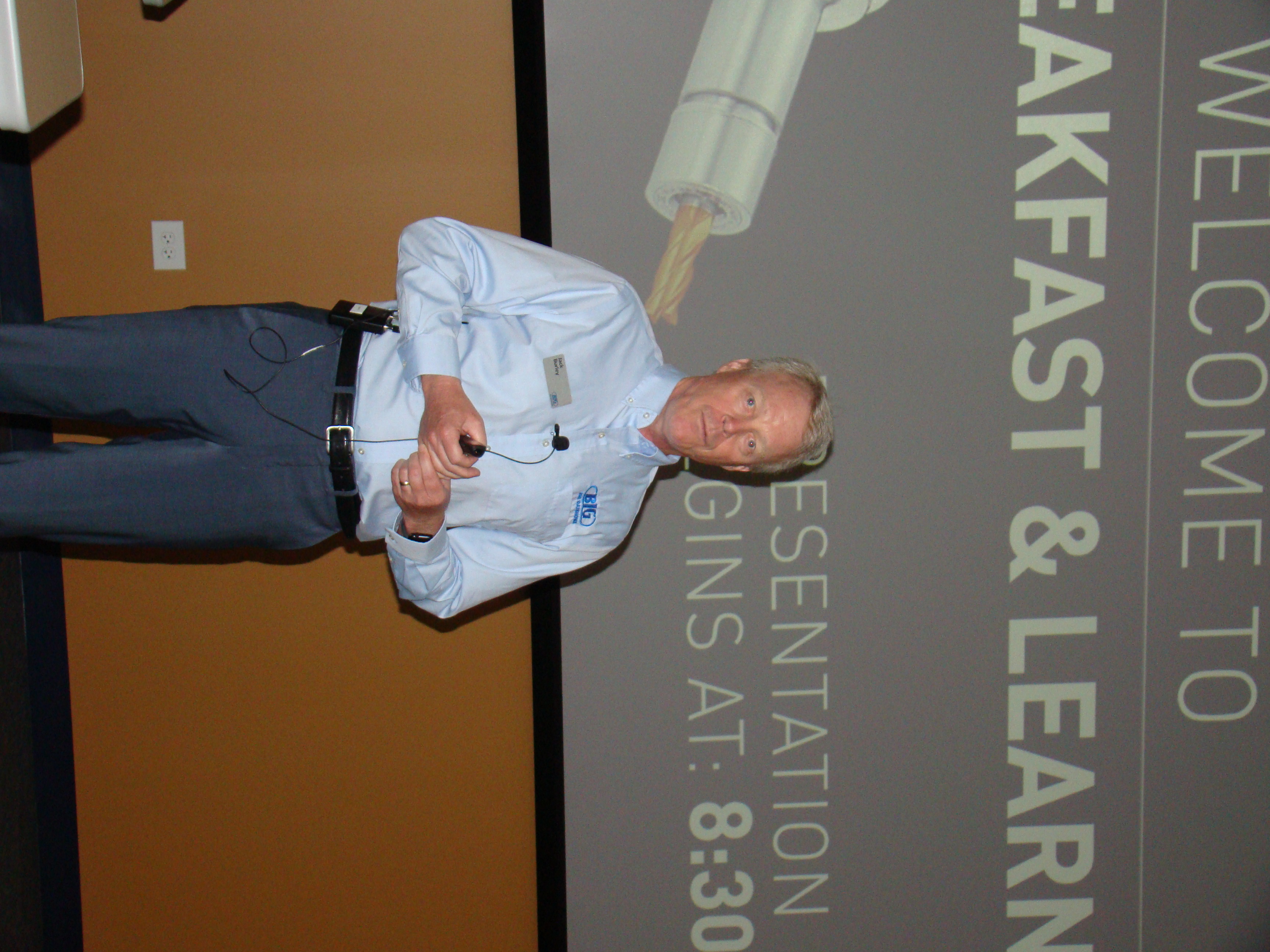 Jack Burley, president and COO of BIG Daishowa, kicks off the presentation segment of the Breakfast & Learn event.">
Companies must evaluate their decisions about acquiring the proper cutting tools and toolholders based on how the tooling aligns to their existing plant equipment, the intended use, the workpiece types and sizes, and the main operations to be performed, Burley continued.
He explained that cutting tool runout is the identifier for precision and tool life, with the rule of thumb being that tool life increases 10% for every 0.0001" reduction in runout.
With more than 20,000 unique part numbers at BIG Daishowa, tooling is not a one-size-fits-all proposition, Burley said. When it comes to toolholders, 22 types are available: five for CAT/BT, five for Capto, and a dozen HSK forms. When endmilling, a collet, fixed, modular, quick-change and rotating." title="Secures a cutting tool during a machining operation. Basic types include block, cartridge, chuck, collet, fixed, modular, quick-change and rotating." aria-label="Glossary: toolholder">toolholder should be selected based on the endmill type, which includes roughing, ballnose, finishing, multi-flute finishing, microendmills with a reinforced shank, through-coolant, and circle segment (barrel cutter) offerings.
In addition, he noted the various styles of toolholders. These include side lock holders, which have the lowest price and performance; shrink-fit holders; collet chucks; milling chucks, which have the best performance; and hydraulic chucks, which have the highest price. The latter is available with a slim design to minimize interference for 5-axis applications that require accessing tight areas, and the hydraulic fluid acts as a vibration damper. Tools with a Weldon shank are the go-to standard for side lock holders, but it is never a good idea to hold a tool with a "hand ground" flat.
Burley noted that while polished tool shanks look "pretty," they do nothing to help a toolholder do its job.
Collet chucks have evolved over time, Burley said, with ER collet chucks for general-purpose applications, the company's Mega New Baby for high-speed multitasking, the Mega E for high-precision milling, and the Mega Micro for small-diameter tools.
The presentation also covered toolholder data matrix marking for identification purposes. An RFID chip can be installed in the holder, where data resides with the tooling, or a barcode can be scanned to retrieve data stored in the cloud. The difference is chips are expensive, and barcodes are not, Burley noted.
A new technology, he added, is wireless connectivity to see what is happening in the tooling, enabling the possibility of automatic adjustment.
In the future, embedded sensors will enable "smart tools," Burley said. While sensors are inexpensive, the problem remains that getting them into tools is not.