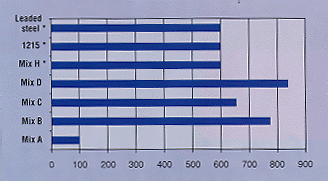


Article discusses the disadvantages of carrying too many grades of carbide inserts. Often, using a less-than-optimal grade can save a machine shop money.

Article defines what constitutes a high-pressure coolant-delivery system and offers advice for selecting such a system. Discussed are pumps, system prices and advantages of these systems when cutting metal.
This article describes reconditioning tools through hand honing, a process that can help a tool produce 20 percent more parts. In explaining the art of hand honing, the author reviews the hone materials and honing techniques to be used.
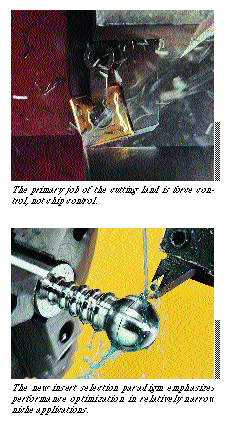
Insert manufacturers have devised color-coding schemes to help users select the right tool for the job. This article explores the thinking behind these schemes and the toolmakers' efforts to design tools for the specific applications defined in their selection systems.
Researchers from Lehigh University report the results of drilling tests conducted using sintered steel samples. The samples were prepared using different machinability-improving additives. The results showed that sintered steel with low-alloy steel and resulferized sintered steel are nearly as machinable as wrought steel.
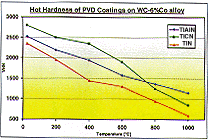
Researchers report on their study of coating performance. Their tests of TiN, TiCN and TiAlN coatings involved turning Inconel 718, medium-carbon steel and ductile cast iron. The wear rates and failure mechanisms of the coated tools are compared.
The growing use of difficult-to-machine materials has driven the metalcutting industry to high-performance tools. This article reviews the trends that are behind most cutting tool research today, and it looks at the state-of-the art results of that research.
This article makes the argument that an insert is really a system made up of a combination of factors. The focus of the article is on one of these factors: the top-form geometry, which has evolved from the chipbreaker designs used primarily on turning inserts.
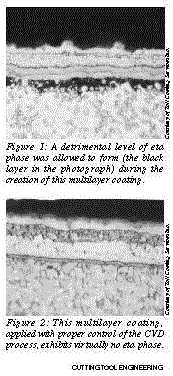
The presence of an eta phase between a coating and the substrate is generally considered harmful to coating adhesion. However, this article argues that when the formation of the eta phase is carefully controlled, it can actually enhance adhesion. The conditions that promote the formation of beneficial eta phase are explained.
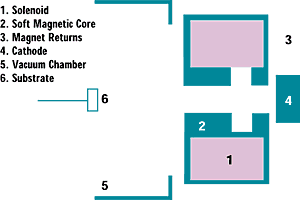
Amorphous diamond coatings can offer performance close to that of CVD diamond film at a fraction of the cost. This article describes the amorphous diamond coating process and the coating that is produced. A comparison to CVD diamond coatings is also presented.
Many end users would like to see carbide tool standards that would ensure consistent quality in tools from shipment to shipment or between manufacturers. Today's C and ISO designations do not provide this assurance, according to this article.
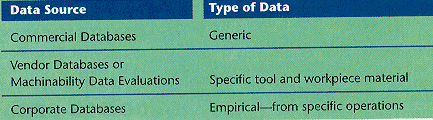
This article discusses the various sources of machining information available, and the body of knowledge on which each type of source bases its recommendations. Emerging sources that make use of such innovative media as the Internet also are discussed.