

Material Matters: Reducing Carbide Use as Tungsten Prices Rise
As the cost of tungsten rapidly rises, cutting tool manufacturers focus on developing inserts that reduce carbide consumption while boosting productivity. By Alan Richter Like so many other commodities, the price of tungsten ammonium paratungstate (APT), which is used to make carbide cutting tools, has moved in only one direction: up — way up.
As the cost of tungsten rapidly rises, cutting tool manufacturers focus on developing inserts that reduce carbide consumption while boosting productivity.
Like so many other commodities, the price of tungsten ammonium paratungstate (APT), which is used to make carbide cutting tools, has moved in only one direction: up — way up. According to tungstenprices.com, the price is about $3,150 per metric ton, an increase of 550% in the past 14 months, primarily the result of China’s export controls that have created a significant supply bottleneck.
Policy changes related to production levels, export control, environmental impact and mining regulations have impacted material costs related to carbide, including indexable inserts, said Mike Dieken, milling product manager for Ingersoll Cutting Tools Co. in Rockford, Illinois.
The toolmaker states that the cutting tool industry is undergoing a very difficult and dynamic situation compared with the past in which tungsten prices have risen far beyond normal market levels, and indications exist that these elevated material costs may persist or even continue increasing. As a result, carbide tools can no longer be viewed as an ordinary and disposable commodity.
Based on current market observations, price increases of around 10 to 15% for cutting tools used in machining serve as a rough orientation, according to Ceratizit USA LLC in Charlotte, North Carolina. Depending on the product group and delivery model, additional surcharges of 60 to 80% may also apply. What is particularly striking is the frequency: due to high volatility, new announcements of price increases are coming in almost daily.
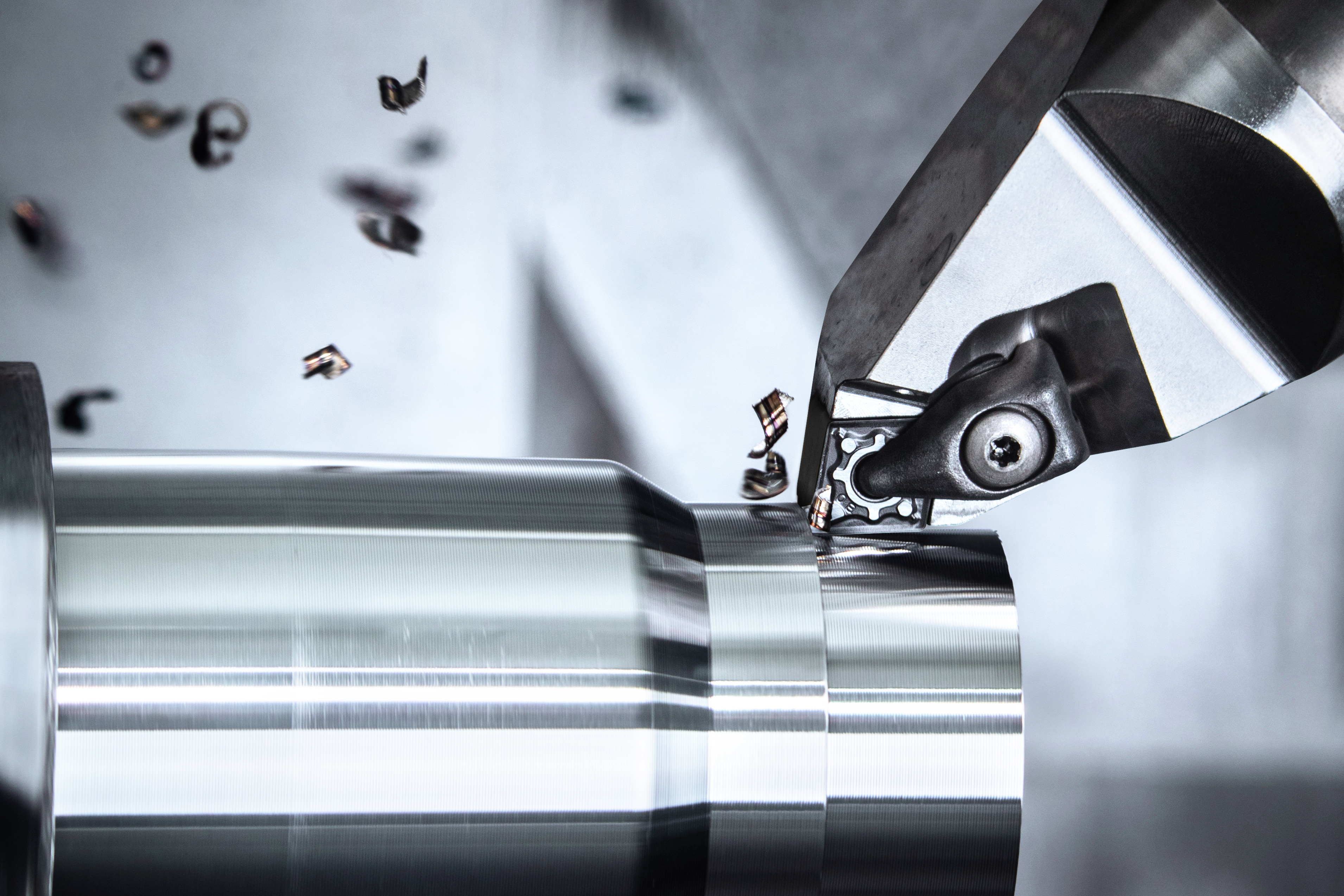
“The current surge stems primarily from the raw materials side — and there, the bottleneck is tungsten,” said Andreas Lackner, spokesperson for the executive board of Ceratizit, a company within the Plansee Group, the largest tungsten supplier outside of China. “About 65% of the tungsten processed worldwide is used for carbide tools.”
The key driver behind the price increases is therefore the situation in the tungsten market, and an important indicator here is the APT. “For us, APT is something like the water level in the commodities market. When it rises sharply, that eventually, with a delay, reaches carbide tools,” Lackner said.
‘The current surge stems primarily from the raw materials side — and there, the bottleneck is tungsten.’
Ceratizit reports that the origins of the tungsten shortage and the price increase are geopolitical in nature: China produces over 80% of the world’s tungsten and exercises control over the availability of this strategic metal through exports and export restrictions. At the same time, China has been a net importer of tungsten since 2025, as mines close and domestic consumption rises. For Western supply chains, this situation means that the shortage is intensifying, which in turn means less predictability regarding availability, lead times and pricing.
Competition for the limited supply of tungsten products is also fierce, as this industrial key raw material is needed almost everywhere, according to Ceratizit. In addition to the entire manufacturing industry, the semiconductor and electronics, medical and aerospace industries require tungsten. The defense industry is also increasing its demand and building up strategic reserves in response to current conflicts.
Because the most significant cost savings that an end user can experience is through boosting productivity, that is the best path to take to be competitive, Dieken said. “The price of the time on a machine to make a part costs way more than the cost of the cutting tool itself, and so if you can make your production go faster, you are going have a higher price percentage of cost efficiency in the long run.”
‘The price of the time on a machine to make a part costs way more than the cost of the cutting tool itself, and so if you can make your production go faster, you are going have a higher price percentage of cost efficiency in the long run.’
He added that it is easy to believe that buying the lowest cost insert will provide cost savings, but that is not going to provide the cost control that is needed to be competitive. To enhance throughput and, therefore, reduce costs, Ingersoll offers the SFeedUp Campaign with 34 products, including ones for milling, holemaking, turning and grooving, to reportedly achieve higher feeds and speeds and followed that with the WinSFeed Campaign with 27 additional products plus eight product expansions. “Ingersoll is devoted to creating new coatings, new substrates and using geometry in order to help make production go faster. That is what we’re all about.”
Milling Cast Iron
To boost throughput when milling cast iron, Sandvik Coromant Co. in Mebane, North Carolina, introduced the GC1220 indexable insert milling grade for light roughing to finishing cast iron. The grade is available in multiple geometries for dry milling and wet milling. Martin Hobbs, product specialist for holemaking and indexable milling tools, said because milling cast iron produces a lot of dust, many customers prefer running with coolant to help control the dust, especially when automation is involved. “They need to keep the chips off of the component when robots are going in and picking up and handling parts.”
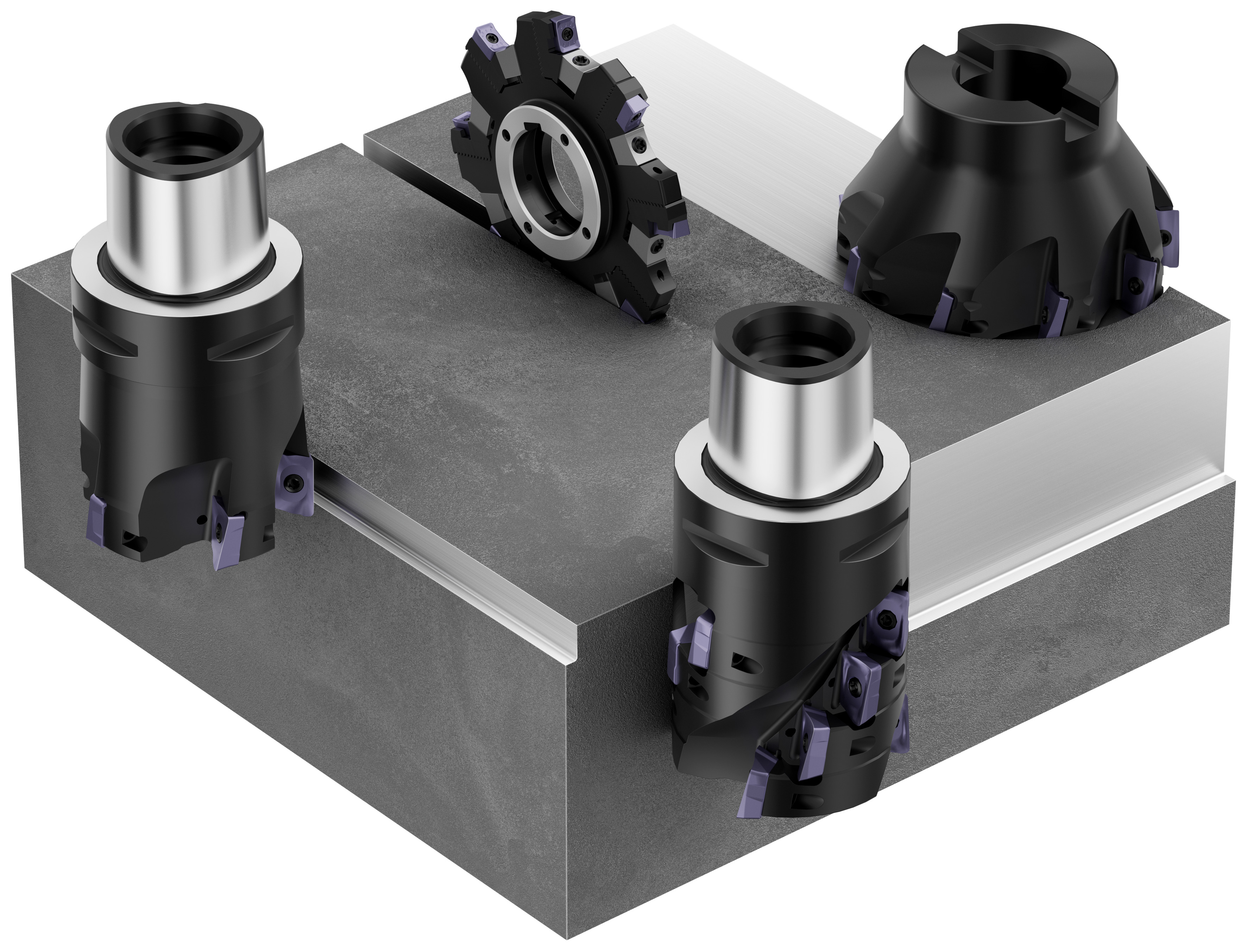
In addition, GC1220 inserts are available with E, or ground, inserts and M, or pressed, inserts, as well as S, L, M and H geometries for sharp, light, medium and heavy. He added that a number determines the edge prep, with a lower number being sharper and a higher number being a heavier edge prep. A light hone is suitable for finishing applications and damping when there is a tendency for vibration and harmonics.
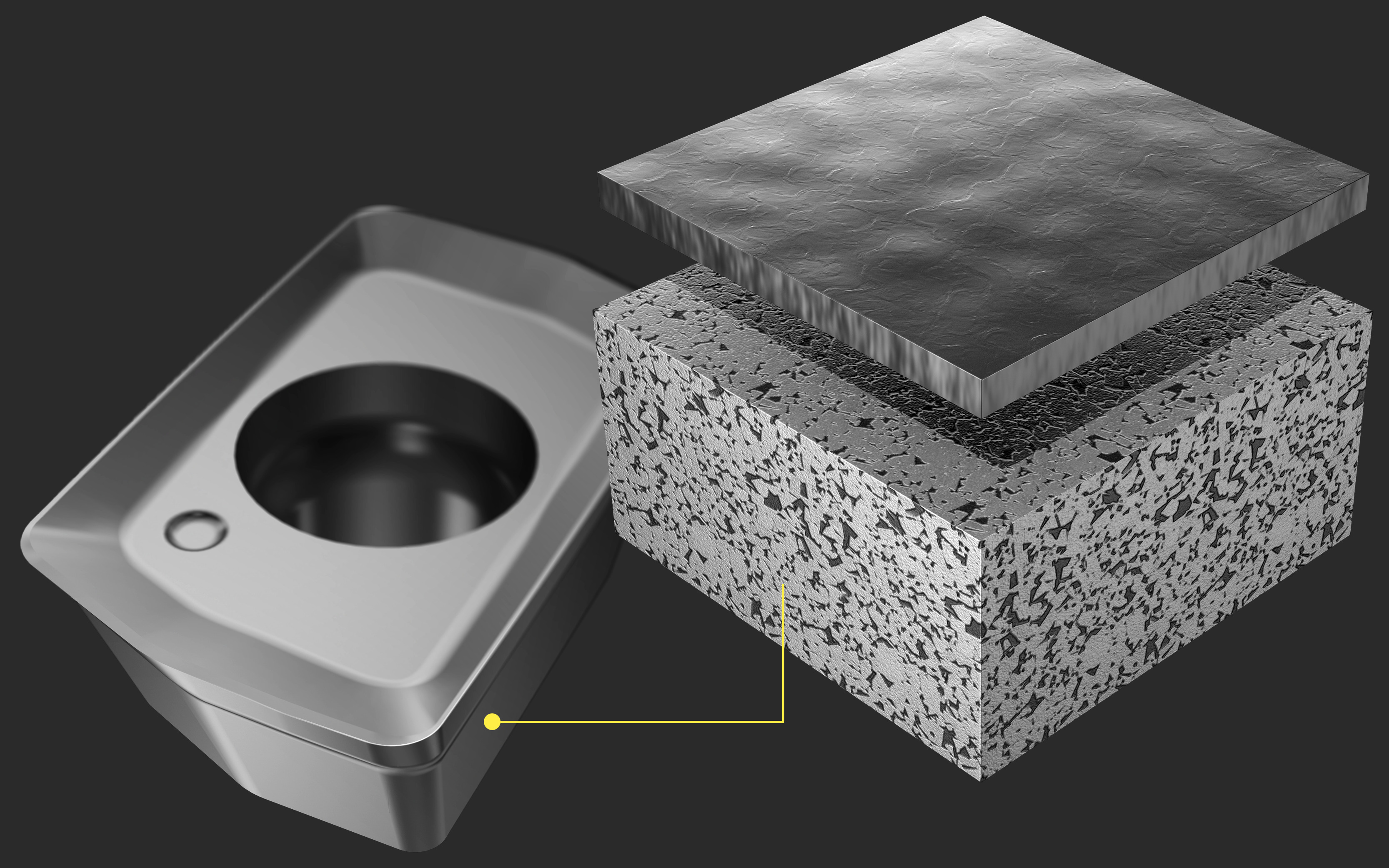
The GC1220 coated inserts have a multilayer with two different layers to provide twice the strength, Hobbs explained. “What’s unique about these coatings is the way that we use Zertivo technology to stand the atoms of these coatings on end, side by side and compressed tightly together in alignment with one another. They’re stacked together like the fibers of wood would be a board and in doing so it gives us much better predictability in tool life, extends tool life and gives us better wear resistance.”
Depending on the workpiece material, the toolmaker offers uncoated variations. For example, an uncoated insert might be appropriate for milling gray cast iron, which generates powdery, fine chips, he noted. Because it is easier to cut than other types of cast iron, an insert for milling gray cast iron doesn’t require much in the way of geometric features. “We don’t necessarily need chipbreakers as much for gray cast, and flat top geometries can be very advantageous.”
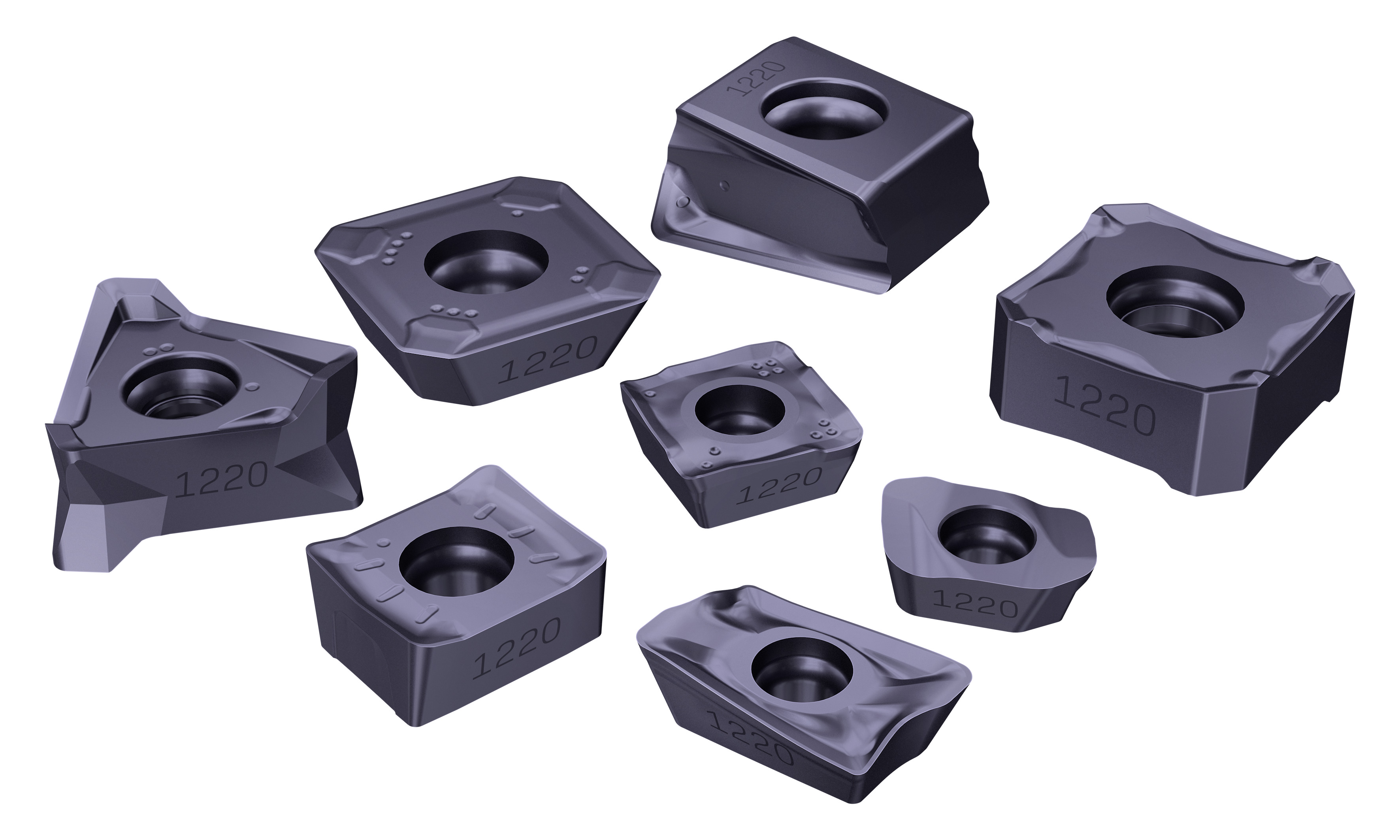
Geometries are helpful, however, when milling the other varieties, Hobbs added, with gray followed by nodular with its compacted graphite nodules and then austempered, depending on the temperament. “And if we get into chilled white irons when we’re talking north of 60 Rockwell, it becomes even more difficult for us to cut those types of materials.”
Suppressing With Pressing
Because end users require a high level of security, productivity, edge-line quality, surface finish, tool life and machining stability when grooving and parting, Sandvik Coromant developed a new pressing technology for the CoroCut 2 grooving and parting platform called FlashLight to produce inserts with a consistent and high edge line quality because even small variations at the cutting edge can lead to problems, said Kyle Bisson, turning product specialist. Burr reduction can be one benefit in certain applications.
“From a parting and grooving standpoint, the key point is that CoroCut 2 offers application-specific geometries, and FlashLight technology improves edge-line quality and consistency,” he noted. “Those factors can help improve chip control, process security and surface finish.”
FlashLight reduces edge-line variation associated with flash from the press process and improves edge-line quality and consistency, Bisson explained. The technology enables a pressed insert to get close to the performance of a ground insert without the added cost, while the company continues to offer ground inserts when needed.
He said the inserts are also available with four newer geometries: RO, CF, CS and CR. RO is a ground, high-precision profiling option with a full radius for stainless steel and superalloys. “It’s a very sharp, positive geometry, which makes it ideal for materials that are tougher to machine and prone to workhardening.”
CF has a positive geometry for parting off at low to medium feed rates that is suitable for a range of materials, the ground CS geometry minimizes pips and burrs when parting off, especially when cutting stainless steel and steel, and CR has a strong, robust edge for when additional stability is needed, such as at heavier feeds or when the setup stability is less than optimal.
Recycling as a Counterstrategy
Sustainability is important to Sandvik Coromant, according to Hobbs, so the toolmaker has established a facility to break down the carbide in used tools from any manufacturer and recycle it into high-quality raw material for new tools, while reducing the need for virgin raw materials and lowering the environmental impact.
He added that the toolmaker’s “very strong recycling program” helps reduce the price of cutting tools.
Ceratizit reports that recycling is gaining traction. “The potential impact is significant because suitable processes exist and tungsten is technically easy to recover within the circular economy. Nevertheless, around 70% of the tungsten used worldwide does not enter the recycling stream,” Lackner explained. “In the U.S., there is an additional problem: large quantities of tungsten scrap are sold to other countries and flow out of the market. While this may seem attractive in the short term, it weakens the raw material base and security of supply in the long run.”
Review the print ads from this magazine to continue
This quick advertiser review unlocks the rest of the article and keeps the full-screen reader focused on the ads instead of the page chrome.
Advertisers included in this article experience
Print placements connected to this article
Tapmatic Corp.
Tapmatic Corp. print ad
Print ad listed on page 16 of the June/July 2026 issue.
Visit Tapmatic Corp. View this placement in the issue recordVektek Inc.
Vektek Inc. print ad
Print ad listed on page 17 of the June/July 2026 issue.
Visit Vektek Inc. View this placement in the issue recordCTE Daily Grind
CTE Daily Grind house ad
CTE Daily Grind house ad printed on folio 19 / physical PDF page 21; United Grinding was deferred to September under the documented production disposition.
View this placement in the issue recordPrint ads from this magazine
Print ad listed on page 16 of the June/July 2026 issue.
Continue reading
June/July 2026
For tool users, there is a concrete scope for action here. Those who consistently collect carbide scrap are already laying the groundwork for increasing the recovery rate and boosting availability in the region. In practice, simple yet effective measures are what counts: clear container and collection concepts, separation of other metals, and established channels for buyback programs or circular economy models.
Disposing of Tips
One way to reduce the cost of carbide in drill and endmills is through replaceable-tip technology to avoid disposing of a solid-carbide tool when the cutting edges become worn, Dieken explained. In addition to having a tool body’s shank made of carbide and only replacing the tip when needed, a steel or heavy metal shank can be used to control the cost of carbide. “The other beautiful thing about tip technology is often you can replace different tip styles on the same type of shank. Not only are you getting the repeatability and consistent use of that same product, but the flexibility that comes with it running different styles.”
In addition, Ingersoll’s insert pressing technology has advanced to where it can hold tighter tolerances than it has in the past, he noted. “You don’t even have to touch off because it’s going to be within plus or minus five tenths.”
Another cost-control technology is the company’s DiPos, or two sided, technology, Dieken explained, doubling the number of edges compared to a single-sided insert while minimizing the amount of face grinding. “We can actually press all of what I call ‘sexy rake face geometry’ into a shape, and we can do it on two sides and have the seating pads held in place without grinding to be able to hold the tolerances that we need to.”
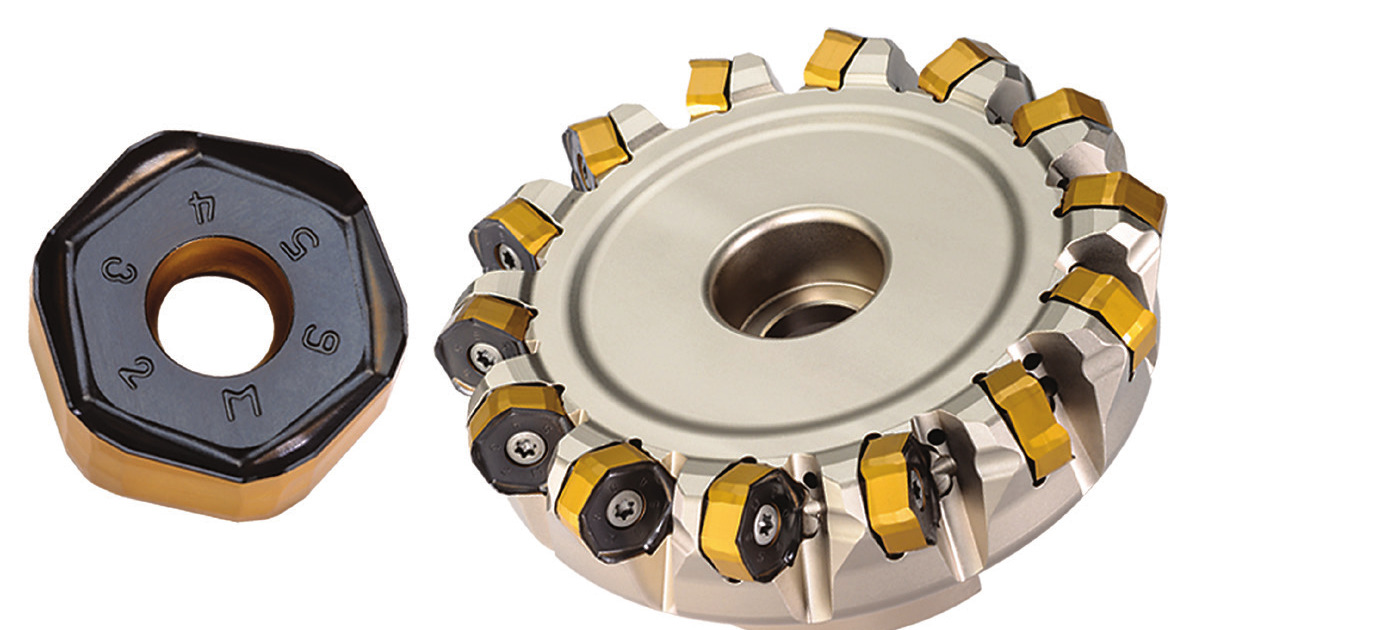
Ingersoll also targets smaller insert technology to reduce the tungsten content, he noted. This technology includes RhinoTurn inserts with a 25% smaller IC and the same thickness and top surface geometry as 12.7 mm (1⁄2") IC inserts, which achieve the same feed rates at a 20 to 30% lower price, and replaceable tip drills as small as 4 mm (0.157") in diameter.
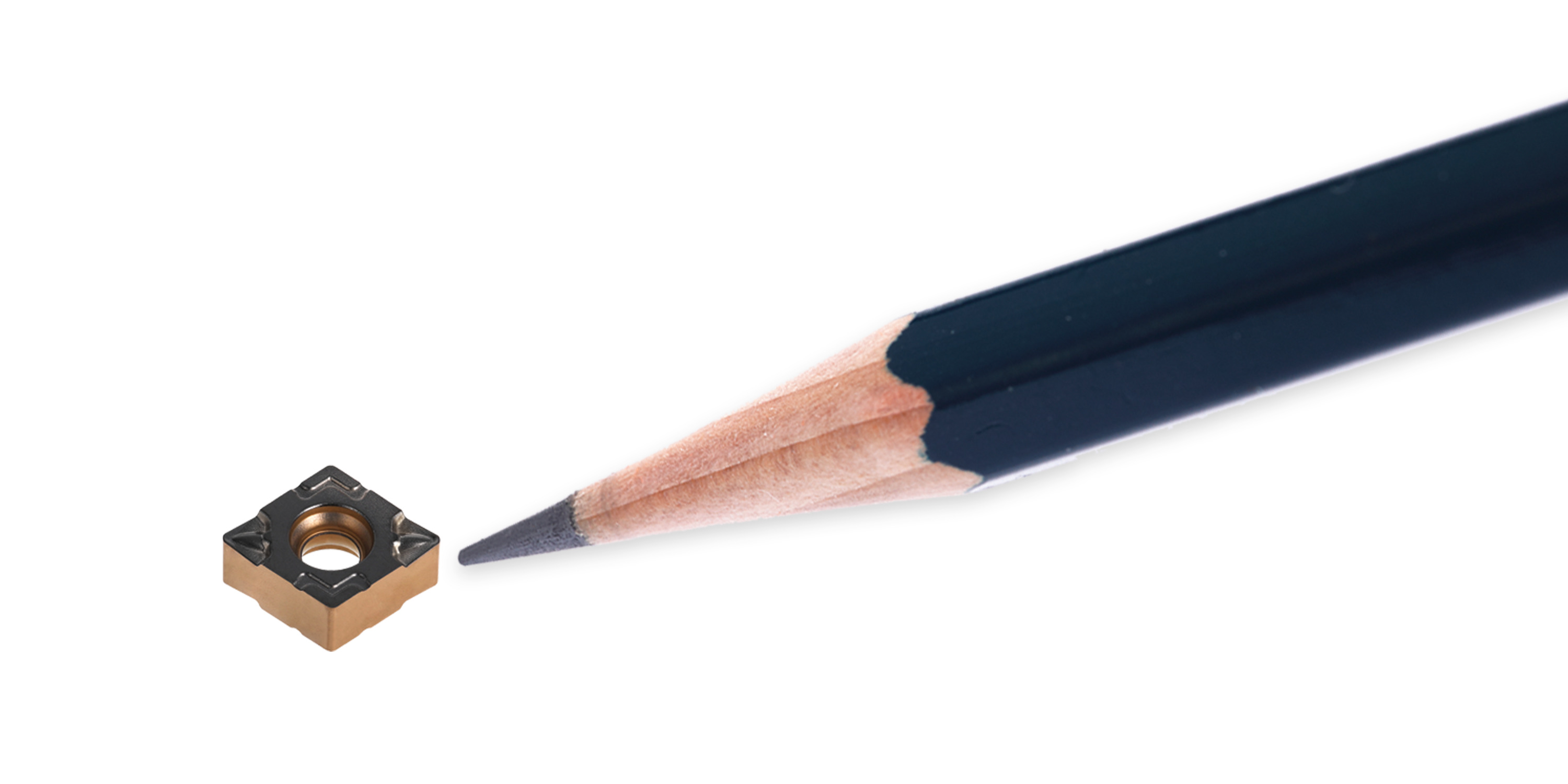
Because tungsten is a price sensitive commodity, Dieken said Ingersoll is developing new substrates and coatings that aim to improve tool life and run at higher parameters to boost production throughput. “In alignment with the higher metal removal philosophy, now is an opportune time to consider advanced materials like cermet and ceramics that have less tungsten. And coupled with these newly developed tools, different machining techniques can be employed. At the end of the day, producing more parts in less time with the same — or less — amount of carbide is the ultimate win.”
Although the current cost hikes for carbide inserts are a new dynamic driven by raw material shortages, geopolitical constraints and more competition for tungsten, Dieken emphasized that solid carbide cutters will not go away as a result because those tools, depending on the application, provide performance and other advantages.
Contributors
Ceratizit USA LLC
800-783-2280
Ingersoll Cutting Tools Co.
815-387-6600
Sandvik Coromant Co.
800-Sandvik
Bridging the Gap
As the cost of carbide inserts rises along with the price of tungsten APT, end users can realize economic gains by switching to inserts made of alternate substrates, with one option being ceramic. In addition to offering carbide inserts in a variety of grades, Greenleaf Corp. in Saegertown, Pennsylvania, produces ceramic inserts, including ones made from its XSYTIN-1 grade, said Martin Dillaman, the toolmaker’s global manager, engineering/applications. Unlike carbide, the price of ceramic is stable.
XSYTIN-1 is phase-toughened ceramic with an interlocking grain structure grown during production, he added, noting that the grade has a different structure than the company’s traditional whisker-reinforced ceramics. The whiskers function like rebar to strengthen the ceramic and enable machining at high cutting speeds and silicon crystals to provide a tougher grade than general aluminum oxide ceramics.
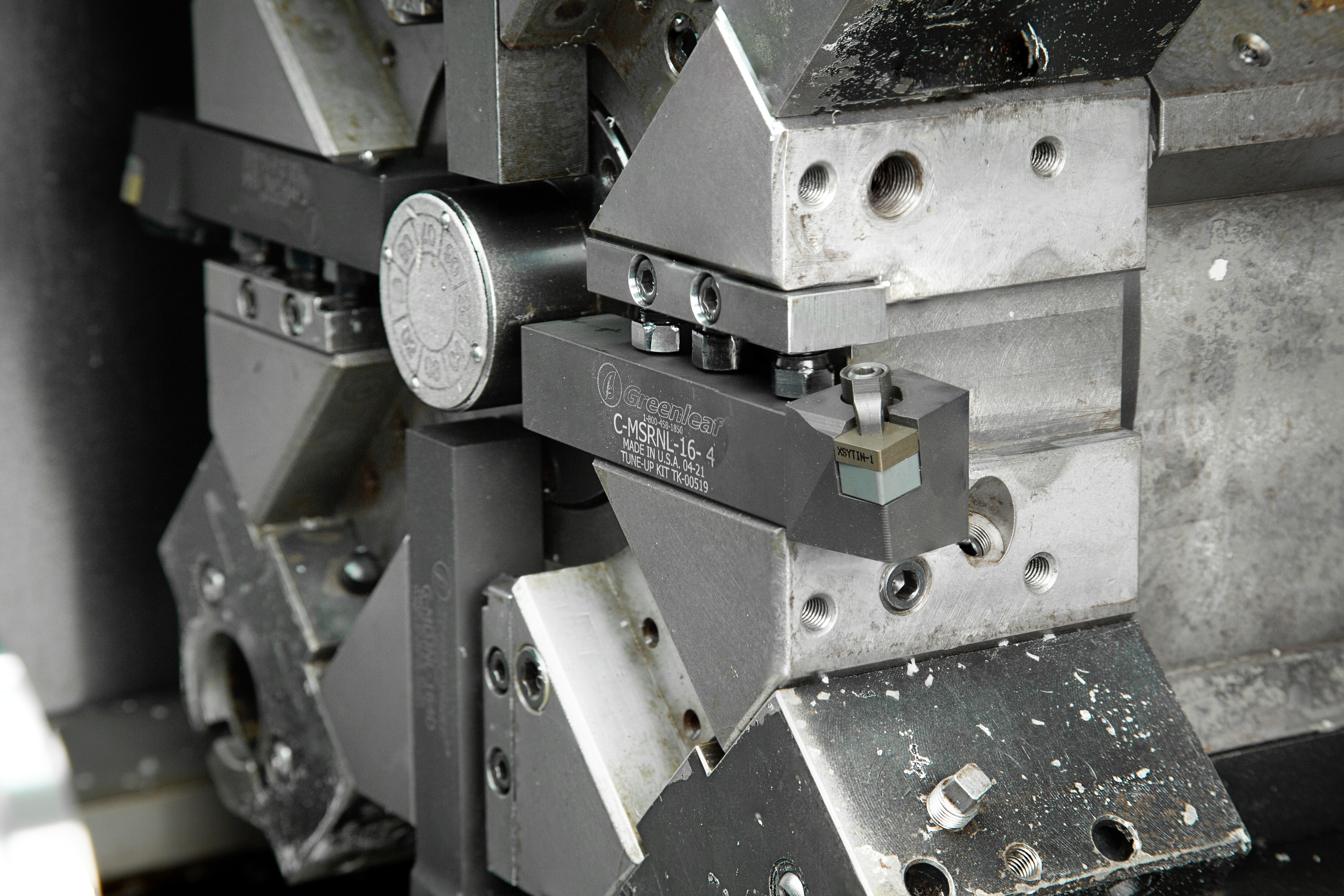
“It kind of bridges the gap between some of those whisker ceramic applications and carbide,” he said. “That has been our go-to grade, especially for roughing operations, where it helps customers achieve much higher rates of material removal versus running with carbide.”
Carbide generally is run at a cutting speed from about 30.5 to 61 m/min. (100 to 200 sfm) when turning, whereas the ceramic grade can reach 305 m/min. (1,000 sfm), according to Dillaman. The speed increase is achieved while being able to feed at the same rate as carbide. Suitable applications for switching from carbide to ceramic include ones in which large inserts are applied to workpieces made of heat-resistant alloys, hardened steels and cast iron materials.
In operation, carbide inserts are designed with positive geometries, such as the rake angle, to shear the workpiece material, he explained, while ceramic inserts tend to be negative and generate heat as they compress and plasticize the material in the cutting zone and use the strength of ceramic to push it away, while extending tool life.
Dillaman said Greenleaf also provides CVD coatings for its ceramic inserts to enhance wear resistance and enable running at a higher speed — a double benefit when the application is appropriate. “We’re probably seeing almost an even split between coated and uncoated ceramics.”
Part manufacturers typically consider only finishing with carbide, but he noted that Greenleaf has the GF1 chip form for a positive ceramic insert to reduce the cutting pressure and enable the tool to be effective for finishing. “A CVD coating on that helps hold up that edge really well for the fine finishing operation.”
For more information about Greenleaf Corp., call 814-763-2915 or visit www.greenleafcorporation.com.
For more information from Greenleaf about its ceramic tools, view a video presentation at www.ctemag.com by scanning the QR codes with your smartphone or entering this URL on your web browser: qr.ctemag.com/2833p.
QR codes and videos from this issue
Print QR codes, video callouts, and in-magazine links for this article now point to the CTE video hub in the HTML version.
Related



Subscribers can use MFGAxis notes, saves and discussion tools with their innoNET account.


