


Tackling Hard Metals With High-Feed Mills
Cox Machine Inc. in Wichita, Kansas, produces precision parts and assemblies for aerospace and other industries. Engineering Manager Brennan Miller said about 90% of its work is aerospace-related and much of the material is aluminum. “We probably have eight work centers out of 80 dedicated to hard metals.”
Cox Machine Inc. in Wichita, Kansas, produces precision parts and assemblies for aerospace and other industries. Engineering Manager Brennan Miller said about 90% of its work is aerospace-related and much of the material is aluminum. “We probably have eight work centers out of 80 dedicated to hard metals.”
- END USER
- Cox Machine Inc.
316-943-1342
www.coxmachine.com - SOLUTION PROVIDER
- Tungaloy-NTK America Inc.
888-554-8394
www.tungaloy.com/us - CHALLENGE
- Reduce insert failures and cutter-body damage while machining titanium and stainless steel.
- SOLUTION
- A high-feed milling system with double-sided, six-edge inserts, shallow depths of cut and low radial cutting forces.
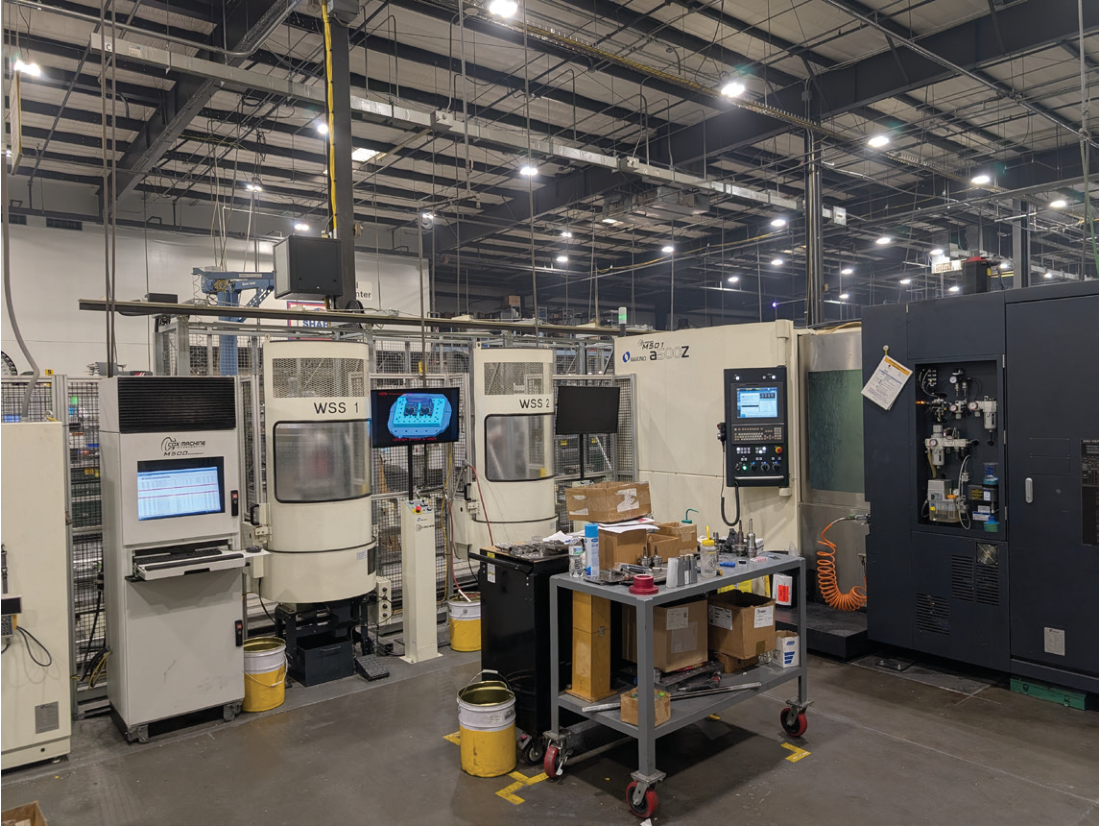
Those hard-metal jobs were damaging cutters. Miller said the shop was losing four or five cutter bodies a week. “At one point, I had about 25 or 30 bodies that were all destroyed.”
The body damage also made insert failures difficult to diagnose. “Then you can’t even break down performance issues because you don’t even know what happened,” Miller said.
Incorrect insert seating by less-experienced operators sometimes added instability and contributed to premature failures, Miller said.
A wholesale representative introduced Cox Machine to Zac Tucker, cutting tool sales engineer for Kansas and Oklahoma at Tungaloy-NTK America Inc. in Arlington Heights, Illinois. Tucker began testing tools on the shop’s hard-metal applications.
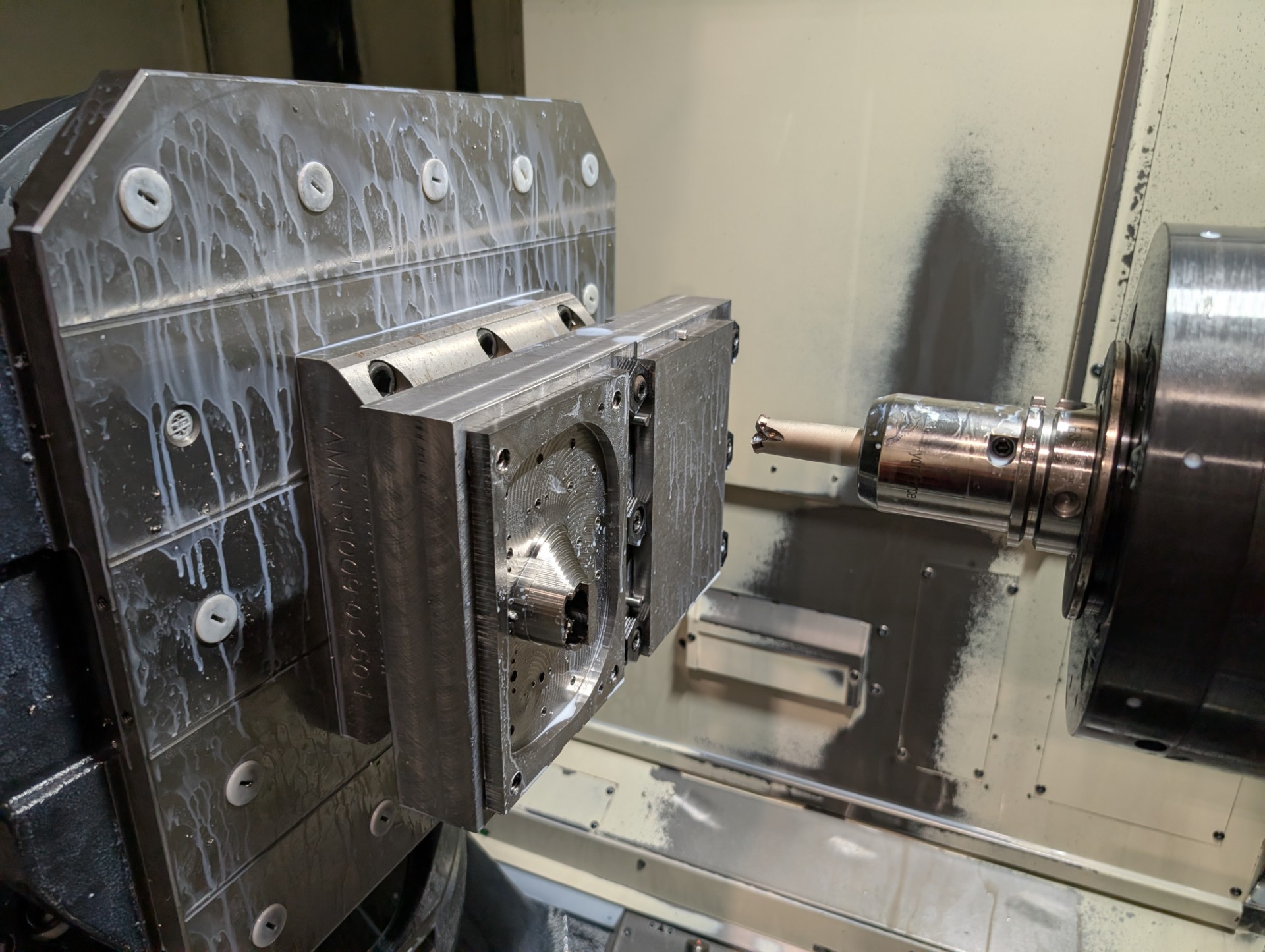
One test involved a complex titanium-6Al-4V aerospace part. Cox Machine changed to a Tungaloy DoFeedTri 03 high-feed cutter with WXMU0303ZER-ML inserts in the AH130 grade. Tungaloy specifies AH130 for applications including titanium alloys, while the ML geometry is intended to reduce cutting resistance.
‘At one point, I had about 25 or 30 bodies that were all destroyed.’
Tucker said cutting speed increased from 45.72 to 54.86 m/min. (150 to 180 sfm) and feed rate increased from 853.4 to 1,701.8 mm/min. (33.6 to 67 ipm). The change reduced a 43-minute operation by 15 minutes and doubled tool life, he said. Cox Machine calculated a $24.54 reduction in tooling cost per part and $3,942 in monthly savings, excluding damaged cutter bodies.
DoFeedTri uses a large insert-seat contact face and a keyed geometry intended to prevent incorrect insert orientation. Its double-sided, trigon-shaped insert provides six cutting edges, compared with the four edges on the insert Cox Machine previously used.
Miller said carbide-tool prices had increased 30% to 50% during a three-month period as the cost of tungsten ammonium paratungstate rose. He said six usable edges reduced the cost per edge. “Those bodies will last if we treat things properly.”
For another application involving a medium-size aerospace component made from 15-5 stainless steel, Cox Machine changed to a 19.05 mm (3/4″) DoFeedTri 03 cutter with WXMU0303ZER-MM inserts in the AH3225 grade. Tungaloy identifies AH3225 as a steel-machining grade, and the MM edge preparation is intended for stable conditions and heavier cuts.
Tucker said cycle time fell from 50 to 40 minutes per side, saving 20 minutes across the two-sided operation. Tooling cost per part dropped from $67.64 to $6.39, and total machining cost per part dropped from $153.93 to $77.42. Based on those displayed figures, a 1,000-part annual run would save about $76,510.
Miller said DoFeedTri also brought the part closer to its final geometry before finish machining. “Our finishers are going to be taking a lot less bite than they were before to actually finish that part. We should see some mostly uncaptured savings with our finishers lasting a little bit longer now as well.”
Manufacturing Engineer Seth Cox said the new process eliminated two tool changes on the stainless steel part, saving several additional minutes per part.
Cox also said a change from sidelock to hydraulic holders produced a better-balanced assembly and a finer roughing finish in this application. “We have some learning to do.”
Following the tests, Cox Machine began considering DoFeedTri for additional work centers. Miller credited Tucker’s on-site testing and continued visits with helping the shop move beyond a recurring failure pattern. “Without Zac coming out and taking the initiative to actually run the tool test, I don’t think we ever would have. We would have just kept on living with the problems we found.”
Related

Subscribers can use MFGAxis notes, saves and discussion tools with their innoNET account.