Industry 4.0 No: Workforce Development & Training
Without skilled craftspeople, the Fourth Industrial Revolution won't have its anticipated impact.
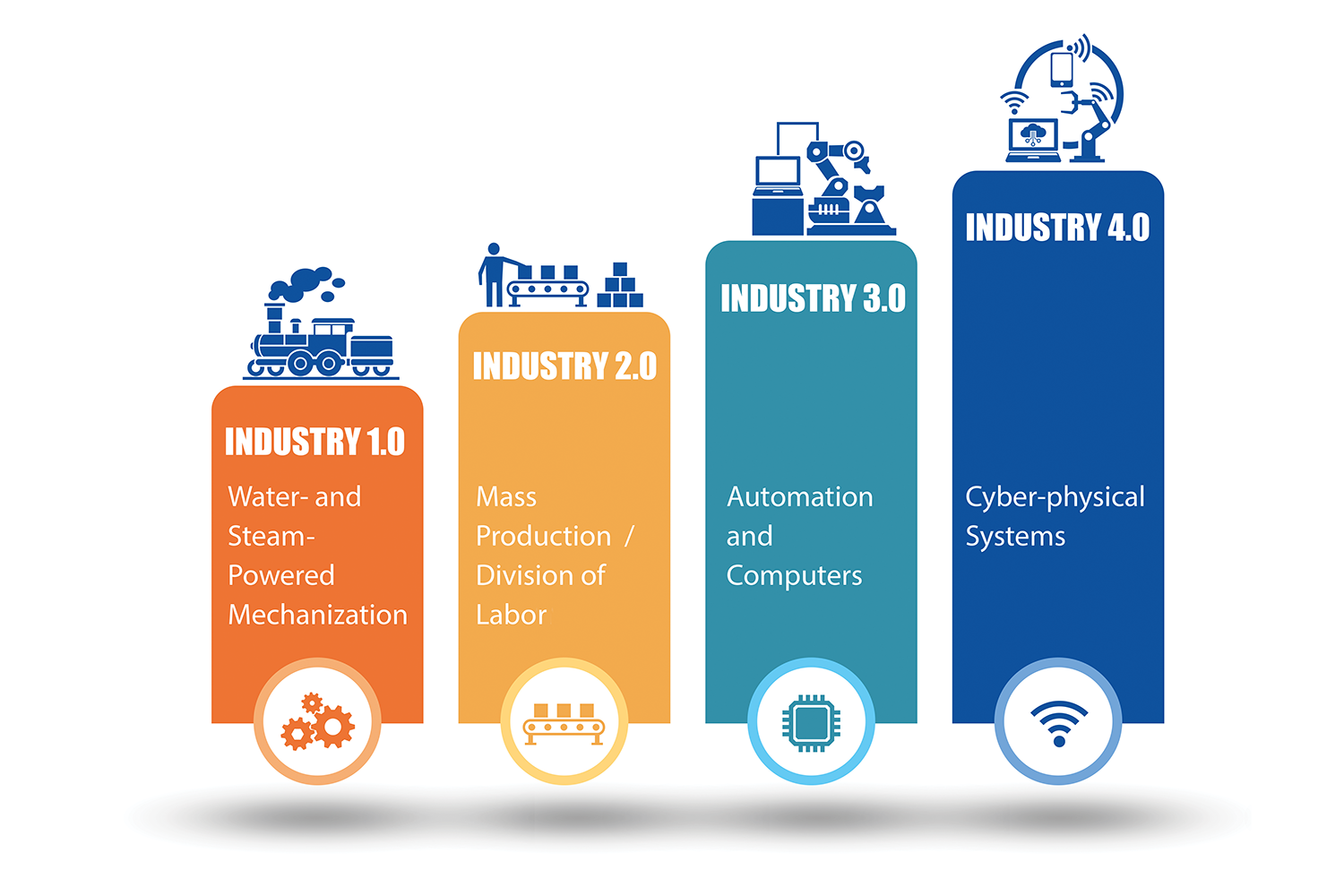
By now, everyone has heard that we have entered the Fourth Industrial Revolution, which has been dubbed Industry 4.0. Data, connectivity, automation and artificial intelligence are some of the defining elements that prompted experts to name this time of change. Economists, scholars and industry leaders believe that the technology-fueled Industry 4.0 could significantly shift manufacturing efficiency, much like the development of steam and electrical power did.
As Industry 4.0 continues to mature, experts predict a transformation in demand for employee skills. Gjoko Muratovski with the Stanford Institute for Innovation in Developing Economies summarized the situation in an article for Forbes, writing that “the demand for soft skills will grow across all job sectors and will include critical inquiry, social perceptiveness, active listening and complex problem-solving.” He went on to point out that technical skills will remain important but that soft skills are “the fields that can help us shape a new generation.”
There is no question that soft skills and the development of human-centric training are crucial to building a successful business. However, as he also states, soft skills are not the foundation of success in this new era of Industry 4.0. Skilled leaders and successful people always have needed to master soft skills, and a tech-driven revolution does not increase the importance of developing good people skills and critical thinking.
If soft skills and problem-solving are not the foundation, then one might assume that mastering technology would have to be the foundation of success. But it is not. After all, the predominance of technology in the industrial world gave rise to the concept of Industry 4.0. From web-based meetings with people around the world to autonomous robots that deliver parts, we already have been immersed in technology.
Robots are a good example of the technology that will advance with Industry 4.0 and the connectivity of the Internet of Things. Although robots have been in the manufacturing sector for decades, their use is expected to continue growing. Not only will the use of robots increase, but robotic applications will become more complex.
These and other similar expected advances explain why educators, politicians and industrial executives tell us that there will be a boom in demand for workers with tech skills. While a deficiency of control engineers, coders and related types is likely, it won’t be sufficient to throttle the expansion of Industry 4.0, and manufacturers will feel only momentary pains from shortages.
Many also are led to believe by the message from our educators and politicians that our students lack the tech skills needed for success after school. I would argue they are not lacking. My son was programming industrial robots when he was 8 years old and making CAD models when he was in high school. At 14, he had the technology skills necessary to function in a manufacturing setting, and there were plenty of students like him. So we already have the tech skills required to drive Industry 4.0.
Review the print ads from this magazine to continue
This quick advertiser review unlocks the rest of the article and keeps the full-screen reader focused on the ads instead of the page chrome.
Advertisers included in this article experience
Print placements connected to this article
Sandvik Coromant
A drilling
breakthrough Introducing CoroDrill® 860 with -GM geometry, the new short-hole drill optimized for a wide range of applications in steel, stainless steel, cast iron and hardened materials. CoroDrill® 860 with -GM geometry sets the standard for optimized multi-material drills, providing several benefits for your production
A drilling breakthrough Introducing CoroDrill® 860 with -GM geometry, the new short-hole drill optimized for a wide range of applications in steel, stainless steel, cast iron and hardened materials. CoroDrill® 860 with -GM geometry sets the standard for optimized multi-material drills, providing several benefits for your production. • Significantly increases tool life in ISO P, M, K and H materials. Also effective in ISO N and S materials • Robust new design provides excellent hole dimensional
Visit Sandvik Coromant View this placement in the issue recordDS4 Ultra-Fine EDM Graphite
Proven to Handle EDM’s
Highest Degree of Difficulty When your machining operation demands an EDM electrode that can provide intricate detail with an ideal surface finish you need Mersen’s DS4. Over the last 15 years DS4 Ultra-Fine EDM Graphite Precision has established a track record of handling the most challenging Detail & EDM burns while proving strong, durable and easy to machine. Finishing.
DS4 Ultra-Fine EDM Graphite Proven to Handle EDM’s Highest Degree of Difficulty When your machining operation demands an EDM electrode that can provide intricate detail with an ideal surface finish you need Mersen’s DS4. Over the last 15 years DS4 Ultra-Fine EDM Graphite Precision has established a track record of handling the most challenging Detail & EDM burns while proving strong, durable and easy to machine. Finishing If you’re ready to save money on ultra-fine EDM graphite, it’s time to switch to DS4.
Visit DS4 Ultra-Fine EDM Graphite View this placement in the issue recordPrint ads from this magazine
breakthrough Introducing CoroDrill® 860 with -GM geometry, the new short-hole drill optimized for a wide range of applications in steel, stainless steel, cast iron and hardened materials. CoroDrill® 860 with -GM geometry sets the standard for optimized multi-material drills, providing several benefits for your production
A drilling breakthrough Introducing CoroDrill® 860 with -GM geometry, the new short-hole drill optimized for a wide range of applications in steel, stainless steel, cast iron and hardened materials. CoroDrill® 860 with -GM geometry sets the standard for optimized multi-material drills, providing several benefits for your production. • Significantly increases tool life in ISO P, M, K and H materials. Also effective in ISO N and S materials • Robust new design provides excellent hole dimensional
Continue reading
August 2022
The lack of skilled craftspeople already is impacting manufacturing, and there is a false belief that technological advances somehow will fill the gap. Simply stated, we are not producing enough welders, machinists, toolmakers and engineers to support the needs of industry and the new Industrial Revolution. The dearth of skilled craftspeople, not soft skills and tech skills, will throttle the expansion of Industry 4.0.
Most companies do not create their own automation but instead hire an integrator that provides a complete solution. An integrator has a team of application engineers who design and construct the system that is handed over to the customer. Who are the most skilled application engineers? They typically are craftspeople who learned and mastered a craft.
A welding cell with the most sophisticated robots, advanced welding technology and state-of-the-art communications is useless if it can’t make a weld. Sure, a good engineer can research and find the necessary variables to make a weld, but a person who has spent time under the welding helmet will provide a better solution in less time.
Once complete, a good robotic welding cell doesn’t need to be attended by a skilled welder to succeed, but what happens when things in the cell go haywire or a new part is introduced? Process maintenance and continuous improvement activities require a person who has experienced many different welding scenarios and learned to adjust to changing conditions.
Data is important to continuous improvement and achieving the productivity gains necessary to remain competitive. Connectivity and data are a bigger part of the Industry 4.0 transformation than automation. Connectivity and IoT are the foundation for the unprecedented amount of data collection that is expected to significantly alter the way that manufacturers operate.
Good data streams allow companies to monitor things like the condition of a machine tool, process efficiency and other high-quality details. But to be useful, data must be analyzed and produce actionable information. With today’s software tools, it is becoming easy to capture data and uncover anomalies in a process. Connectivity and IoT will accelerate the flow of information, and we have armies of people ready to capture and analyze. What we don’t have are the craftspeople needed to act on the findings.
Machine tool monitoring is a good example of early warning technology that allows manufacturers to analyze a data stream and see impending failures or shifts in machine performance. Monitoring produces real-time actionable data, but it requires a maintenance tech to respond. Most manufacturers struggle to keep trained maintenance techs on staff and usually don’t have enough to react to emergencies, so responding to impending failures is impossible. Again, if there are not enough skilled craftspeople in the workforce, technological advances will not have their expected impact.
If Industry 4.0 is going to provide the positive changes that have been predicted, then we need to make the adjustments necessary to convince people that learning and mastering a craft is the path to a lifetime career. Industry leaders must stop lamenting the shortage of skilled craftspeople and take significant steps to close the gap. Also, politicians should fund vocational education and encourage industry to play a role in that education. Anything less and Industry 4.0 will be nothing more than a marketing campaign for tech companies.
Related


Subscribers can use MFGAxis notes, saves and discussion tools with their InnoNet account.