

Selecting the appropriate drill design
Twist, indexable, replaceable-tip and spade drills can performed most machine work in today's shops.
If asked to name common machining operations, machinists and toolmakers likely would reply with varied lists based on experiences. Although varied, all lists probably would include drilling.
Drilling is a manufacturing process that has been used for millennia. Its roots can be traced to ancient Egypt when pyramid builders drilled holes in rock to construct the massive structures. Early methods were crude by today’s standards. But as the world became more industrialized, advances in workpiece materials and the need for greater accuracy demanded improvements in drilling technology.
In some manufacturing facilities, like those where machining occurs, drilling is an integral part of product realization. In other types of manufacturing, like food production, drilling is not integral to production but is certainly required for machinery and facilities maintenance. Therefore, it is safe to say holemaking is a critical process in all types of modern manufacturing.
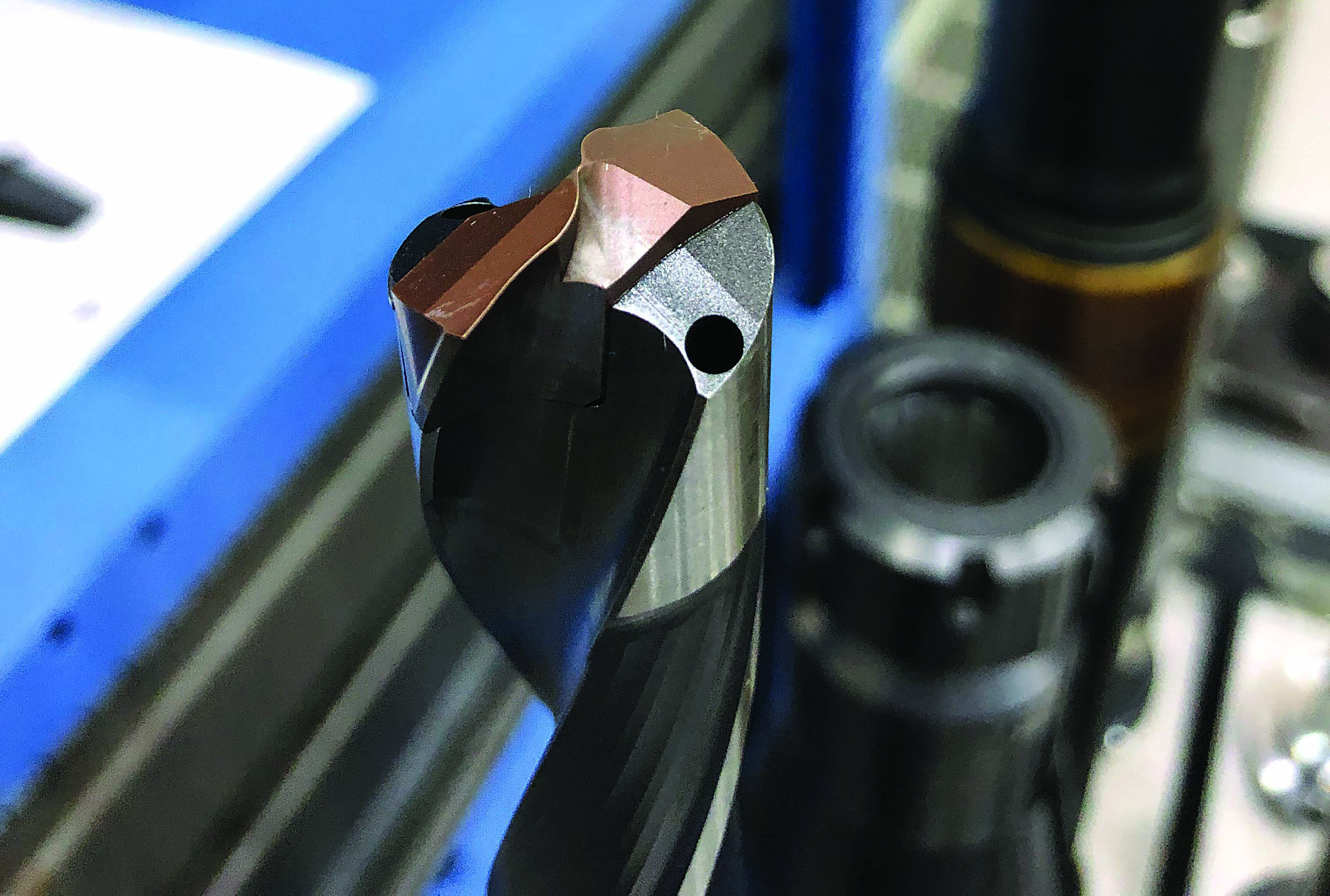
Replaceable carbide tips are molded so they conform to the shape of the drill body. Image courtesy of C. Tate
Drilling as most people know it dates to Stephen Morse’s invention of the twist drill, which was patented in 1863. Although drills had been manufactured for centuries, his twist drill design is the most familiar and the basis for many modern drilling tools. This was a major change. Now, a person could drill vertically and still evacuate chips without re-cutting them.
The twist drill is easily recognized by the distinctive helical flutes, or grooves, that run most of its length. Helical flutes pull chips from the hole and allow cutting fluids to access the work zone. The name originated from the manufacturing process developed by Morse whereby the round drill blanks were twisted after the flutes had been milled.
Modern twist drills are usually made from HSS, but cobalt-alloy, solid-carbide and carbide-tipped twist drills are common. Twist drills are available in countless sizes, lengths, shank types and point angles depending on whether the workpiece material generates long or short chips. This variety makes the twist drill the go-to drill in most circumstances.
Index or Replace
Indexable carbide inserts dramatically changed cutting tools in the mid-20th century by ushering in new tool designs and boosting efficiency in all types of machining operations, including drilling.
Indexable carbide-insert drills have become common cutting tools, as they offer several advantages. Indexable drills have penetration rates that are four to five times greater than HSS drills, resulting in faster cycle times. Carbide inserts also extend tool life compared with HSS tools, especially when cutting difficult-to-machine materials.
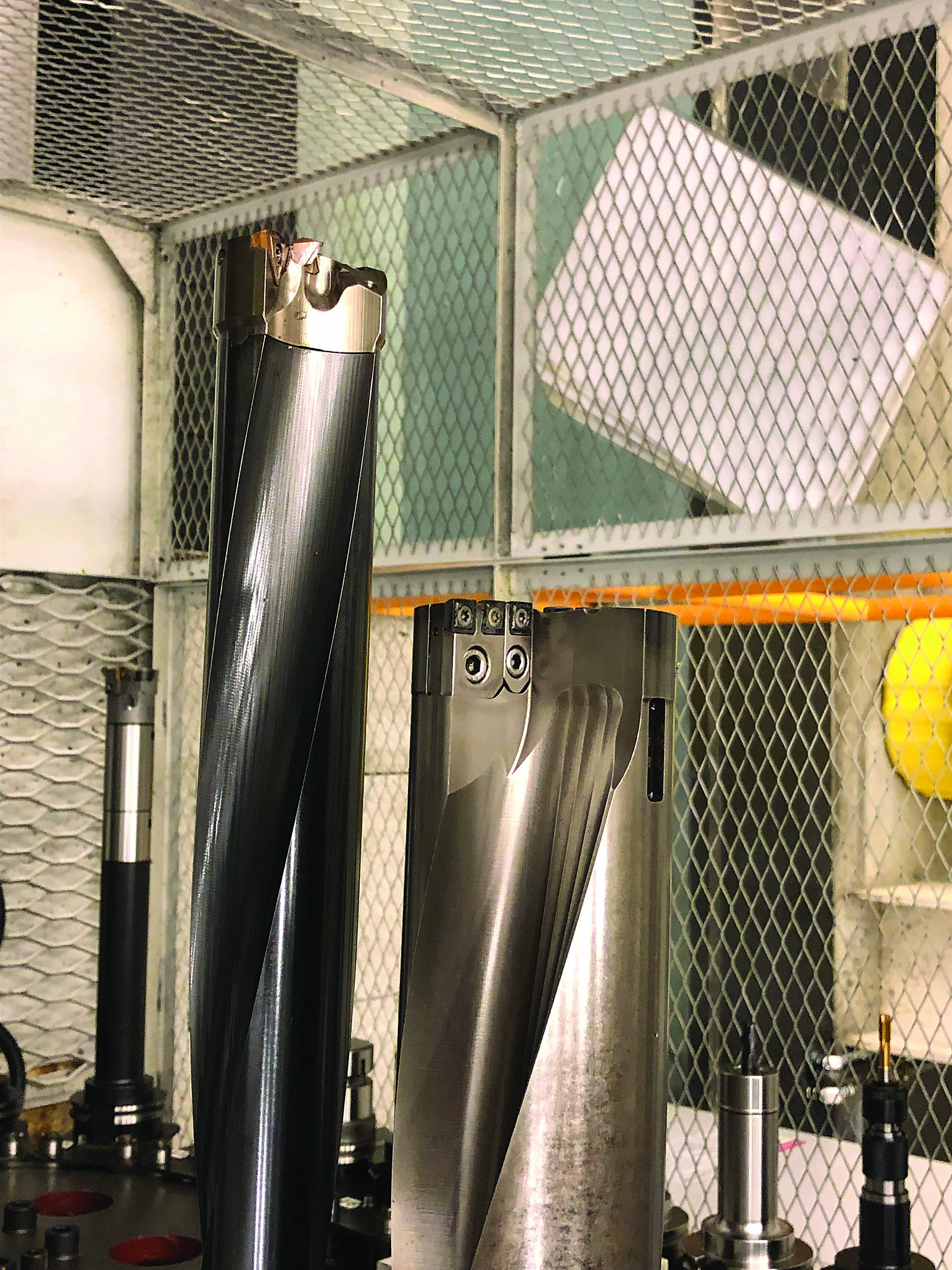
Indexable carbide inserts offer long life, high performance and easy edge renewal. Image courtesy of C. Tate
Review the print ads from this magazine to continue
This quick advertiser review unlocks the rest of the article and keeps the full-screen reader focused on the ads instead of the page chrome.
Advertisers included in this article experience
Print placements connected to this article
Xactedm
Strausak
A WHOLE NEW BALLGAME Xact Wire EDM Corporation has a machine that is Wire EDM Corporation ideally suited for EDM small hole drilling in carbide. The use of an oil based coolant provides better edge control, surface finish and machining speed. It compliments our numerous other HSSH machines that specialize in all other conductive materials
Strausak A WHOLE NEW BALLGAME Xact Wire EDM Corporation has a machine that is Wire EDM Corporation ideally suited for EDM small hole drilling in carbide. The use of an oil based coolant provides better edge control, surface finish and machining speed. It compliments our numerous other HSSH machines that specialize in all other conductive materials. • Electrode sizes from .010-(.25mm) to .118-(3.0 mm) • Test samples upon request
Visit Xactedm View this placement in the issue recordAgathon
Looking for an economical insert grinding solution ?
The Leo Peri, a high-precision 4-axis grinding center for grinding the periphery of your indexable inserts. Your Benefits: ● Grinding of carbide, ceramics, cermet, CBN and PCD ● Small footprint ● Short cycles, high productivity ● In-process wheel dressing standard ● Auto-loading of up to 6 trays ● Unmatched reliability.
Looking for an economical insert grinding solution ? The Leo Peri, a high-precision 4-axis grinding center for grinding the periphery of your indexable inserts. Your Benefits: ● Grinding of carbide, ceramics, cermet, CBN and PCD ● Small footprint ● Short cycles, high productivity ● In-process wheel dressing standard
Visit Agathon View this placement in the issue recordPrint ads from this magazine
A WHOLE NEW BALLGAME Xact Wire EDM Corporation has a machine that is Wire EDM Corporation ideally suited for EDM small hole drilling in carbide. The use of an oil based coolant provides better edge control, surface finish and machining speed. It compliments our numerous other HSSH machines that specialize in all other conductive materials
Strausak A WHOLE NEW BALLGAME Xact Wire EDM Corporation has a machine that is Wire EDM Corporation ideally suited for EDM small hole drilling in carbide. The use of an oil based coolant provides better edge control, surface finish and machining speed. It compliments our numerous other HSSH machines that specialize in all other conductive materials. • Electrode sizes from .010-(.25mm) to .118-(3.0 mm) • Test samples upon request
Continue reading
September 2019
Improved tool life and the ability to index, or turn, an insert without removing the cutter from the machine reduce the costs associated with cutting edge renewal. Indexable drills also allow end users to start holes on irregular surfaces where other types of tools would have difficulty starting. Unlike large HSS drills, indexable drills require pilot holes.
As indexable drills gained popularity, tool manufacturers began to expand the technology by developing drills with replaceable carbide tips. Replaceable-tip drills are similar to indexable-insert drills and provide many of the same benefits, such as an increased penetration rate, long tool life, low maintenance requirements and reduced inventory costs.
The major distinction is in their design. Instead of holding multiple carbide inserts in pockets on a steel body, replaceable-tip drills accept a single carbide tip on the end of a steel body and resemble the trusty twist drill. Applying a replaceable-tip drill improves hole size and finish compared with an indexable drill.
Manufacturing small multiple-insert indexable drills is difficult because they are fragile and there is a limit to how tiny they can be. There was a time when small indexable drills were not available. Shops were forced to buy more expensive carbide drills, accept the limitations of HSS drills or employ extra machining operations when the needed size of an indexable drill was not available. Replaceable-tip drills eliminated this gap and provided the benefits of indexable insert drills in smaller diameters.
Price Point
Cost is always a factor when purchasing cutting tools, and acquiring indexable drills along with necessary hardware can be expensive. When production volume is low, replaceable-tip drills, indexable drills and some HSS twist drills may not be the most economical choices. Spade drills are the ideal solution when producing a low volume of holes larger than ½” in diameter.
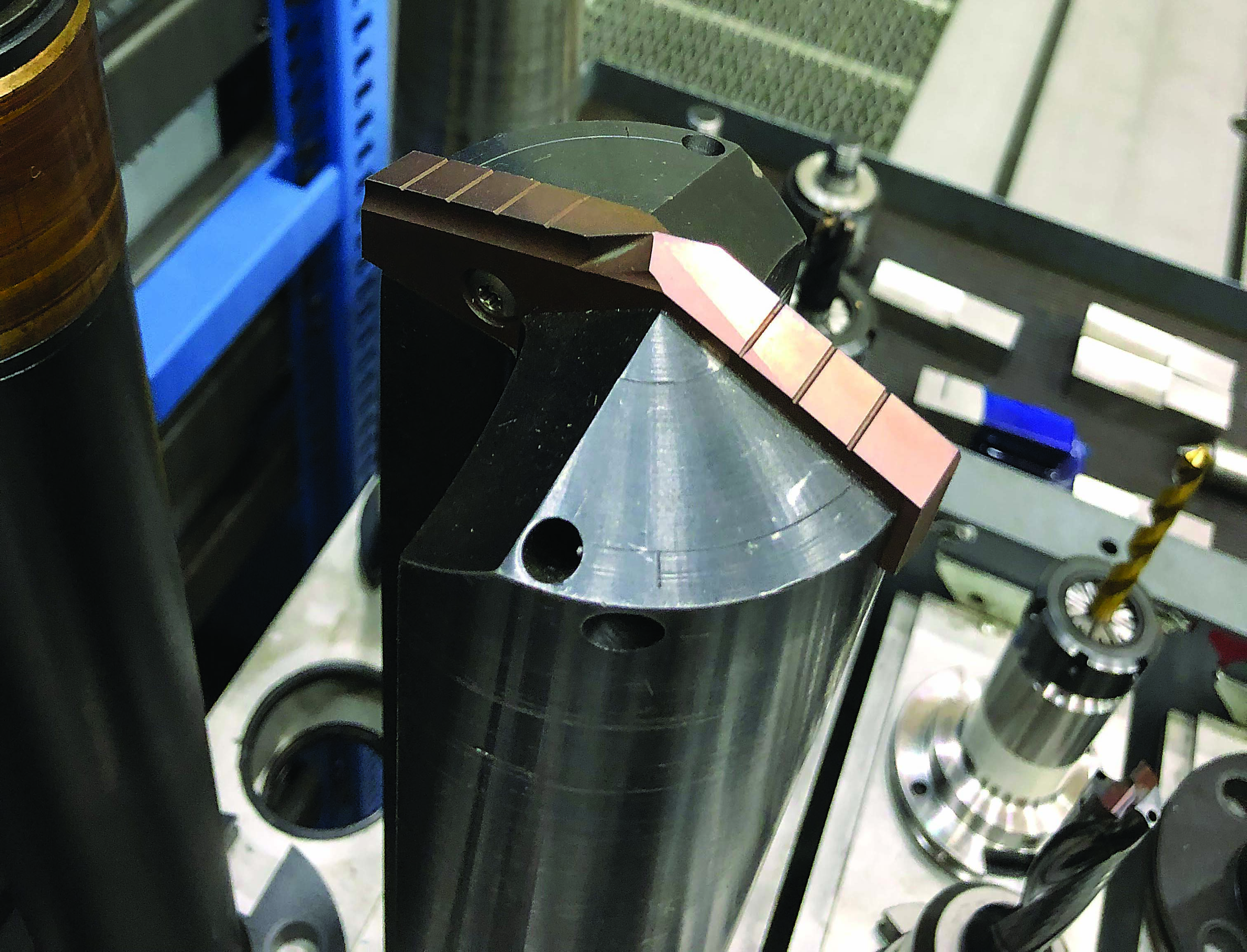
The flat configuration and straight flutes of a spade drill reduce manufacturing costs. Image courtesy of C. Tate
Spade drills, which resemble drills that existed before the original twist drill, are similar to replaceable-tip drills, as they have a steel body and accept HSS or carbide drill points. However, spade drills have a flat point made with ground cutting edges while replaceable-tip carbide drills have a more complex shape that shares the same form as the fluted drill body.
Spade drill bodies accept a range of drill points, allowing one body to drill several different diameters. In addition, they are offered in a large selection of body lengths often not available in other drill styles.
I frequently turn to spade drills first if I need to make only a small number of large-diameter holes, as they are cost-effective in a high-mix, low-volume environment like at our shop. Spade drills also are forgiving and work well in old manual machines, as well as in million-dollar machining centers. This capability makes them a safe choice when producing holes in expensive parts.
While there are other drill types available, twist, indexable, replaceable-tip and spade drills are the most common. In today’s shop, most machine work can be performed with one of these styles.
Glossary terms in this article
Related


Subscribers can use MFGAxis notes, saves and discussion tools with their innoNET account.


