

Factors to consider before bringing abrasive waterjetting in-house
Before bringing abrasive waterjetting in-house, shops should know it is a deceptively simple process that demands a great deal of thought, effort and planning to ensure a reasonably quick return on investment and increase in operational productivity.
When considering bringing an outsourced process or service in-house, the primary concerns involve whether the amount of work justifies the capital investment and the associated operating costs. Other factors include maintenance, necessary peripheral devices, specialized training and the configuration of the available workspace.
Taking these factors into account is especially important when contemplating bringing abrasive waterjet machining in-house. Waterjetting is a deceptively simple process that demands a great deal of thought, effort and planning to ensure a reasonably quick return on investment and increase in operational productivity.
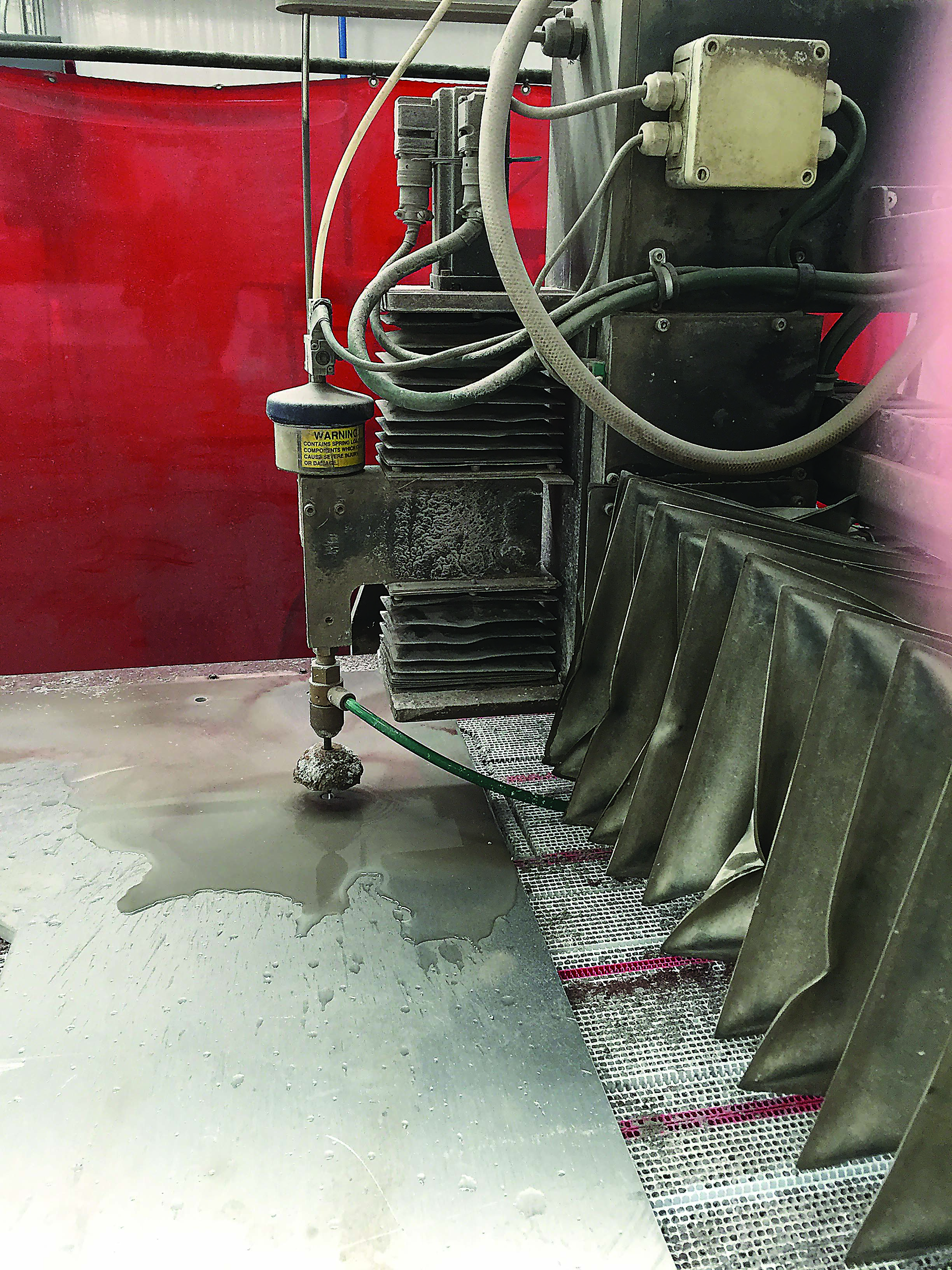
The Jet-Master 510 at Fitz-Thors Engineering is used primarily in-house to cut parts for the specialty equipment it builds. Abrasive waterjet machining can be a dirty job, so this machine has been outfitted with a special cup on the cutting head to minimize overspray. Image courtesy of Fitz-Thors Engineering.
Waterjet professionals can help guide machine shop owners who are considering whether to bring the process in-house or continue to outsource it.
Cut Parts, Not Corners
Jim Draper, president of Rocky Mountain Waterjet and Laser LLC, Greeley, Colo., has had a front-row seat from which to watch the growth of his clients in the automotive, aerospace, medical and defense markets. As these companies expanded, some brought their waterjet cutting in-house.
Many of them, Draper said, indicated later that they wish they’d stayed with RMWL. “There are a lot of things people don’t take into consideration when they decide to handle waterjet cutting themselves,” he said.
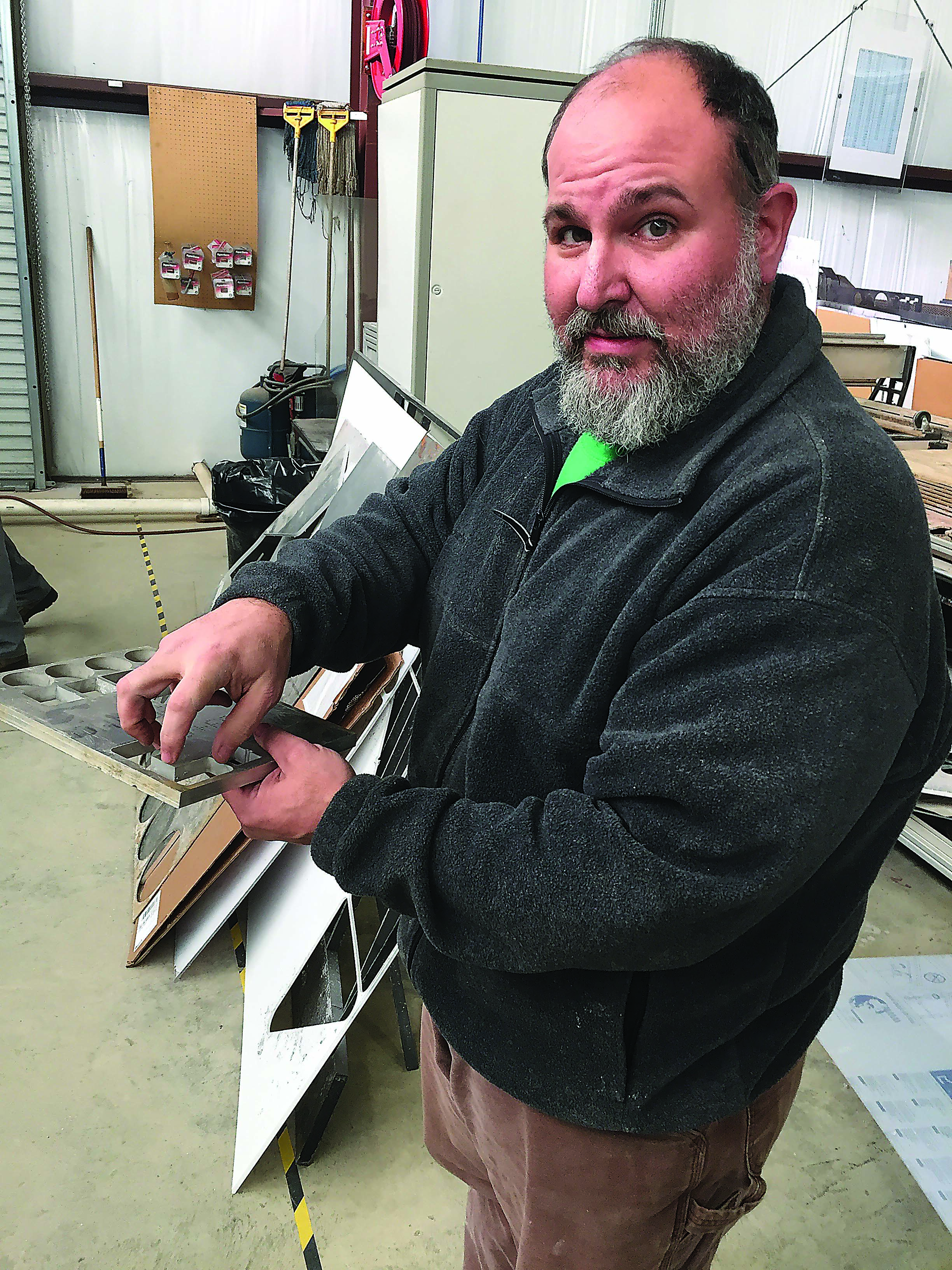
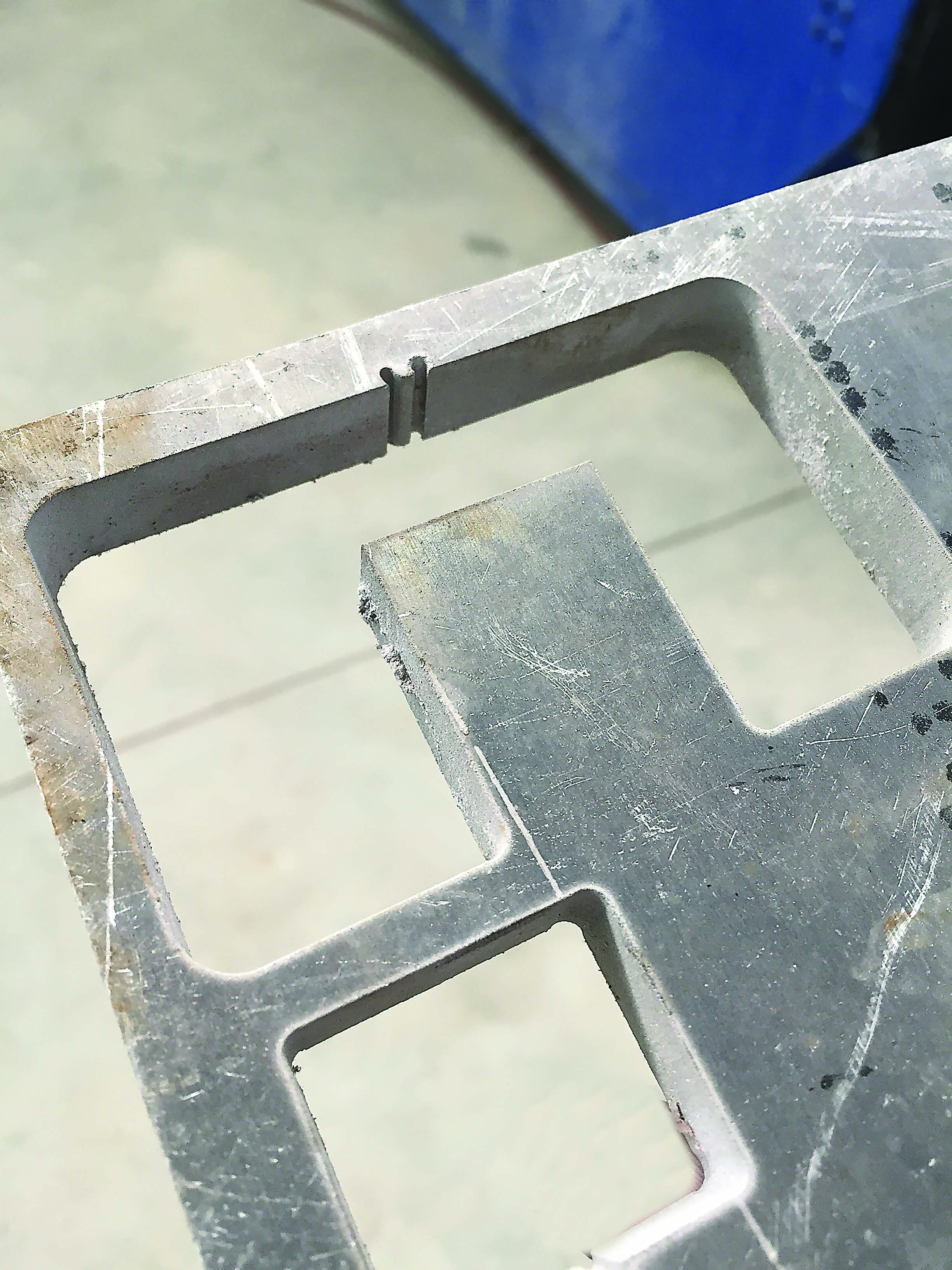
T.J. Johnson,engineering manager of the manufacturing division at Fitz-Thors Engineering, holdsa sample workpiece to point out entry and exit points for an interior part. Image courtesy of Fitz-Thors Engineering.
Among them are:
- Dust and overspray. Many first-time waterjet users aren’t aware of how messy the operation can be. It generates dust and often douses the surrounding area with overspray. “I’ve seen people buy a waterjet and install it in the same area as their CNC machines, which can be a mistake,” Draper said. Cross-contamination must be considered, and sometimes waterjets need enclosures equipped with fans.
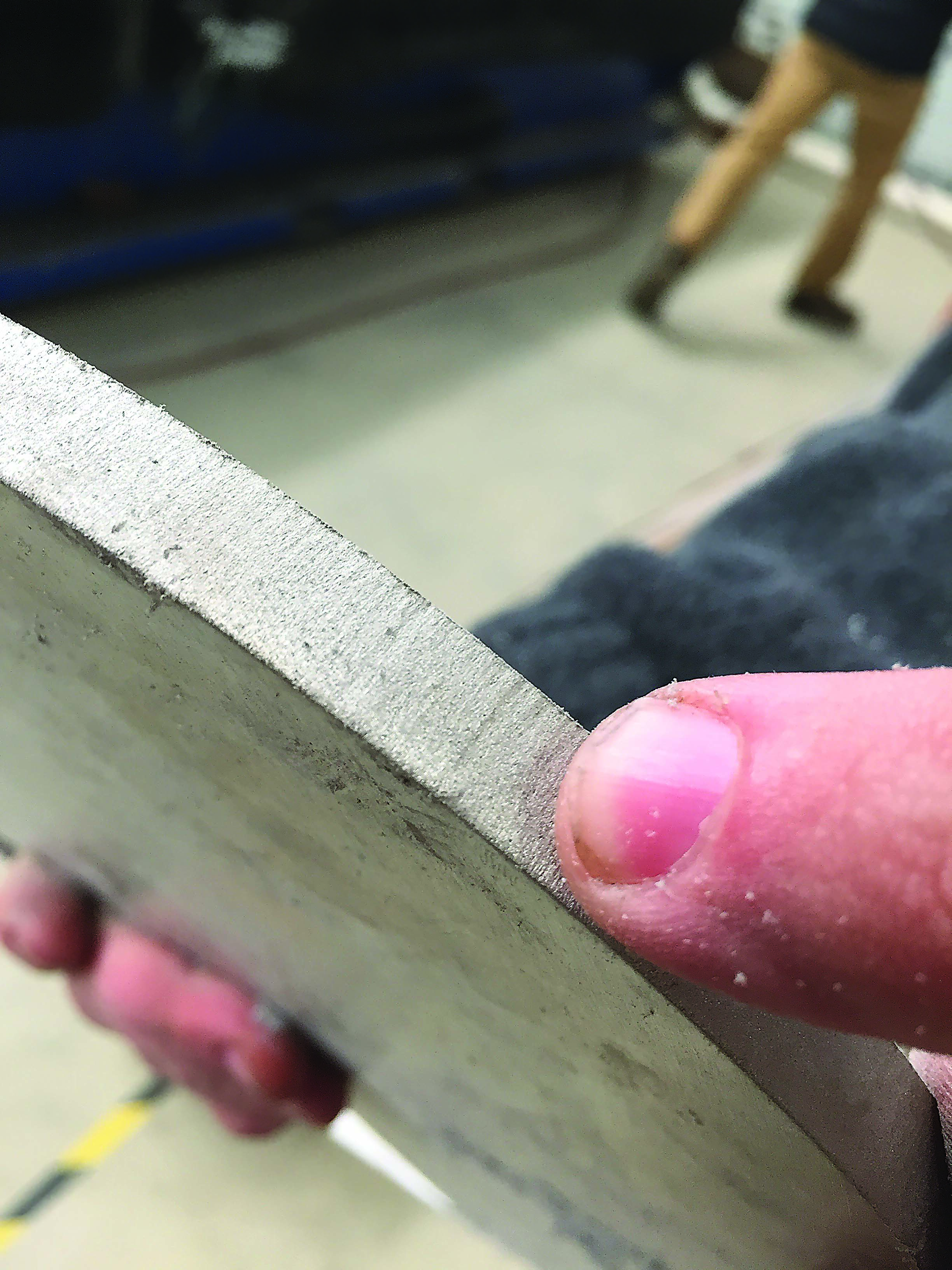
T.J. Johnson points to ridges on a part that result from spray moving quickly through a cut, which, depending on the part’s intended use, could cause problems. Image courtesy of Fitz-Thors Engineering.
- Water quality/temperature. The quality of municipal water, especially the particulates it can contain, varies a great deal from city to city. Any material suspended in the water can damage the jewel in the spray nozzle. The concentrator found in the nozzle body can cost from $80 to $800. Temperature is also important. Overly warm water can deteriorate seals in the waterjet mechanism and halt production. RMWL filters its water and runs the water through chillers to maintain an ideal temperature—one that’s no higher than 45° F (7° C).
- Operator training. It would be a mistake to think that other machinist skills are readily transferable to waterjetting. Most waterjet builders include customer training in the purchase price; the most reputable remain at the leading edge by offering ongoing operator training.
- Material storage and handling. Keep in mind that waterjets generally cut large sheets of material. This calls for a different approach to storage and handling than metal billets or bar stock. End users must develop a convenient means of separating and storing raw materials, as well as establishing best practices for transporting these large, often heavy sheets from storage to the waterjet machine.
- Periodic cleaning of chips and remnants. Waterjet machining doesn’t generate mass quantities of chips or other debris, as is the case with milling, turning and most other machining operations. However, it’s important to clear cutting remnants from the waterjet machine’s mechanisms on a regular basis to ensure smooth operation and reduce equipment wear.
- Abrasives. When abrasive waterjetting, consideration must be given to the abrasive used. In addition to purchasing abrasives, spent abrasive must be handled and processed, if it is to be reused. The most common abrasive for AWJ is garnet, which isn’t inherently hazardous.
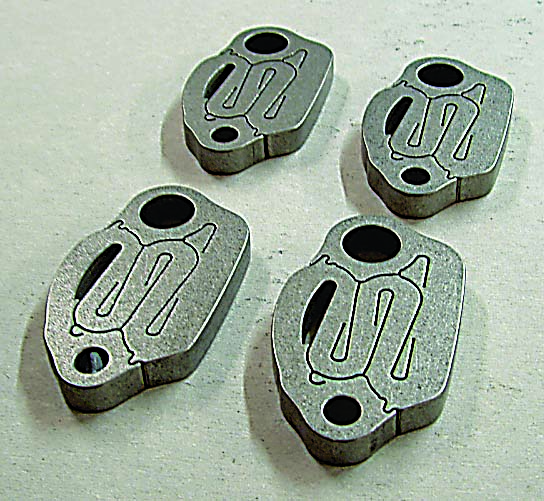
A stainless steel safety device with various features cut by waterjet, such as the indentations that allow it to give under pressure, decreasing impact force. Image courtesy of Rocky Mountain Waterjet and Laser.
Other considerations include convenient access to a water supply for the pump and having a system for draining wastewater nearby.
Astute owners of manufacturing businesses understand the value of expanding their capabilities and adding services that customers need. Keeping machines running as long as possible each week helps develop a healthy revenue stream.
If the workload justifies it, bringing waterjetting—or any outsourced service—in-house can be the right decision. But it’s important to consider the costs that will surface beyond the initial investment and the benefits a subcontractor or specialist provides.
Benefits of Waterjet Cutting
According to Jim Draper at Rocky Mountain Waterjet and Laser, the advantages of having parts cut by waterjet include:
Review the print ads from this magazine to continue
This quick advertiser review unlocks the rest of the article and keeps the full-screen reader focused on the ads instead of the page chrome.
Advertisers included in this article experience
Print placements connected to this article
Helfertool
Flat,
circular or hard-to- find cutting tools are immediately available from Helfer Tool Company. Whether you need small, precision carbide or high speed Swiss tools, or larger flat or circular tools, they’re standards at Helfer Tool. Plus carbide test pins, carbide cold- heading punches and solid carbide drill blanks are on the shelf, too
Flat, circular or hard-to- find cutting tools are immediately available from Helfer Tool Company. Whether you need small, precision carbide or high speed Swiss tools, or larger flat or circular tools, they’re
Visit Helfertool View this placement in the issue recordPrint ads from this magazine
circular or hard-to- find cutting tools are immediately available from Helfer Tool Company. Whether you need small, precision carbide or high speed Swiss tools, or larger flat or circular tools, they’re standards at Helfer Tool. Plus carbide test pins, carbide cold- heading punches and solid carbide drill blanks are on the shelf, too
Flat, circular or hard-to- find cutting tools are immediately available from Helfer Tool Company. Whether you need small, precision carbide or high speed Swiss tools, or larger flat or circular tools, they’re
Continue reading
March 2018
- Elimination of tool costs for small-volume and prototype work.
- Minimal kerf width of 0.010″ to 0.030″ (0.254mm to 0.762mm), which allows for tight tolerances and meeting capabilities for maximum material yield.
- No thermal distortion or degradation of materials.
- No noxious gases.
- Part accuracy of ±0.005″ (0.127mm).
Draper said RMWL operates OMAX 80160 and 55100 waterjet machines, which feature Tilt-A-Jet, a programmable Z-axis, and regular, macro and water-only nozzles.
Materials that can be cut by a waterjet machine include acrylic, aluminum, brass, carbon fiber, cast iron, copper, glass, iron plate, stainless steel, stone and titanium.
As material thickness increases, process speed and smoothness of cut decrease. Despite the challenges posed by thick materials, Draper said RMWL has cut aluminum parts up to 12″ (304.8mm) thick.
In addition to waterjets, RMWL operates two lasers: a 400w Kern and a 4,000w Ermaksan fiber-laser machine, which is suitable for cutting thin materials and etching. Advantages of having parts cut by laser include smooth edges; quick setup, making small-volume and prototype work practical; a kerf width two times the beam diameter (when cutting plastics); and part accuracy of ±0.003″ (0.076mm).
Draper has invested significantly in laser operations, to the extent of having a laser custom built to make parts for a longtime customer.
“It took more than a year to build the machine, which cuts parts as long as 20′ (6.1m), but it was definitely worth it in terms of the results we’re able to deliver to our customer,” he said.
—R. Willcutt
Shops Stress Importance of Building Expertise
A good sign of a company’s waterjet cutting expertise is when the process is harnessed for internal and external applications. Such is the case at Fitz-Thors Engineering Inc., a Bessemer, Ala., design/build firm that specializes in engineering projects and offers manufacturing services, such as automation integration, product development and prototyping.
The company waterjets parts for automotive and steel industry companies while also acting as a job shop that operates CNC machines for milling, turning and drilling. About 30 percent of its job shop work is waterjetting, according to T.J. Johnson, engineering manager of the manufacturing division.
“We’re constantly learning and improving our waterjet techniques while cutting parts for our custom design projects. We then apply those techniques to our job shop work,” he said. “The sheer variety of the parts we’re required to waterjet to very specific dimensions and specifications really adds to our skills.”
As an engineering firm, Fitz-Thors Engineering can also provide design assistance to customers at whatever level they require.
Another waterjet shop, Big Blue Saw, Atlanta, also stresses the importance of providing customers with more than just parts.
“Our customers appreciate the fact that we act as a consultant at times,” said Simon Arthur, the company’s founder and owner.
Big Blue suggests the best “processes, materials and machining techniques to meet [customers’] part specifications and delivery requirements; we also offer them at a reasonable cost,” Arthur said.
—R. Willcutt
Glossary terms in this article
Related
 MFGAxis Discussion
Be part of the shop-floor conversation
Like, save, or comment on this CTE story.
MFGAxis Discussion
Be part of the shop-floor conversation
Like, save, or comment on this CTE story.


MFGAxis Discussion