

Process creates steel that’s a-peeling
If you've ever watched a bar of red-hot metal emerge from the furnace at a rolling mill, you might wonder how that scaly chunk of material became the smooth, shiny and accurate length of steel you just loaded into a lathe's bar feeder. Machinists know it as cold-finished bar stock.
If you’ve ever watched a bar of red-hot metal emerge from the furnace at a rolling mill, you might wonder how that scaly chunk of material became the smooth, shiny and accurate length of steel you just loaded into a lathe’s bar feeder. Machinists know it as cold-finished bar stock. For those who have turned a piece of ugly, dirty, hot-rolled 1018 or 4140 steel, they’re glad to have it. It got that way thanks to a process known as bar peeling.
Iwan Antonow, executive vice president of toolmaker Saar-Hartmetall USA LLC, Covington, Ky., said bar peeling is a post-rolling mill process. It removes scale, brings the bar to size and greatly improves its surface finish. The process, which works much like an apple peeler, is performed by a doughnut-shaped device equipped with four to six carbide-tipped cutting tools. These spin around and along the cut bar or coil of wire at speeds “substantially faster than is possible with turning,” he said.
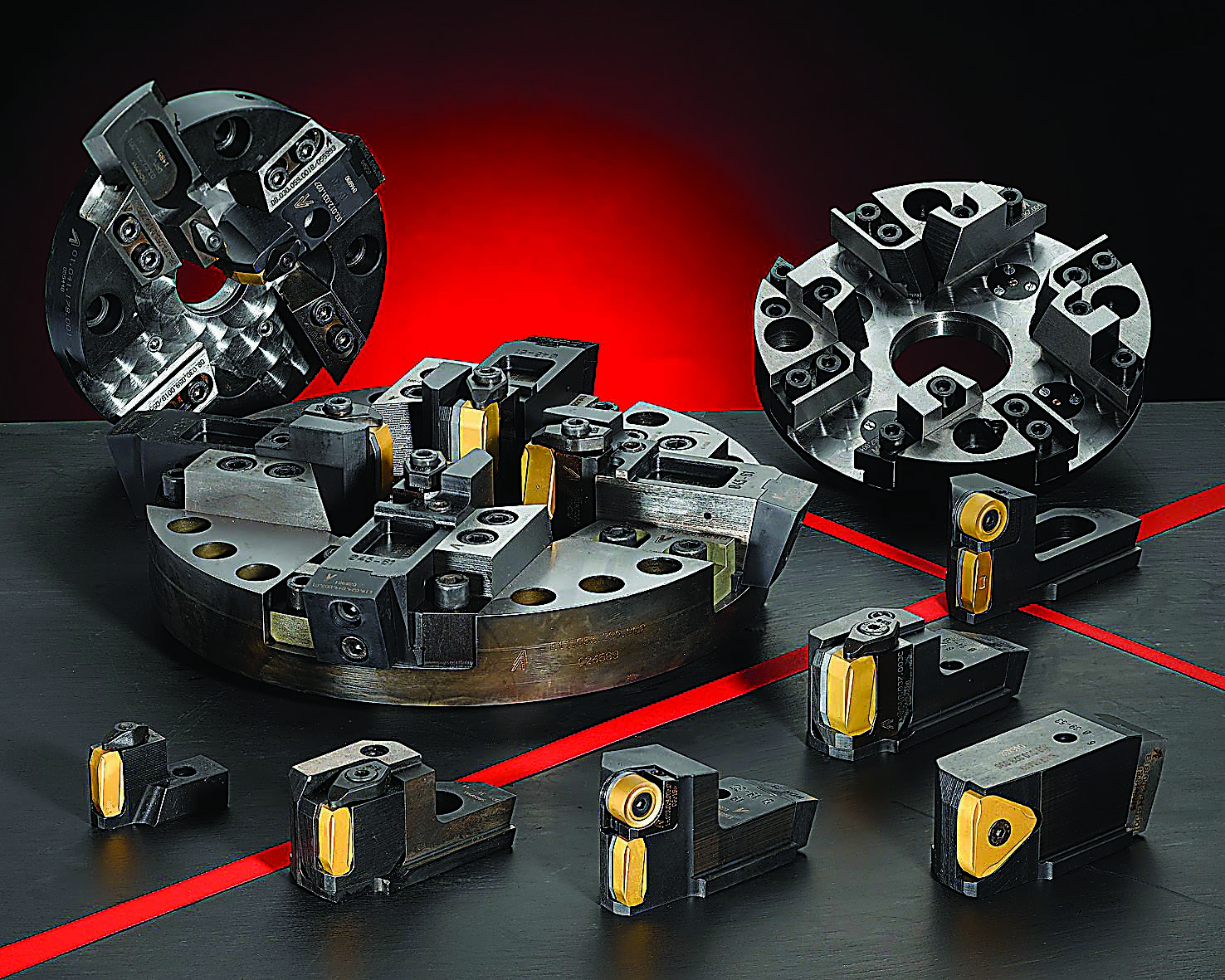
Bar-peeling heads must be carefully adjusted so each insert cuts an equal amount of material as the bar passes. Image courtesy of Saar-Hartmetall USA.
Antonow explained that the speed is determined not so much by the number of cutters but by the material grade, the rpm of the cutter head and how quickly the bar travels through the peeling head. Those values are, in turn, determined by surface-quality requirements, how long the user wants the inserts to last and the amount of material being peeled off.
“Sometimes you shave the surface just enough to clean it up,” Antonow said, “and sometimes you remove substantial amounts of material because you want to bring it to a different diameter. Every application is different, and that’s what ultimately determines the speed. Regardless, it’s always faster than turning.”
Review the print ads from this magazine to continue
This quick advertiser review unlocks the rest of the article and keeps the full-screen reader focused on the ads instead of the page chrome.
Advertisers included in this article experience
Print placements connected to this article
Us Sales Network Now Forming
US STOCKED
STANDARD TOOLING COMING OCTOBER 2017 REQUEST YOUR FREE TEST SAMPLES TODAY CBN Inserts PCD ROUND TOOLS PCD INSERTS Solid, Brazed, Pitted, Stock standards in Brazed, Chipbreakers, Chipbreakers, Coatings common sizes Geometries, Edge Preps WHY "PICK 2" WHEN YOU CAN HAVE ALL 3? ISO 9001, ISO 14001 & BS OHSAS 18001 Funik Ultrahard Materials (US), Inc
US SALES NETWORK NOW FORMING US STOCKED STANDARD TOOLING COMING OCTOBER 2017 REQUEST YOUR FREE TEST SAMPLES TODAY CBN Inserts PCD ROUND TOOLS PCD INSERTS Solid, Brazed, Pitted, Stock standards in Brazed, Chipbreakers, Chipbreakers, Coatings common sizes Geometries, Edge Preps WHY "PICK 2" WHEN YOU CAN HAVE ALL 3? ISO 9001, ISO 14001 & BS OHSAS 18001
Visit Us Sales Network Now Forming View this placement in the issue recordPrint ads from this magazine
STANDARD TOOLING COMING OCTOBER 2017 REQUEST YOUR FREE TEST SAMPLES TODAY CBN Inserts PCD ROUND TOOLS PCD INSERTS Solid, Brazed, Pitted, Stock standards in Brazed, Chipbreakers, Chipbreakers, Coatings common sizes Geometries, Edge Preps WHY "PICK 2" WHEN YOU CAN HAVE ALL 3? ISO 9001, ISO 14001 & BS OHSAS 18001 Funik Ultrahard Materials (US), Inc
US SALES NETWORK NOW FORMING US STOCKED STANDARD TOOLING COMING OCTOBER 2017 REQUEST YOUR FREE TEST SAMPLES TODAY CBN Inserts PCD ROUND TOOLS PCD INSERTS Solid, Brazed, Pitted, Stock standards in Brazed, Chipbreakers, Chipbreakers, Coatings common sizes Geometries, Edge Preps WHY "PICK 2" WHEN YOU CAN HAVE ALL 3? ISO 9001, ISO 14001 & BS OHSAS 18001
Continue reading
August 2017
The speed is augmented by the fact that bar peeling is often a continuous process. So-called coil-to-coil processing unwinds bar stock from one coil, feeds it through the bar peeler and winds it onto a coil at the opposite end of the processing line. It is used on wire from 5mm (0.197″) up to about 12mm (0.472″), which—depending on the material—is the upper limit for coil stock.
According to Antonow, wire smaller than this is usually fed through extrusion dies, while larger stock (bars up to 18″, or 457.2mm, in diameter are possible with bar peeling) is cut into standard 12′ or 20′ (3.66m or 6.10m) lengths before processing.
Saar-Hartmetall supplies the peeling heads, cartridges and inserts to bar-peeling machine builders as original equipment and adapts its tooling to other brands of peeling machines. The company also provides aftermarket tools to end users.
Bar-peeling machines are often part of a “bright bar” line at a steel mill. Together with supporting processes such as straightening, grinding and burnishing, these machines convert hot-rolled steel, stainless steel and aerospace-grade alloy “black bar” into shiny and smooth-peeled bars.
Glossary terms in this article
Related




Subscribers can use MFGAxis notes, saves and discussion tools with their innoNET account.


