

Auto Clean: Turning Performance
Courtesy of acpIn the face of increasing cost pressure for automotive suppliers, functional surface cleaning, such as with the CO2 snow jet process, provides a viable approach to saving time and money.Equipment and media options for cleaning automotive parts.Component cleanliness is a quality criterion in the automotive industry.
Courtesy of acp
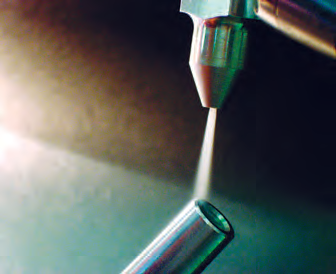
In the face of increasing cost pressure for automotive suppliers, functional surface cleaning, such as with the CO2 snow jet process, provides a viable approach to saving time and money.
Equipment and media options for cleaning automotive parts.
Component cleanliness is a quality criterion in the automotive industry. Requirements are becoming stricter with each vehicle generation, which increases cost pressures on auto parts manufacturers. Therefore, they must optimize parts cleaning.
With the global emphasis on reducing CO2 emissions and fuel consumption, there is need for smaller engines that run more efficiently with high power output. These engines require tight-tolerance components capable of withstanding extreme loads.
However, precision components have an increased sensitivity to contamination. Even particles as small as 100µm can cause operating problems or component failures. This is why the automotive industry has started defining particle-size distributions for certain parts in functional modules, such as the power train, steering system and brakes. For example, the requirement might state there can be no more than 500 particles on the part ranging in size from 200µm to 400µm.
To fulfill and document these requirements, large investments in industrial parts cleaning equipment are sometimes required. For example, the cost for cleaning technology that meets a specification of “no particles larger than 1,000µm” is two to three times higher than for systems designed to meet less stringent standards. This article focuses on cleaning equipment and media available to achieve new, more stringent standards.
Minimizing Contamination
One approach to parts cleaning optimization is component design, because workpiece geometry; the individual steps of the manufacturing process, such as turning, milling and assembly; and cleanability are determined during the design stage. The latter consideration usually plays no role in the design process, but it can cause major problems during the production process: Some parts have internal corners, edges or holes from which manufacturers can only remove particles and processing residues with considerable effort—or not at all.
Because machining removes material in the form of chips, contamination can never be entirely avoided. The quality of coolant and other metalworking fluids influences the quantity of chips, burrs and particles on workpieces. Suitable filtration matched to particle size prevents previously removed contaminants from returning to the component. To assure continuous particle removal, the cleaning equipment must employ a gentle but continuous bath motion.
In addition, a special rinsing step while the tool is in the machining center—perhaps with more finely filtered fluid from a separate tank—can reduce the level of chip contamination. At first glance, this represents an additional expense, but it typically pays for itself through shorter cleaning times, longer bath service life and higher component quality. Removing residues after machining by means of mechanical precleaning—such as vibrating, shaking, spinning or vacuum blasting part surfaces—also minimizes contamination and reduces the load on the cleaning agent.
For applications requiring multistage machining processes, intermediate cleaning steps prevent contaminants from accumulating, mixing or drying on the workpieces.
System Design
Modern cleaning systems can fulfill high demands for component cleanliness, assuming the cleaning process has been matched to the contaminants to be removed, part geometry, workpiece material and the cleanliness specification.
The particle limit value of “smaller than 1,000µm” for engine and gearbox components, for example, can only be achieved with a cleaning process designed specifically for the respective part. State-of-the-art cleaning systems use a multistage procedure to achieve this.
Courtesy of LPW Reinigungs Systeme
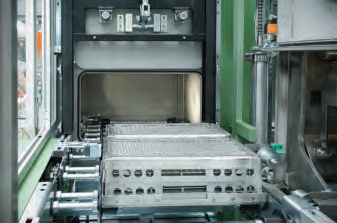
Modular cleaning systems, which can be integrated into a parts production line, offer flexibility. In this example, diesel injection system parts are transferred from a cleaning chamber to a vacuum dryer.
The workpieces are mechanically cleaned, such as via spinning or vacuum blasting, during the first step, which removes some of the metalworking fluid. The second step involves immersion flooding, where water is injected at 145 to 220 psi into the cleaning chamber below the surface of the bath. The resulting whirlpool rinses chips and contamination out of hollow spaces, such as threaded blind-holes. Waterjets aimed at openings in the component and lances advanced into holes quickly optimize results. Lances allow users to inject cleaning fluid at a high pressure into drilled holes and remove contaminants while also deburring. A drying process then follows rinsing.
The growing number of engine and gearbox variations, as well as ever-shorter product life cycles, requires significant cleaning system flexibility—even for individual part cleaning operations. This can be accomplished with robotic cleaning systems, which are integrated into production lines. Thanks to simple reprogramming options, these systems assure levels of flexibility comparable to those offered by machining centers.
Review the print ads from this magazine to continue
This quick advertiser review unlocks the rest of the article and keeps the full-screen reader focused on the ads instead of the page chrome.
Advertisers included in this article experience
Print placements connected to this article
further than Toolmex and Palbit
Perfect High Performance
High-performance cutting tools for; Automotive, Aerospace, Die-mold, Medical, or General metal working – look no We hold our own against anyone when it comes to performance and experience 1075 Worcester Street, Natick, MA 01752 IS #78 Scan and Explore © 2011 Toolmex Corporation, Inc. EXCLUSIVELY DISTRIBUTED IN NORTH AMERICA BY TOOLMEX CORPORATION.
Perfect High Performance High-performance cutting tools for; Automotive, Aerospace, Die-mold, Medical, or General metal working – look no further than Toolmex and Palbit We hold our own against anyone when it comes to performance and experience +1-508-653-8897 • 800-992-4766 1075 Worcester Street, Natick, MA 01752 IS #78 www.toolmex.com
Visit further than Toolmex and Palbit View this placement in the issue recordPrint ads from this magazine
High-performance cutting tools for; Automotive, Aerospace, Die-mold, Medical, or General metal working – look no We hold our own against anyone when it comes to performance and experience 1075 Worcester Street, Natick, MA 01752 IS #78 Scan and Explore © 2011 Toolmex Corporation, Inc. EXCLUSIVELY DISTRIBUTED IN NORTH AMERICA BY TOOLMEX CORPORATION.
Perfect High Performance High-performance cutting tools for; Automotive, Aerospace, Die-mold, Medical, or General metal working – look no further than Toolmex and Palbit We hold our own against anyone when it comes to performance and experience +1-508-653-8897 • 800-992-4766 1075 Worcester Street, Natick, MA 01752 IS #78 www.toolmex.com
Continue reading
June 2011
Large numbers of vehicle parts can be cleaned at the same time in batch processes. Single- and multiple-chamber systems, which can be integrated into the production line, are also available for these batch cleaning tasks.
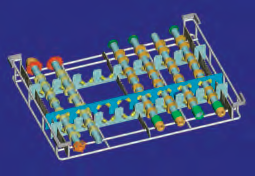
In addition to the specific cleaning process and medium, the cleaning container also greatly influences part cleaning results and costs. There are two primary considerations: Are the parts in the container readily accessible from all sides for the cleaning medium and washing mechanism? And is it possible to position the part within the container such that critical areas can be targeted?
Aqueous or Solvent?
Wet chemical cleaning processes with aqueous media or solvents are generally used in the automotive industry. Aqueous media, available as alkaline, neutral and acidic cleaners, are preferred when large volumes of parts must be cleaned and when fine and micro cleaning are required. Their cleaning effectiveness is based on builders and tensides. Builders are inorganic salts, which increase the pH value of the water, facilitate removal of solid particles and increase the cleaning effectiveness of tensides by means of a sort of synergy effect. Tensides are surface-active substances that change the respective boundary surface characteristics. As surface-active components, tensides are capable of “wedging” themselves between the contamination and the material to be cleaned, dislodging the contamination and dispersing the wash liquid. Continuous monitoring of the bath and bath replacement at regular intervals are necessary to consistently produce good results.
Aqueous media are also used to rinse processing oils from auto body parts prior to zinc phosphating, which is a pretreatment process prior to the coating processes to achieve effective corrosion protection and paint bonding. The industry offers specially developed products to reduce the cost of bath maintenance, which is frequently accomplished with ultrafiltration.
Courtesy of Metallform Wächter
Parts in a cleaning container must be readily accessible on all sides for the cleaning medium and washing mechanism, and targeted treatment of critical areas is possible in an optimized batch process.
Cleaning media, which are matched to the chemical requirements of new, more environmentally compatible alternatives to zinc phosphating, such as ZetaCoat and Bonderite, are also available. These agents remove not only oils from components but oxides as well.
Chlorinated hydrocarbons (CHCs), such as perchloroethylene, trichloroethylene and methylene chloride, are not combustible and effectively degrease and dry metal parts—even ones with complex geometries. Particles the solvent cannot dissolve, such as chips, are removed with the oil because they are no longer able to adhere to the surface. Perchloroethylene has proven to be effective for cleaning safety-relevant workpieces. These include parts used in air bags, brakes and power steering systems. Due to its chemical-physical characteristics, it’s also frequently the solvent of choice for cleaning parts prior to soldering and welding, such as electrical plug contacts, coolers and air-conditioning components.
Nonhalogenated hydrocarbons, such as isoparaffin and modified alcohols, provide good dissolving performance for animal, vegetable and mineral oils and grease, and demonstrate outstanding materials compatibility. They are more environmentally compatible than CHCs.
Functional Surface Cleaning
Cleanliness requirements for a single workpiece can vary greatly. For example, the requirements for functional surfaces like sealing, joining, bonding and laser welding areas are often stringent to guarantee an effective and durable connection is achieved. In such cases, cleaning targeted at specific component surfaces may be advantageous. That’s because it is often considered too costly to conventionally clean with aqueous media or solvents to achieve the same high degree of cleanliness for the entire part that’s specified just for the functional surface.
Courtesy of Hermann Bantleon
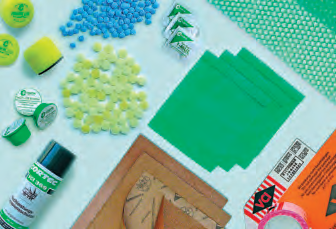
VCI materials, which consist of powders, granules, liquids, impregnated foils, foams or paper, create a gas phase inside a closed package and protect against corrosion.
In the face of increasing cost pressures for automotive suppliers, functional surface cleaning—such as using CO2 snow jet, laser or plasma processes—can save time and money. A further advantage of functional surface cleaning when integrated into the production process is that the cleaned surface is available just-in-time, thus eliminating any need to maintain cleanliness after cleaning and during transport.
As soon as functionally critical parts leave the cleaning system, however, there is a danger of recontamination. To prevent contamination with particles from the environment, it may be necessary to inspect, package and store them in a so-called “clean zone,” and to provide the personnel there with appropriate clothing and gloves.
In the automotive industry, functionally critical cleaned components are transported and stored in appropriate packaging. These frequently consist of so-called “VCI (volatile corrosion inhibitor) foils,” which also offer corrosion protection. Part-specific, reusable, deep-drawn, plastic sheet materials are also used to protect cleaned parts, as are small plastic boxes that usually hold small parts. In addition, these boxes are often lined with foil. To avoid recontamination of the cleaned parts caused by this packaging, they also have to be cleaned at regular intervals. CTE
About the Author: Doris Schulz founded her own public relations consultancy in 1995 and has also worked as a freelance journalist. One of her specialties is surface treatment, especially industrial parts cleaning. She can be reached at +49 71 185 4085 or doris.schulz@pressetextschulz.de.
[Editor’s note: parts2clean, the international trade fair for industrial parts and surface processes, will take place at the Stuttgart (Germany) Exhibition Centre Oct. 25-27, 2011. For more information, visit www.parts2clean.com.]
Glossary terms in this article
Related


Subscribers can use MFGAxis notes, saves and discussion tools with their innoNET account.


