

Broaching the Question: New Versus Traditional Tech?
Neither modern nor traditional broaching is inherently better; the application determines the right process.
It seems universally agreed upon that we are losing skilled laborers faster than we can find their replacements. The ramifications are numerous and complex. The good news is that the machine tool and cutting tool industries have responded with some innovative solutions that can help machine shops mitigate some of the problems caused by the loss of skilled labor.
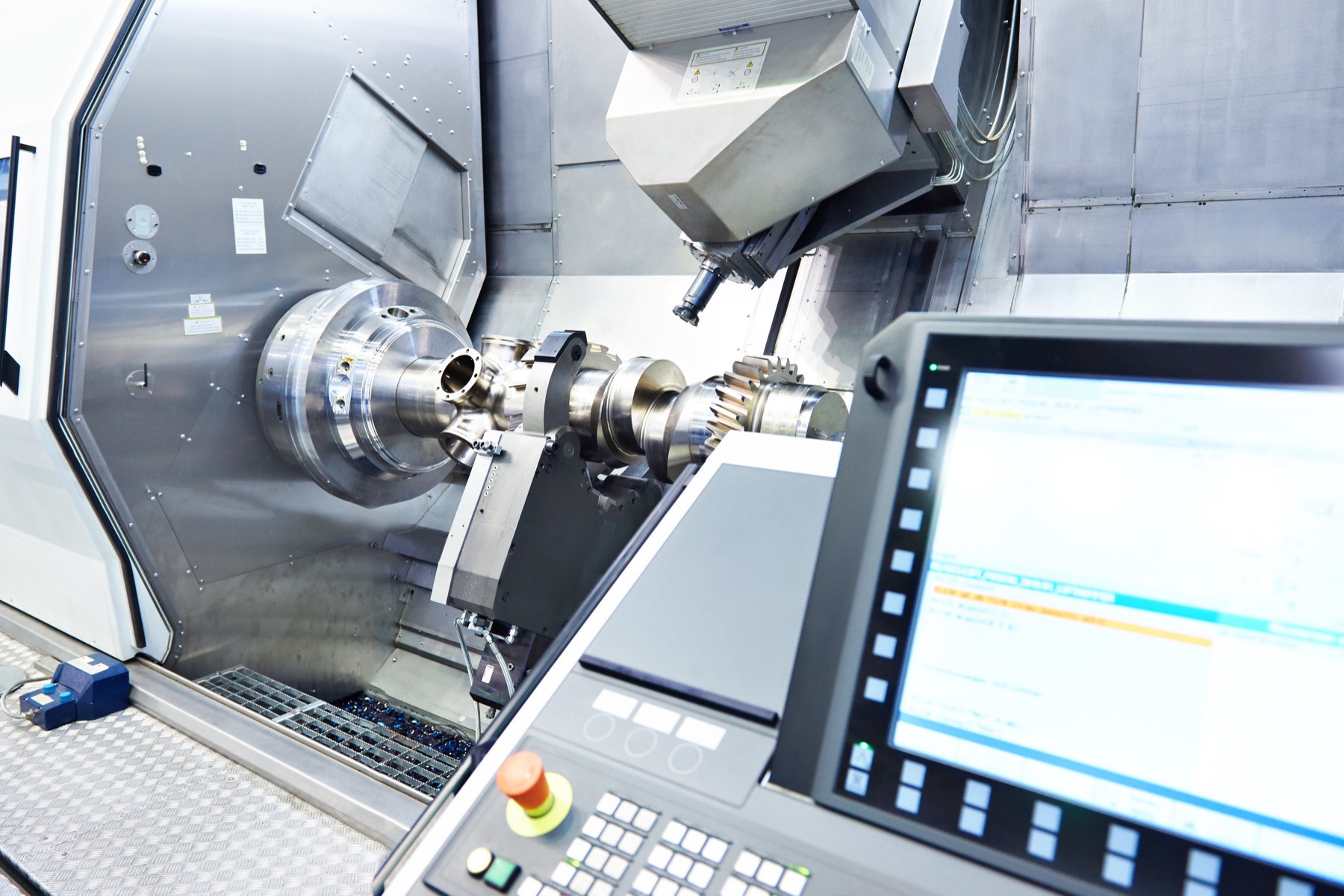
Machine builders routinely provide machines with increased capabilities that address the needs of shops that are dealing with a growing skills gap. Builders are offering non-traditional machine tools and methods that allow programmers and engineers to create part geometries in one machine that would have taken two or three machines in the past.
Broaching is one of the old-school machining operations that machine builders and tooling companies have successfully transitioned to modern CNC machines. Tooling manufacturers are making indexable tools that can be held in the turret or spindle and used to create keyways, splines and other geometry that has been traditionally broached.
These new tools are fascinating to watch and, from this perspective, seem to be capable. Like most things in machining, there are going to be some trade-offs. Transitioning from traditional broaching tools to the newer tools is not a straightforward decision and requires consideration of several factors.
Traditional broaching tools are accurate and repeatable. A traditional broach, no matter the style, either makes a good part or it does not. Once the tool geometry is proven to be good, there is little that can go wrong. I have broached keyways, steering gears and turbine wheels. Whenever we made a bad part with a qualified tool in good condition, it was almost always a result of incoming part condition. Accuracy and repeatability are the primary advantages of broaching geometry with traditional tools.
Traditional broaching tools used in a qualified process are far less likely to be affected by things like runout and indexing errors. Deliver a good part to the broach machine, and it makes a good part without fail. Broaching is one of the most capable processes in manufacturing. Accuracy and repeatability are the primary reasons aerospace and power generation manufacturers use it for turbine wheels. Traditional broaching tools and machines have fewer inputs than these new tools that are used in lathe turrets or machining center spindles.
When using some of the newer tools and techniques, like the broach tools held in a lathe turret, it is easy to see how tool offsets, part runout, and similar settings could cause dimensional issues. A few thousandths off center could keep a gear or pulley from aligning to the keyway on a shaft. A small amount of error in the indexing angle of a spindle axis can throw off internal splines when using the new tools that require the part to be indexed. If the tool is not set square to the machining axis, the broached feature will not be properly aligned, thereby generating improper part geometry.
Cost is the elephant in the room.
Review the print ads from this magazine to continue
This quick advertiser review unlocks the rest of the article and keeps the full-screen reader focused on the ads instead of the page chrome.
Advertisers included in this article experience
Print placements connected to this article
LMT Onsrud Cutter LP
LMT Onsrud Cutter LP print ad
Print ad listed on page 33 of the August 2026 issue.
View this placement in the issue recordSharon Cutwell
Sharon Cutwell print ad
Print ad listed on page 35 of the August 2026 issue.
View this placement in the issue recordContinue reading
August 2026
Traditional broaching tools are expensive. Like all cutting tools, size and complexity can exponentially increase the cost of the tools. Broaching anything more complex than a keyway typically requires a machine to push or pull the broach through the part. Therefore, the initial investment for traditional tools is significantly higher than the newer tools that are held in CNC machines.
The initial investment of traditional broaching tools can often be recouped through improved cycle time and improved throughput. Broaching a feature on a CNC lathe or machining center is going to take longer than a using a traditional tool making it more expensive and consuming more machine time. For simple geometry like a keyway, the differences might be negligible. For something complex like a spline, the difference can be quite large.
Traditional broaching done on a separate machine requires movement of the part. Someone or something has to take it from the lathe or mill to the broach machine. Automating the process becomes more complex and more costly when the part has to be moved across machines. If the process is not automated, then a person has to move the part, and, frankly, that’s what most shops are trying to avoid. Although faster and more repeatable, using traditional tools on a dedicated machine presents challenges that need to be considered.
Broaching inside the CNC machine reduces or eliminates the need for handling. A lathe with a bar feeder and parts catcher can easily be set up to make complete parts. It can’t be stressed enough that reduced handling dramatically reduces the opportunities for quality problems and lost productivity associated with fingerprints. These costs, while difficult to calculate, are an important consideration. Making a complete part in one setup is the primary advantage of the newer tools. This one characteristic might be significant enough to discount all of the disadvantages associated with broaching inside the machine.
Broaching will always be part of machining. It is often the most productive method available for creating complex geometries like internal splines. Traditional tools offer accuracy and repeatability that is unmatched. Non-traditional tools allow shops to minimize the cost of handling and they make automation much easier. One method is not inherently better than the other. It is up to each shop to evaluate all the options and choose what is best.
If I were facing such a choice, I would begin by considering questions such as these:
- How many parts do I have to broach?
- Does this job require a complex geometry like splines or is it simple like a keyway?
- Can I use an arbor press to push the broach?
- What is the acquisition cost of the tooling, fixtures and other items needed?
- Does my shop have excess capacity on the machine tools for the increased cycle time?
- Does my shop have labor capacity to support handling?
- Are the tolerances so tight that I can’t risk removing the part from the CNC machine before completion?
- Does my shop have experience with one method and not another?
- Can my shop automate the machining process?
- What is the size of the feature being created, and can I use non-traditional tools to successfully satisfy the customer?
about the author: Christopher Tate is the owner of Tate Engineering, a Natchez, Mississippi, firm that helps manufacturers solve efficiency problems. Tate, who holds a master’s degree in industrial technology from Mississippi State University, has 32 years of experience in the metalworking industry. Contact him at chris23tate@gmail.com.
Related


 MFGAxis Discussion
Be part of the shop-floor conversation
Like, save, or comment on this CTE story.
MFGAxis Discussion
Be part of the shop-floor conversation
Like, save, or comment on this CTE story.


MFGAxis Discussion