

Climate change hacks for aerospace
Over the past decade, manufacturers and shops that serve the aerospace industry have witnessed the clear shift toward lighter-weight components. A response to reducing fuel consumption and meeting green initiatives, many projects that come across engineers' desks involve using lighter metals with tighter tolerances and more complex designs.
Over the past decade, manufacturers and shops that serve the aerospace industry have witnessed the clear shift toward lighter-weight components. A response to reducing fuel consumption and meeting green initiatives, many projects that come across engineers’ desks involve using lighter metals with tighter tolerances and more complex designs.
Engineers must also meet the call for “light-weighting” metal components, which means reducing the amount of the required metal to produce a part while still maintaining excellent part performance under heat and stress. In aerospace, every gram counts and using lighter alloys or light-weighting other metals ensures maximum part performance with the lowest workable weight.
When you see such trends coming through the door, the pros and cons of adapting your processes and tooling to fit must be considered, whether you’d adapt temporarily or permanently. Many of these lighter alloys behave differently when machined and are tougher to work, especially if any of your post CNC work is done manually, such as deburring and finishing.
To accommodate them, you may need tougher, more durable automated tools that can more reliably accomplish the required precision and quality. Many manufacturers are moving forward with such accommodations. They’re certain that such jobs and components will continue to see increased demand in the coming years.
Such confidence is not surprising given that in 2019 many of the major players in aerospace signed a statement declaring their commitment to collaborate on sustainability targets set by the Air Transport Action Group (ATAG). By major players, we’re talking about Airbus, Boeing, Dassault Aviation, GE Aviation, Rolls-Royce, Safran, and United Technologies Corp.
Further, the global air transport industry has committed to pursuing net-zero carbon emissions by 2050.
Lighter-weight components are critical to such commitments. In new aircraft fleets, they promise lower emissions and reduced fuel consumption. Thus, aerospace industry leaders have been increasing, diversifying and innovating the use of lightweight metals in their designs.
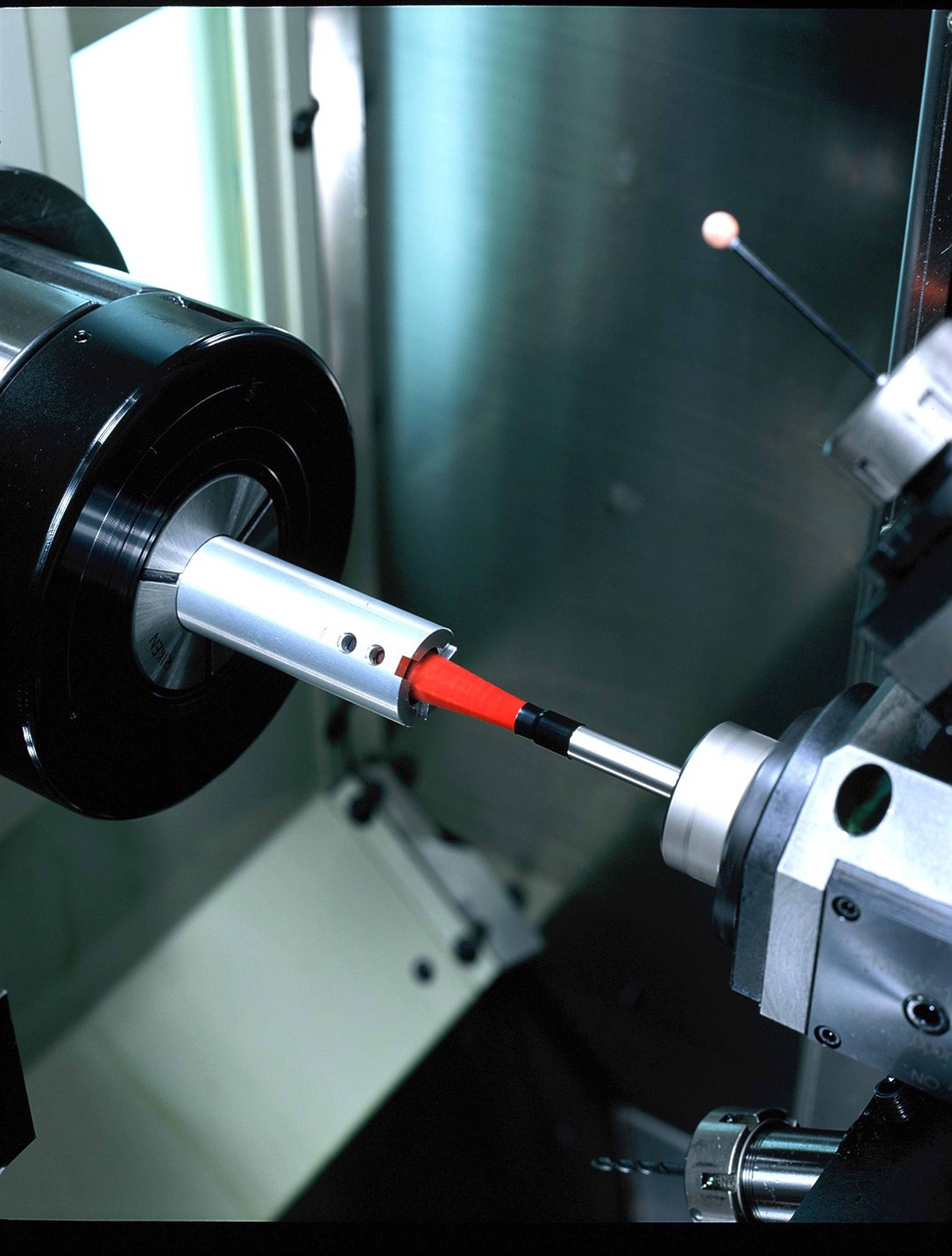 Xebec Deburring Technologies’ proprietary continuous ceramic fiber bristles have intense cutting power, act like cutting tools, and have proven to work well with aluminum and titanium alloys. Image courtesy of Xebec Deburring Technologies”>
Lightweight components are already proving their mettle. ATAG reports that newer, lighter aircraft, including the Boeing 787 and Airbus A380 and A220, consume less fuel. For example, the Boeing 787 is 20 percent lighter and has improved fuel efficiency of 10 to 12 percent.
Lightweight Metals Surging in Aerospace
Lightweight aluminum alloys and titanium alloys are commonly used for developing lighter-weight components in aerospace today. They’re close in strength to steel, but at much lighter weights. And they offer the performance needed in intense aerospace applications.
For example, strong titanium alloys are already in use for landing gear component applications. And more opportunities with alloys are developed each year. For instance, industry experts and researchers are closely examining and exercising the potential of aluminum-lithium alloys.
Additionally, NASA announced a new alloy, Alloy GRX-810, that offers greater strength, performance and durability, and leads to reduced fuel burn in jet engines.
Taking on Lighter, Stronger Metals
These harder but lighter metals are tougher to machine. Particularly the titanium alloys. Hand-deburring them, for instance, would be challenging. And automated wire or nylon brushes wouldn’t be durable enough or have enough grinding power to sufficiently work such parts.
Continuous ceramic fiber, on the other hand, is the perfect match for such tough materials. It is uniquely capable of working these metals while also achieving the high quality and precision required. Xebec Deburring Technologies’ proprietary continuous ceramic fiber bristles have intense cutting power, act like cutting tools, and have proven to work well with aluminum and titanium alloys without deforming, and with consistent cutting strength.
To capture the incoming work for lighter-weight materials in aerospace, you may need to upgrade your tooling to incorporate such technology. It outperforms the alternatives and will deliver consistent results in far less time and with a much longer tool life.
Further, with aerospace parts becoming more complex with the aim of optimizing components and builds, you may need to upgrade from 3-axis CNC machines to 5-axis. In any CNC milling project, fixturing is a key factor in repeatability, especially for aerospace components that must be precision milled, deburred and finished consistently on the machine.
Part of the ATAG sustainability initiative is to promote modern technologies, such as additive manufacturing. In fact, because they do a lot of prototyping, aerospace manufacturers have been at the forefront of additive manufacturing.
3D printing can often eliminate 25% to 35% of the deburring that manufacturers see in CNC machines. However, deburring is still needed to produce the high-quality finish required. If a manufacturer invests in 3D additive manufacturing, they should also invest in getting the most sophisticated deburring tool to pair with it.
Gaining in Return
When adjusting your processes to accommodate the climate change initiatives of the broader industry, it’s not uncommon to experience “green” benefits in kind. For example, implementing automated deburring and finishing often reduces waste by decreasing the number of scrapped parts and material wasted.
Beyond green benefits, this equates to cost savings at your facility. Aerospace components are some of the most expensive, and many of these lighter metals come at a higher price point. Automating processes such as deburring and finishing allows manufacturers to redirect capital from labor intensive work to higher quality materials.
Aerospace components are also some of the most complicated in metalworking, and many are some of the largest. Working large or complex parts manually or with inadequate tooling leaves a lot of room for error, inconsistency and quality issues.
As adoption of more advanced alloys and technologies like 3D printing, robotics, artificial intelligence (AI) and automation accelerate, manufacturers must analyze each part of the process to determine the benefits in cost, quality, productivity and sustainability.