


Jet-Setting for Success
A shop-floor primer on abrasive-waterjet capabilities, maintenance and common trouble spots.
A shop-floor primer on abrasive-waterjet capabilities, maintenance and common trouble spots.
Abrasive-waterjet machining uses a high-velocity stream of water and garnet abrasive to erode a programmed path through sheet or plate. The process works with many metals, plastics, glass and other materials, although material compatibility and machine limits must be checked before cutting. Tempered glass, water-reactive materials and diamond are among the unsuitable choices cited for our machine. In our college shop, the waterjet has shortened the route for many legacy parts that previously required sawing and extensive machining.
How the process works
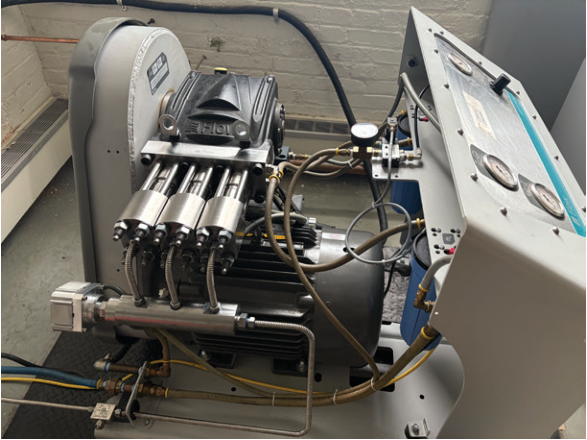
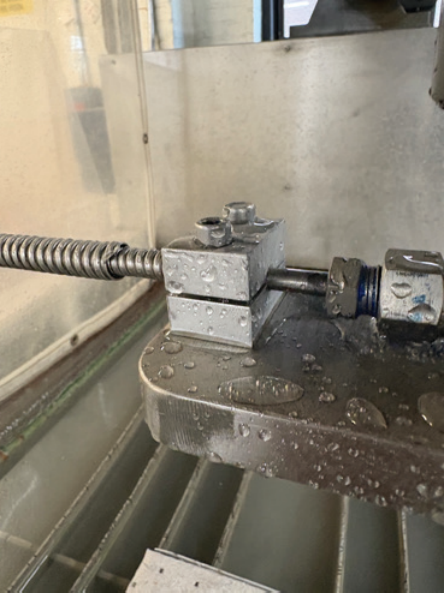
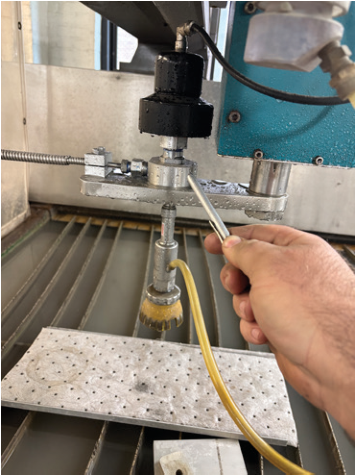
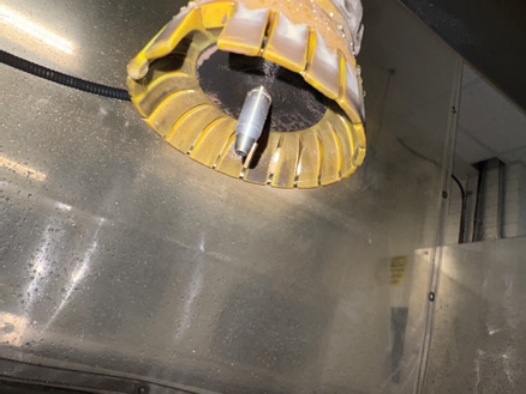
A large motor drives the high-pressure pump shown in Figure 1. Our machine operates at 55,000 psi, or 55 kpsi. High-pressure tubing (Figure 2) carries the water to the cutting head, where an on/off valve (Figure 3) controls the stream. At the head, the water passes through the assembly and draws garnet into a carbide mixing tube (Figure 4). The control’s drawing and programming software then converts the desired geometry into a toolpath.
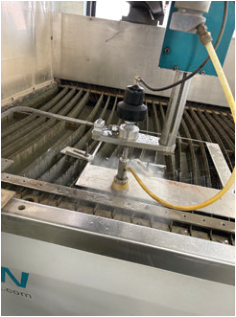
The head normally moves to a point just outside the finished geometry and pierces the material before tracing the programmed path (Figure 5). The software compensates for the cutting stream and mixing-tube geometry. On our machine, the mixing tube is 0.040″ in diameter, so the programmed compensation is approximately its 0.020″ radius. Actual compensation depends on the nozzle, material, thickness and cutting parameters.
Our Flow Mach 2 1313B is best suited to sheet and plate work that does not require extremely tight tolerances directly from the waterjet. Its FlowCut software can nest multiple parts and arrange the sequence to reduce unnecessary motion and help manage sheet movement. For a recurring order, for example, we nest a series of parts on a 48″ × 48″ aluminum sheet and let the software sequence the toolpaths across it.
The catcher tank dissipates the stream after it passes through the workpiece and collects spent garnet and material debris. Do not leave the jet running in one place longer than the programmed pierce requires. A stationary stream can erode the tank protection and create an expensive leak. Follow the machine manufacturer’s operating and safety procedures for piercing, testing and maintenance.
Managing inlet pressure
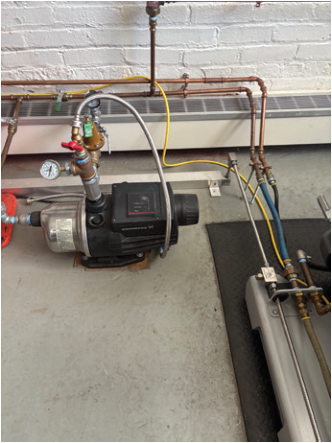
The high-pressure pump also depends on a stable inlet-water supply. Our college building’s demand varies throughout the day, and the pressure occasionally fell below the machine’s 50-psi inlet requirement. The pump would fault and stop. We installed the booster setup shown in Figure 6 to maintain a consistent inlet range. Shops considering a booster should confirm the required pressure, filtration, plumbing and service recommendations for their exact machine rather than copying another installation blindly.
Capabilities and secondary operations
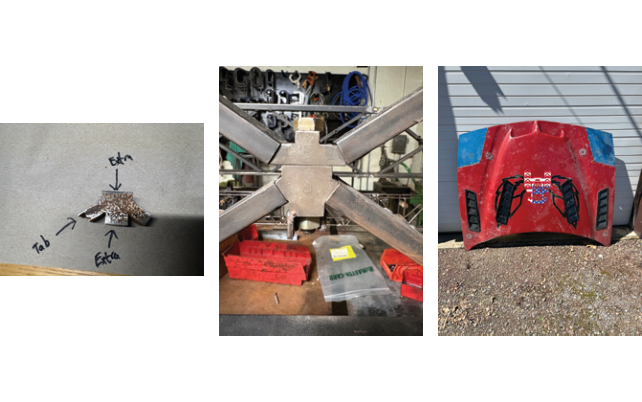
In our shop, the waterjet is used mainly for sheet up to about 0.500″ thick and for parts that can tolerate a secondary finishing operation. When a feature needs greater accuracy or a better finish, we leave machining stock on the critical surface and complete it on a mill or other machine. Figure 7 shows examples of parts produced with this approach.
For Lafayette College’s Steel Bridge team, students designed a connector with a machined interface and a precision hole. We modified the waterjet geometry to leave 0.0625″ of stock on the two surfaces that required finishing. The parts then went to a CNC mill for facing, drilling and reaming. The marked part in Figure 7 shows the added stock and the tab that kept it from dropping into the tank.
The waterjet also produced 0.050″-thick stainless steel reinforcing plates for fiberglass repair work on a racecar hood. Drawing and importing the parts took longer than cutting them. We programmed two extras because trackside repairs reward having a spare. The job illustrates where abrasive waterjet shines: quickly producing flat profiles that need little or no secondary work.
Maintenance and trouble spots
Water quality and preventive maintenance matter. Follow the manufacturer’s limits for inlet pressure, temperature, dissolved solids and filtration, and service the pump, filters, seals, high-pressure tubing and fittings on the prescribed schedule. Our shop has replaced the flexible high-pressure line above the gantry and has serviced both the pump’s pressure-control valve and the cutting head’s on/off valve. Water leaking from a designated weep hole can indicate wear, but diagnosis and repair should follow the manufacturer’s procedure because high-pressure components are hazardous.
The garnet-delivery system is another common source of downtime (Figure 8). Paper from an abrasive bag, metal debris, moisture or a clogged breather can interrupt flow or block the mixing tube. We now screen the garnet as it enters the tank and keep spare breather components available. Abrasive should remain clean and dry, and operators should inspect the delivery path before assuming that the pump or control is at fault.
Sometimes we at Lafayette have used the word kerf for the gap between the mixing tube and the workpiece, but that gap is the standoff distance. Kerf is the width of the cut. Excessive, insufficient, or inconsistent standoff can hurt cutting performance, while contact between the nozzle assembly and the workpiece can contribute to blockage or damage. Our shop uses a 0.100″ setup shim, but the correct value must come from the manufacturer’s documentation for the exact cutting head and application.
Small parts also require tabs or another retention method, so they do not drop into the catcher tank at the end of the toolpath. A magnet is not a reliable recovery plan because turbulence can move and bury a part in the garnet. Tabs can also keep thin work from lifting into the head’s travel. The required number and size depend on the material, part geometry and cutting sequence.
Post-cut considerations
Cut-edge condition varies with material, thickness, abrasive condition and machine settings. Carbon steel parts may rust quickly after leaving the tank, so plan for prompt drying and post-processing. Stainless steel and other alloys can require additional deburring or finish machining. We noticed a difference during some secondary finishing operations.
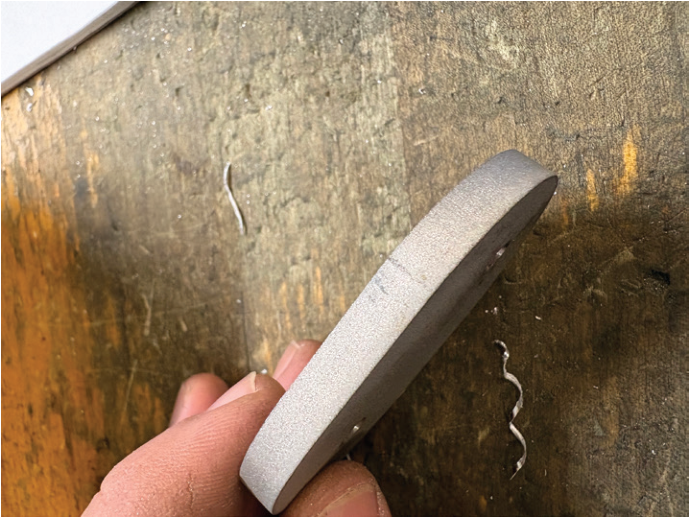
In our shop, some stainless parts felt different during filing and drilling after waterjet cutting (Figure 9). Using a brand-new drill bit, I needed to finish the holes to a slightly larger diameter. When engaging the waterjet-cut surface, the drill immediately screamed as if I were cutting a hardened surface. I wondered whether it had been work-hardened. Abrasive waterjetting is generally a cold-cutting process, but the absence of heating does not rule out mechanical surface changes. Searching ScienceDirect led me to research on waterjet peening and localized deformation of metal surfaces. That raised a possible explanation, but it does not establish what happened to our parts. Regardless of material, inspect the cut edge and handle bottom-edge burrs carefully before secondary operations.
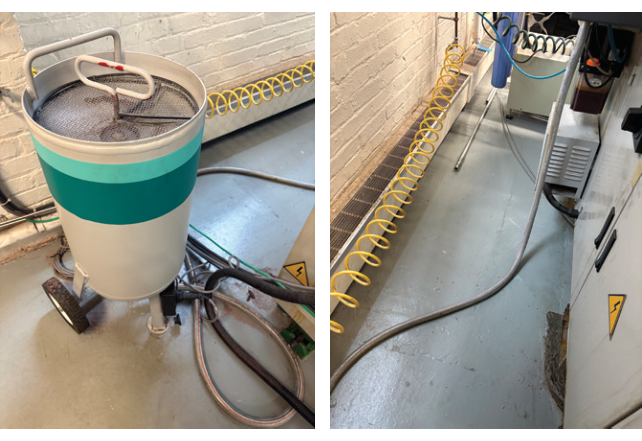
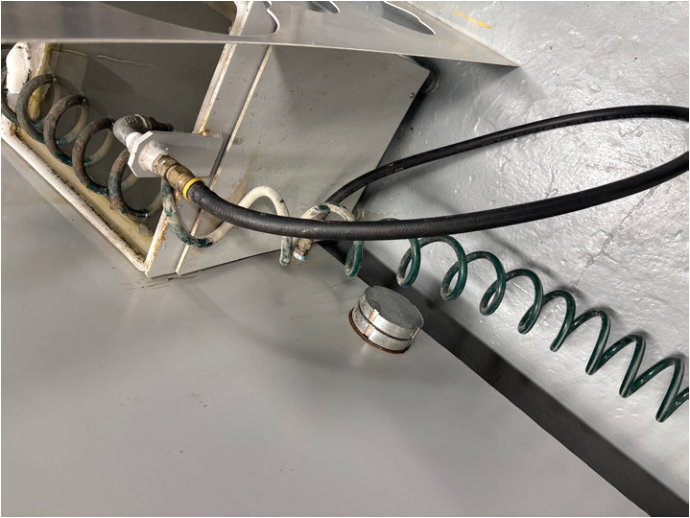
The catcher-tank overflow and drain system also deserves regular inspection (Figure 10). Restricted flow can raise the water level and send garnet or debris into the drain line. Our Flow final-filtration system uses stepped tanks, a sump pump and filters to help settle solids before discharge. Inspect and clean the overflow, drains and filters at the intervals required by the machine and the shop’s workload; replace filters based on condition and manufacturer guidance rather than an assumed universal annual schedule.
Keep the tank and slats clean
Spent abrasive eventually fills the catcher tank. Although our machine sits idle for stretches, it uses roughly one metric ton of garnet a year. We hire a sanitation company to vacuum about 1,400 gal. from the tank and final-filtration system during major service. Monitor the abrasive level before compacted sludge reaches the slats or interferes with water flow. Tank water and sludge can harbor bacteria and sharp debris, so use suitable protective equipment, follow the machine manufacturer’s recommendations for bacteria control, and observe company environmental-health and waste-disposal requirements.
The support slats are wear items and cut hazards. Move work around the table so repeated toolpaths do not erode the same area. We rotate and invert our slats during tank service and replace them when scoring makes them unstable. One repeated job eventually cut through a slat, allowing it to spring from its slot and fall into the tank. Our machine uses 1/8″ × 4″ stainless steel strips cut to length. Worn edges can be razor sharp, so shut the machine down and use proper hand protection when handling them.
Parting thoughts
Abrasive waterjet can replace several conventional operations when the part, material and required tolerance fit the process. The machine rewards disciplined setup, clean water and abrasive, routine inspection and a realistic plan for secondary operations. The practices described here have helped our shop make legacy parts faster and avoid preventable downtime. Use them as a starting point, then follow the requirements for your exact equipment and application.
Related
Subscribers can use MFGAxis notes, saves and discussion tools with their innoNET account.