

Mastering basic turning skills
The importance of mastering fundamental turning skills. Turning and other lathe operations are the most common machining applications. A master tool and die maker once told me a lathe is the only piece of shop equipment that can remanufacture itself. Whether or not the statement is factual is not important.
Turning and other lathe operations are the most common machining applications. A master tool and die maker once told me a lathe is the only piece of shop equipment that can remanufacture itself. Whether or not the statement is factual is not important. Having the lathe described in that manner indicates how important and universal turning is to manufacturing.
The lathe is one of the first machines tool and die students learn to operate. This is because the procedures and techniques that are learned on the lathe have application on other machine tools.
Industry has, for many years, been adopting technology that limits machinists’ interaction with the machine itself. Things like CNCs and CAD/CAM software enhanced the manufacturing environment and will continue to improve manufacturing processes but are diminishing fundamental skills.
There is a set of old-school lathe skills that every machinist, toolmaker and engineer can learn to directly impact their effectiveness in today’s machine shop. For example, machinists should learn to turn an eccentric shape on the lathe. Eccentric shapes can be made in several ways but are typically made by offsetting the workpiece using a 4-jaw chuck. Learning to master the 4-jaw chuck and understanding how to align parts has direct application on any machine tool with rotating elements.

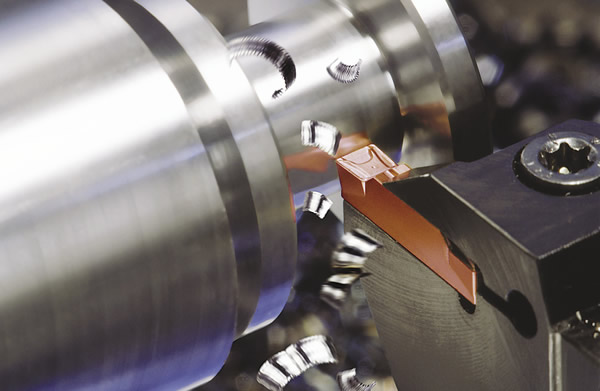
The lathe is one of the first machines tool and die students learn to operate. Image courtesy Sandvik Coromant.
A previous employer of mine was having scrap issues with an aluminum casting that had hydraulic ports drilled using a rotary table attached to a vertical machining center. The two ports were drilled at 90° to each other, and we kept having problems with the ports being too close to the edge of the casting, leaving a wall that was too thin. After investigating, I found maintenance had replaced the collet chuck mounted on the rotary table; the collet was running out and causing the part centerline to shift by a few millimeters. Shifting a part centerline using a 4-jaw chuck produces the same situation, and I may not have found the solution had I not spent time aligning parts in a 4-jaw chuck. Similar to a 4-jaw chuck on a lathe, the collet chuck on a machining center could be adjusted using four setscrews. This adjustment allows the user to drive the axis of the collet chuck so that it is aligned to the center of the rotary table.
Review the print ads from this magazine to continue
This quick advertiser review unlocks the rest of the article and keeps the full-screen reader focused on the ads instead of the page chrome.
Advertisers included in this article experience
Print placements connected to this article
older machines on your floor with Mastercam’s Dynamic
OUR TOOLPATHS
SAVE TOOLS DYNAMIC MOTION TOOLPATHS EVENLY DISTRIBUTE HEAT AND PRESSURE. Dramatically extend the life of tools and give new life to toolpaths. Milling even tough materials like titanium and Inconel is faster and smoother the Dynamic way. Save tools. Save time. Save money. Use Mastercam Dynamic toolpaths. NEW CuttingToolsEngineering-FullPage.idml 1 6/9/15 2:44 PM.
OUR TOOLPATHS SAVE TOOLS DYNAMIC MOTION TOOLPATHS EVENLY DISTRIBUTE HEAT AND PRESSURE. Dramatically extend the life of tools and give new life to older machines on your floor with Mastercam’s Dynamic toolpaths. Milling even tough materials like titanium and Inconel is faster and smoother the Dynamic way. Save tools. Save time. Save money. Use Mastercam Dynamic toolpaths. NEW
Visit older machines on your floor with Mastercam’s Dynamic View this placement in the issue recordPrint ads from this magazine
SAVE TOOLS DYNAMIC MOTION TOOLPATHS EVENLY DISTRIBUTE HEAT AND PRESSURE. Dramatically extend the life of tools and give new life to toolpaths. Milling even tough materials like titanium and Inconel is faster and smoother the Dynamic way. Save tools. Save time. Save money. Use Mastercam Dynamic toolpaths. NEW CuttingToolsEngineering-FullPage.idml 1 6/9/15 2:44 PM.
OUR TOOLPATHS SAVE TOOLS DYNAMIC MOTION TOOLPATHS EVENLY DISTRIBUTE HEAT AND PRESSURE. Dramatically extend the life of tools and give new life to older machines on your floor with Mastercam’s Dynamic toolpaths. Milling even tough materials like titanium and Inconel is faster and smoother the Dynamic way. Save tools. Save time. Save money. Use Mastercam Dynamic toolpaths. NEW
Continue reading
December 2015
Machinists should also learn to pick up a thread that has already been cut and chase it. Cutting a good thread is difficult enough, but aligning the lathe to an existing thread and successfully recutting it is quite the challenge. Learning how to perform this task has benefits. CNC machines make thread cutting easy, but it is impossible to correct a thread that is oversize once the part is out of the machine. I have saved oversize parts threaded on a CNC machine by recutting them on a manual lathe.
Sometimes with a repair job, the machinist or engineer has a part but no drawing. Determining the proper thread pitch is difficult in these situations, but it is possible to use a manual lathe to find the pitch. Just the other day, our shop had a threaded part that did not screw into the mating part. After inspecting it with a pitch gage, we felt the lead was slightly off—probably a programming error. To make the final determination, we used an indicator on the lathe to determine that the pitch did actually deviate like we suspected.
When turning, poor surface finish, chatter and stringy chips are common issues. These problems are overcome by either altering the cutting parameters or the tool.
Before the proliferation of indexable cutting tools, machinists were expected to make and sharpen their own turning tools. How to properly grind a turning tool was one of the basic skills taught to an apprentice. Over time, apprentices would learn tips and tricks from the old guys and, as the apprentices were exposed to different materials, machines and situations, they would learn to make minor changes to the tools that would help them be more efficient. Understanding how tool angles, chipbreakers and edge preparations impact the machining operation is invaluable when improving efficiency. Many young machinists struggle with problems that could be easily solved with the knowledge that comes from successfully grinding tools.
I would never profess that we turn back the clock, but we do not adequately equip our young machinists and toolmakers for the trade.
While visiting a machine tool manufacturer in Germany not long ago, I saw a group of students squaring steel blocks with files. You would have to look hard to find that level of training in the U.S.
About the Author: Christopher Tate is operations manager, combustion shop, for Mitsubishi Hitachi Power Systems Americas, Savannah (Ga.) Machinery Works. Email: chris23tate@gmail.com.
Glossary terms in this article
Related




Subscribers can use MFGAxis notes, saves and discussion tools with their innoNET account.


