



Overcoming material challenges: Design & Engineering
Companies that make cylindrical cutting tools from PCD and other materials face two key challenges: meeting the surging demand for PCD tools while retaining the ability to produce HSS, carbide, ceramic and cermet tools, observes the Machine Technology column in the October issue of Cutting Tool Engineering magazine.
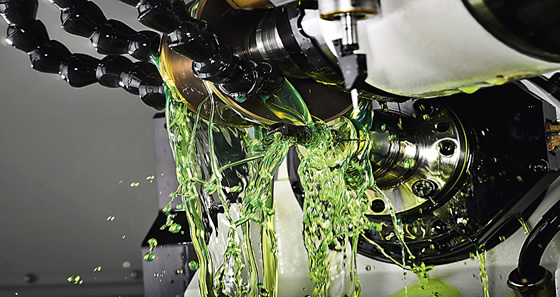
Diamond-Plus, Walter’s tool erosion software, enables an optimal erosion process independent of disturbances, such as differences in material, electrode shape or tool profile, according to the company. Image courtesy United Grinding North America.

Companies that make cylindrical cutting tools from PCD and other materials face two key challenges: meeting the surging demand for PCD tools while retaining the ability to produce HSS, carbide, ceramic and cermet tools.
Being superhard, PCD cutting tools provide long tool life when machining abrasive, gummy materials, such as composites and aluminum alloys. The use of PCD tools is expanding as aerospace manufacturers seek to improve fuel economy by increasing the proportion of lightweight composite and aluminum parts in new aircraft.
Also in pursuit of lighter, more fuel-efficient vehicles, the automotive industry is machining more composite and aluminum workpieces. The extended tool life and clean cutting action provided by PCD tools for these materials outweigh their higher costs.
Toolmakers are producing PCD tools with complex cutting edge geometries to efficiently cut these advanced workpiece materials. However, creating those geometries in PCD is the real challenge.
Grinding PCD with diamond wheels presents the conundrum of grinding diamond with diamond, and it requires careful management of cutting parameters and close attention to wheel wear. An alternative to grinding is the noncontact EDM process. Wire and sinker EDMs can erode PCD, but there are restrictions on the tool features either can produce.
A wire EDM can produce the OD geometry of a PCD tool, for example, but forming some geometric details may not be possible because of the continuous nature of the wire. Similarly, the ability of a sinker EDM to follow a helical contour is limited. Both types of EDMs tend to be dedicated equipment without any grinding capabilities.
To grind the full array of tool materials, Walter developed the Helitronic Diamond Evolution grinding and erosion machine. This two-in-one machine grinds features of rotationally symmetrical carbide, HSS, cermet and ceramic tools while being able to erode PCD and PCBN tools with a rotary-disc EDM electrode.
The electrode rotates on one end of the machine’s two-sided cartridge spindle and produces tool features in the same manner as a grinding wheel. The compact machine has a 2,100mm × 3,100mm (6.9 ‘×10.2 ‘) footprint.
Engineered for shops processing small to medium tools, the machine facilitates production or resharpening of tools from 1mm (0.04 “) to 165mm (6.5 “) in diameter, up to 185mm (7.3 “) long and weighing up to 30 kg (66.1 lbs.).
If grinding conventional tool materials becomes a priority, shops can replace the rotary electrode with a second grinding wheel set. When erosion work returns, the rotary electrode can be quickly refitted.
The same fluid is applied for both processes. Walter research determined that dielectric, which is necessary for EDMing, performs quite well as grinding coolant.
The dual-process nature of the machine also simplifies programming. Because the rotary EDM electrode disc produces tool features in the same manner as a grinding wheel, the software to control the electrode’s motion is similar to that used for grinding. Some operator training is necessary, however, because setting up the erosion process requires entry of information different than that typical of grinding.
Diamond-Plus, the most recent generation of tool erosion software from Walter, employs a new variable-acceleration factor that continually optimizes the erosion process to compensate for differences in material, electrode shape, stock removal and tool profile.
In the past, it was always necessary to finish-grind PCD tools, but now, many applications require only finish eroding. And Walter’s Superfine finish erosion technology limits cutting edge chipping to 5µm.
Automation can enhance the productivity of the erosion process, and robot loaders and extensions for cylindrical and HSK tools are available as options. Untended or semitended operation is an important factor when employing the erosion process, which usually is more time-consuming than conventional grinding. In addition, automation permits loading a series of tools and utilizing on-machine probing to monitor the operation, freeing operators to tend multiple machines.
As OEMs incorporate more weight-reducing composites and exotic materials, the demand for PCD tools to machine them will continue to grow, placing more pressure on cutting tool manufacturers to deliver.
Glossary terms in this article
Related




Subscribers can use MFGAxis notes, saves and discussion tools with their innoNET account.


