Skip to content
Magazine Column

Feature Article

Select one or more.
Select one or more.
Select one or more.
Select one or more.
Reset

Latest in Feature Article

Holding On: Drilling Performance
Article July 1, 2000 Kip Hanson
Holding On: Drilling Performance
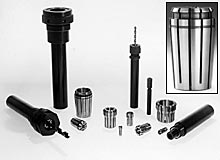
Discussion of different types of toolholders for lathes, including collets, drill chucks, bushings and keyless chucks. Author discusses best holder for different applications, based on his experiences.
Ceramics Take a Turn: Turning Performance
Article July 1, 2000 Dennis Esford
Ceramics Take a Turn: Turning Performance
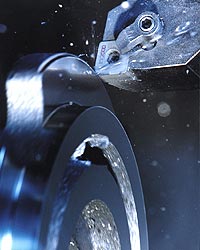
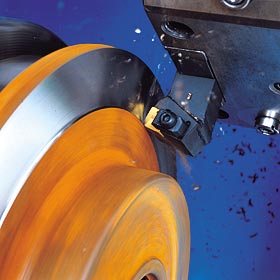
Author describes applications for the two basic types of ceramic turning inserts–alumina and silicon nitride–as well as the types of parts and materials users have turned with them. Specifics about speeds, feeds and DOCs are given.
Hands Free: Turning Performance
Article July 1, 2000 Les Loncharich
Hands Free: Turning Performance
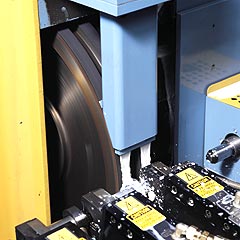
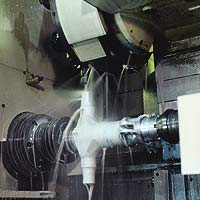
Shop owners who operate multitask machines talk about the time and cost benefits of producing parts in a single chucking. They also discuss some of the problems they had when adopting the technology. Accompanying Articles focus on a multitask users group and machine that hard-turns and grinds.
Size Matters
Article June 1, 2000 Alan Richter
Size Matters
The trend toward developing finer and finer carbide grains continues. The author looks at recent developments in the production of nanosized tungsten-carbide grains, which are smaller than 0.2 microns in diameter. Though not used widely at present for the production of cutting tools, some predict that will change as the technology evolves.
Killing Time: Drilling Performance
Article June 1, 2000 Tim McKeever
Killing Time: Drilling Performance
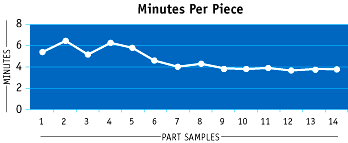
One company instituted a comprehensive plan for reducing setup times and saw its average setup time drop from 252 minutes to 39 minutes. The plan involves everything from standardizing tooling to consolidating raw materials to creating families of parts. The author outlines a step-by-step program that readers can apply to their metalworking setup operations.
Double Header
Article June 1, 2000 Jack Burley
Double Header
The author discusses the advantages and proper application of twin-cutter boring tools. They're recommended for rough-boring applications on castings, forgings and other jobs requiring a tool that can bore a cored hole. Details are provided on the three basic types of methods for rough boring with a twin cutter: balanced, stepped and full profile.
Tool Men
Article May 1, 2000 Brent Chandler
Tool Men
Establishing a good relationship with your cutting tool salesperson can benefit your operation. A good salesperson can help solve problems you don't have time to tackle and offer recommendations for machining difficult parts. The author also addresses what to do when a relationship sours.
Smoother Roughing
Article May 1, 2000 Kip Hanson
Smoother Roughing
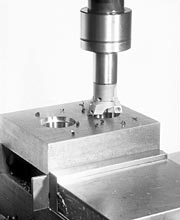
The author discusses the disadvantages of using a finishing endmill for roughing applications. He also presents a quick, systematic, step-by-step series of calculations that allows machinists to optimize metalcutting when applying coarse-pitch, cobalt-HSS roughing endmills.
Abrasive Personality: Drilling Performance
Article May 1, 2000 Kimberly R. Pontius
Abrasive Personality: Drilling Performance
High-silicon aluminum--aluminum that consists of at least 11.8 percent silicon--has qualities such as lightness and strength that appeal to automakers. The abrasives nature of the material, however, makes it difficult to machine. The author offers suggestions for milling, tapping, drilling, turning and grinding high-silicon aluminum.
High Expectations: Drilling Performance
Article April 1, 2000 Mark Richardson
High Expectations: Drilling Performance
People in the aerospace industry expect a lot from reamers. The author, an nengineer who works for a manufacturer of aerospace components, discusses nstrategies for job shops interested in developing a precision reaming nprogram.

Keep exploring