Significant progress in metalworking productivity most often results from the combined efforts of toolmakers, machine tool builders and software developers. Plunge, or Z-axis, milling is a good example.
As the U.S. strives to become less dependent on foreign energy sources, energy producers are increasingly employing hydraulic fracturing, or "fracking," to drill shale deposits and extract natural gas and some oil. That booming market requires a range of parts from shops around the country.
Where there are drilled holes, there are burrs. The only question is how large the burrs will be, according to Dave Lopes, vice president of sales and marketing for Cogsdill Tool Products Inc., Camden, S.C.
Dynomax Inc. is taking self sufficiency to a new level. For example, while machine tool builders often use their machines to produce parts for making other machines, Dynomax stands out by building machines for its own contract part manufacturing operation.
Part Time: While some shops shy away from difficult projects, others welcome them. According to Bob Perkins, president of PDS (Precision Defense Services) Industries, Irwin, Pa., the company has built its business on doing things others can't do.
When turning 2mm-dia. and smaller parts on a Swiss-style machine, it only makes sense that the radius on the tool should be equally tiny. After all, you can't cut a 0.5mm bone screw with a TNMG-431 insert—the tool's nose radius is nearly as big as the part.
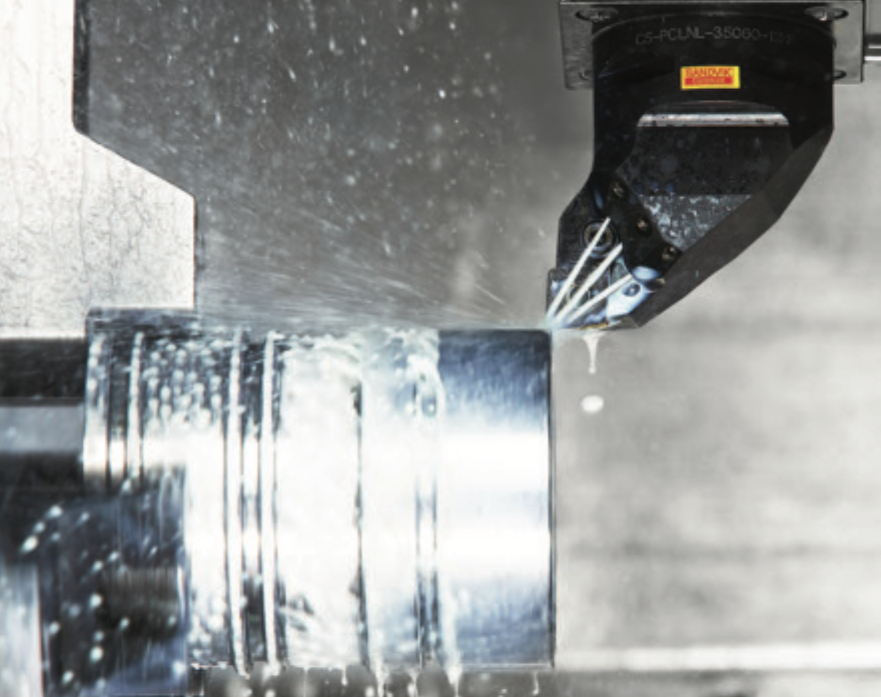
Nickel-base superalloys can withstand hot and tough conditions, but are difficult to machine. With the right approach, machinists can keep their cool when cutting them.