


Operation / Process

Machining

Optional: narrow results to one content type.
Select one or more.
Select one or more.
Select one or more.
Reset
Videos December 1, 2016
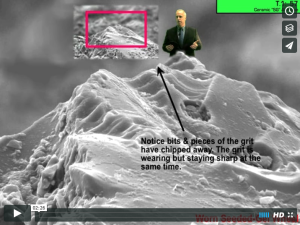
Episode 74: Norton SG grits Q&A
A shop asks Dr. Jeffrey Badger about applying Norton SG grits in the 74th episode of Cutting Tool Engineering magazine's Grinding Doc video series.
Articles December 1, 2016 Alan Richter
Replace technologically obsolete production equipment
END USER: Mast Motorsports, (936) 560-2218, www.mastmotorsports.com. SOLUTION PROVIDER: Hurco North America, (800) 634-2416, www.hurco.com. CHALLENGE: Replace technologically obsolete production equipment. SOLUTION: Purchase two new 5-axis CNC milling machines
Articles December 1, 2016 Alan Richter
Taking a break from breakdowns
END USER: lllinois Carbide Tool Co. Inc., (800) 323-2414, www.crobaltusa.com, www.brakedrumtool.com. SOLUTION PROVIDER: Agathon Machine Tools Inc., (203) 730-8741, www.agathon.com. CHALLENGE: Keep up with increasing production demands for carbide brake lathe inserts. SOLUTION: A 4-axis grinding machine that enables lights-out production.
Articles December 1, 2016 James Harvey
Become familiar with CNC programming code
Presented here is the second part of a two-part series of columns about the importance of becoming familiar with CNC programming code. The following describes the steps involved in manually writing a program.
Articles December 1, 2016 Kip Hanson
Maximizing with multispindles
Before CNC lathes, most high-volume turned parts were made on multispindle, cam-driven screw machines. Setup times were long, and great skill was needed to design the cams and grind the cutting tools. However, by being able to perform a dozen or more operations simultaneously, they could produce hundreds—often thousands—of parts per hour. Whatever happened to those old mechanical monsters? According to Giovanni Principe, they're alive and well.
Articles December 1, 2016 Stas Mylek
Achieving machining effectiveness
In the first part of this two-part series, I looked at what actually happens in the cutting zone and how that knowledge allows end users to select the best possible cutting tool and CAD/CAM strategy for a particular material to optimize material removal. This second part covers why it is important to adopt this approach not only for all CNC machining processes, but as a significant production cost-saving measure companywide and industrywide.n
Articles December 1, 2016 Keith Jennings
Tougher & wiser in times of turmoil
While attending IMTS in September, it was nice to meet fellow machine shop owners and managers, many of whom expressed optimism and reported a robust year for their businesses. That was good to hear, considering our market is in the midst of a downturn and requires aggressive management to persevere.
Articles December 1, 2016 Jeffrey A. Badger, Ph.D.
Setting up a lab
The Grinding Doc fields the following questions: 1. The grinding wheel manufacturer I work for wants to set up a basic lab for testing wheels and different Al2O3 grits. What's the best, most-economical way to do this? 2. I'm getting chatter on parts and am trying to determine if it's from grinding forces that are too high or from an out-of-balance wheel. Is there a way to tell?
Articles December 1, 2016 Evan Jones Thorne
Tracing sinker EDMing back to its original spark
Electrical discharge machining (EDMing) goes by many names—burning, spark machining, spark eroding, vaporizing—but they all refer to variations on the same process: removing material by running an electric current between an electrode and a negatively charged workpiece material submerged in a dielectric fluid. At least in the case of sinker EDMing, that's pretty much all there is to it.