
Operation / Process

Machining

Optional: narrow results to one content type.
Select one or more.
Select one or more.
Select one or more.
Reset
Products February 3, 2016
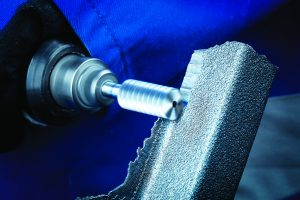
Cast Cut carbide burs
PFERD Inc., Milwaukee, Wis., today introduced Cast Cut, a new line of high-performance carbide burs specially designed for work on cast iron. The burs, which are characterized by an extremely high stock removal rate, reportedly offer a smooth milling action that significantly reduces vibration and noise. Cast Cut achieves stock removal rates up to 100 percent higher than conventional double-cut burs, thanks to its innovative tooth geometry—a major plus for automotive customers given the industry's relentless drive to boost productivity and save time. Other key market applications include foundry, welding and general industry.
Products February 3, 2016
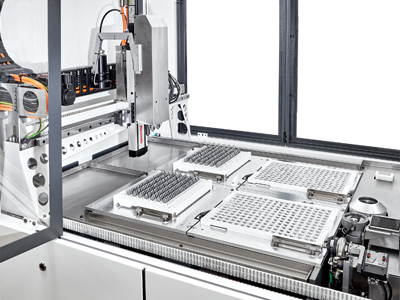
Leo Peri 4-Axis Grinding Center
AGATHON Machine Tools Inc. has introduced the new Leo Peri 4-axis grinding center for grinding the periphery of indexable inserts. Throughout product development, the Leo Peri design concept focused on achieving a smaller machine size, incorporating greater user friendly accessibility, maintenance free concepts, and overall superior machine strength enabling high process performance to meet both high production and peak quality standards for carbide, cermet, ceramics and PCBN applications.
Products February 3, 2016
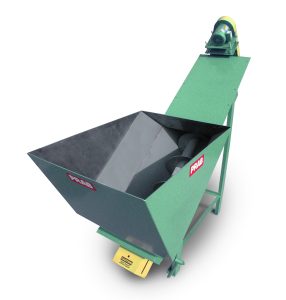
Screw Conveyor
PRAB Inc., Kalamazoo, Mich., this week debuted a Screw Conveyor engineered to effectively move a range of metal scrap from chips to bundled turnings, according to a Feb. 1 news release from PRAB. The Screw Conveyor is said to be ideal for applications where scrap is dumped into the conveyor or infeed hopper in a load. The PRAB Screw Conveyor uses a single drive to operate an auger that rotates and moves the material through the trough. The straight-forward design and standard components reportedly make the conveyor cost effective to own and easy to maintain.
Products February 2, 2016
BX53M System Microscope and Stream Analysis Software
Said to combine ease of use with expanded functionality, the new BX53M System Microscope from Olympus Scientific Solutions Americas is designed to make it easy for users to quickly and accurately undertake a variety of analytical tasks, the company announced in a Jan. 26 news release. What's more, when combined with new Olympus Stream 2.1 Image Analysis Software, the BX53M System Microscope reportedly simplifies workflow from observation to measurement, analysis and reporting.
Products February 2, 2016
Machine Tool Retrofit Packages
Konecranes Machine Tool Service, Springfield, Ohio, offers retrofit packages that reportedly present customers with several approaches to maximize the performance of their equipment, the company announced in a Jan. 25 news release, noting that some of their customers have discovered a retrofitted machine tool can be a better option than new equipment—at about half the cost.
Articles February 1, 2016 William Leventon
One machine, two processes
Additive and subtractive manufacturing may be conceptual opposites, but a new partnership aims to show that the two can make a good team. Two of the partners are New York organizations: the Rochester Institute of Technology (RIT) and Elmira-based Hardinge Inc. RIT researchers are incorporating additive-manufacturing capabilities into Hardinge's Bridgeport GX 250 5-axis vertical machining center. The goal is to create a hybrid manufacturing system capable of producing more accurate parts at a lower cost than conventional manufacturing methods.
Articles February 1, 2016
Enhancing machining efficiency
Multiple machine tool builders offer equipment for machining the helicopter transmission components Northstar Aerospace Inc. produces at its Bedford Park, Ill., facility, but not all are equally efficient in handling the task. The parts weigh up to 350 lbs. (159 kg), have diameter tolerances as tight as 0.0003" (0.0076mm) and are made of aerospace-grade superalloys typically hardened from 50 to 60 HRC, said Brian Cheek, vice president and general manager at Northstar.
Articles February 1, 2016 Christopher Tate
Reaming can be most cost-effective way to produce accurate holes
Technological advances in cutting tools, machine tools and toolholders have allowed machinists and manufacturing engineers to increase holemaking efficiency by eliminating the number of tools required to produce accurate holes. High-performance drills are the best example of these technological advances. In the past, it was common for a machinist to spot-drill, drill and then ream to achieve accurate hole geometry. Now, the same hole can be made in a single operation using a high-performance drill.
Articles February 1, 2016 Evan Jones Thorne
Overcoming five common challenges when turning
While it's nearly impossible to quantify the most common challenges or most important considerations when turning, experts agree that the five aspects of turning discussed below should be considered. It's important to note that each factor has the potential to impact the others. So, instead of looking at each issue individually, it's recommended machinists take a holistic best-practices approach to turning.
Articles February 1, 2016 Evan Jones Thorne
Aluminum can be hard to drill, despite its easy rep
When drilling, perhaps no variable is as important as the workpiece material. It dictates drill geometry and substrate, tool coating, coolant application, and speeds and feeds. While known for its relative softness and ductility, misconceptions abound among those who regularly drill aluminum.
Articles February 1, 2016 William Leventon
A machine for dry grinding gears
Italy-based Samputensili S.p.A. unveiled a machine that eliminates the need for cutting oils when manufacturing gears, thereby reducing grinding costs. During grinding, oil-based lubricants cool the workpiece, as well as reduce friction and help evacuate chips. On the downside, however, oil use accounts for a significant amount of a grinding operation's total cost. Expensive equipment is required to supply, chill, catch and wash away oil in grinding processes. In addition, Samputensili estimates that oil-treatment equipment accounts for 75 percent of the energy consumed by a grinding machine.
Articles February 1, 2016 James Harvey
Avoiding machine crashes
Everyone crashes, I was once told. It's likely true. However, not all crashes are created equal. There are fender benders that just break small tools, and then there are head-on collisions that ruin much more—including your day. CNC machine crashes are relatively easy to avoid. They often occur during setup and debugging. If you can recognize high-risk situations, you'll be in a better position to avoid them.