Skip to content
Browse

Articles

Select one or more.
Select one or more.
Select one or more.
Select one or more.
Select one or more.
Reset

Latest Articles

Don’t Toss that Indexable Tool
Articles April 1, 2000 Derek Phillips
Don’t Toss that Indexable Tool
Ninety-nine percent of indexable tools that break can be repaired, according to companies that repair tools. And, they say, a broken indexable tool can nbe repaired so it performs as well as or better than the original.
High Expectations: Drilling Performance
Articles April 1, 2000 Mark Richardson
High Expectations: Drilling Performance
People in the aerospace industry expect a lot from reamers. The author, an nengineer who works for a manufacturer of aerospace components, discusses nstrategies for job shops interested in developing a precision reaming nprogram.
Added Dimensions: 5-Axis Machining
Articles April 1, 2000 Dennis Esford
Added Dimensions: 5-Axis Machining
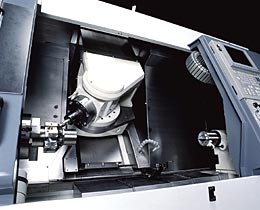
A rotary table allows a 3-axis vertical machining center to machine in the n4th and 5th axes. The author explains the different types of rotary tables nthat are available and discusses the advantages and disadvantages of each.
Getting to the Bottom of Chatter
Articles April 1, 2000
Getting to the Bottom of Chatter
Tool chatter is one of the biggest obstacles to effective machining that job nshops face. The author discusses the sources of chatter and offers nsuggestions for minimizing it.
Creeping Up
Articles March 1, 2000 Dennis Esford
Creeping Up
Creep-feed grinding is not as popular a process as it was predicted to become in the late 1980s. But a machine shop that specializes in CF grinding has found great success by using the process. The shop's owner and other CF-grinding experts contend that as workpiece tolerances become tighter and manufacturers begin using more exotic workpiece materials, CF grinding will grow in popularity.
Getting a Better Edge: Design & Engineering
Articles March 1, 2000 William Shaffer
Getting a Better Edge: Design & Engineering
The author, an expert on cutting tool edge preparation, explains the importance of applying the proper edge hone to a tool. He also discusses a brush-type honing machine designed to apply a variable edge--a capability not available with other machines on the market.
Dry Out: Drilling Performance
Articles March 1, 2000 Don Graham
Dry Out: Drilling Performance
As the government publishes ever-stricter regulations for metalworking fluids, more shops try dry machining. The author examines the cost benefits of machining dry and looks at the various types of tool materials designed to enhance dry-machining applications.
Software Solutions: Safety, Standards & Compliance
Articles March 1, 2000 Dennis Esford
Software Solutions: Safety, Standards & Compliance
Tool management software is designed to help users of cutting tools get more control of their toolcribs. The article describes the types of tool management software available, the savings possible by utilizing software and includes comments from shop owners who've installed these systems.
Pecking Order: Drilling Performance
Articles February 1, 2000 Kip Hanson
Pecking Order: Drilling Performance
The CNCs on many lathes don't have drill-pecking cycles. The author ndescribes several ways to program CNCs to peck, including shortcuts such as nsubprogramming and parametric programming.n
Dry Run: Drilling Performance
Articles February 1, 2000 Derek Phillips
Dry Run: Drilling Performance
Dry milling and turning grow in popularity day by day, but dry drilling is nanother matter. Because of the nature of drilling, it's more difficult to nperform this operation without coolant. Still, progress is being made, nthanks to research and more sophisticated coatings.n
Extreme Drilling
Articles February 1, 2000 Derek Phillips
Extreme Drilling
A detailed description of a combination drill that machines six different nhole diameters. Used on a dedicated drilling machine that drills cast iron ncylinder heads, it was developed over a number of years. The six-in-one tool nis made of HSS and has carbide inserts.n
Grade Wise: Inspection Efficiency
Articles February 1, 2000 Peter Fretty
Grade Wise: Inspection Efficiency
Most people know that using the right grade of insert can improve nproductivity dramatically. Few know that the proper grade is also important nwhen utilizing round tools. The author examines the different types of ncarbide grades available for round tools.n

Keep scrolling