Skip to content
Browse

Articles

Select one or more.
Select one or more.
Select one or more.
Select one or more.
Select one or more.
Reset

Latest Articles

Ceramics Get Tough: Turning Performance
Articles September 1, 1996 Joseph Halloran
Ceramics Get Tough: Turning Performance
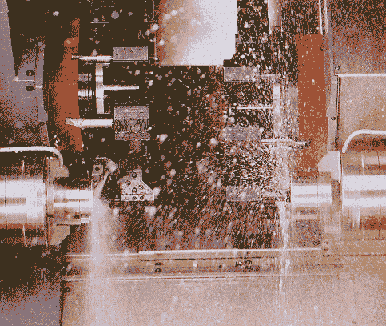
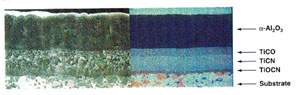
Improvements in cermet and ceramic inserts have made them a good choice for high-speed milling. This article describes how the compositions and designs of these newer inserts make them tough enough to withstand the punishment of a milling operation while maintaining the hardness that makes them wear-resistant.
Quality Through the Tiers: General Industry Coverage
Articles August 1, 1996 Martin Eastman
Quality Through the Tiers: General Industry Coverage
Manufacturing customers have begun demanding that their suppliers institute quality-control processes. At the same time, they are expecting their suppliers to adopt more efficient processes so that suppliers can reduce their prices while maintaining profitability. This article discusses these pressures and how even subtier suppliers are being affected by them.
The Good, the Bad and the Retapped
Articles August 1, 1996 John Edmond
The Good, the Bad and the Retapped
Internal threads can end up undersized because of the work material's properties or because of changes to the hole's dimensions caused by plating or heat-treating processes performed after tapping. This article explains H- and D-limits and how to use them to specify a tap that will produce the right size thread, regardless of any post-tapping operations.
Rigid Rules: General Industry Coverage
Articles August 1, 1996 Allen Krenick
Rigid Rules: General Industry Coverage
There are some tapping situations that call for a rigid tapholder and some that call for a length-compensating holder. Often the choice depends on the capabilities of the machine and the CNC driving the tap. This article discusses why a machinist might choose one type of tapholder or the other.
Presetters Produce Profit
Articles August 1, 1996 Richard McCarthy
Presetters Produce Profit
There are a variety of presetters on the market. All reduce machine downtime by allowing shops to set up tools offline. This article discusses the different presetter types and the impact that these differences will have on the instrument's price and functionality.
Superabrasive Safety: Safety, Standards & Compliance
Articles June 1, 1996 Thomas Service
Superabrasive Safety: Safety, Standards & Compliance
Standards governing grinding-wheel safety testing do not cover all superabrasive wheels. This article suggests that these standards should include them. The author explains why as he describes a typical superabrasive wheel and the dynamics of superabrasive wheel failure.
Powder Particulars: General Industry Coverage
Articles June 1, 1996 Norman Rohr
Powder Particulars: General Industry Coverage
This article describes the shapes and sizes of diamond particles produced through standard manufacturing processes. The uses for these different types of particles are also explained, with an emphasis on particles used in superfinishing powders and slurries.
Creep-Feed Exam: General Industry Coverage
Articles June 1, 1996 Trevor Howes
Creep-Feed Exam: General Industry Coverage
Researchers at the Center for Grinding Research performed a series of creep-feed grinding tests to determine the causes of the heat damage and striations they observed. The tests involved grinding slots and vertical faces. This report discusses the dynamics behind these problems and suggests ways to avoid them.
The Hard Truth: General Industry Coverage
Articles June 1, 1996 Leonard Pukaite
The Hard Truth: General Industry Coverage
The fundamentals of wheel dressing and truing are reviewed in this article, which covers the proper maintenance of a wide variety of wheel bonds and abrasive types. The article also discusses different truing techniques and their appropriateness for different uses.
Understanding EDMed Surfaces
Articles April 1, 1996 Lawrence Rhoades
Understanding EDMed Surfaces
EDMed surfaces have their own texture and integrity considerations. This guide explains why EDM surface condition matters for inspection, finishing, and downstream performance.
A Spark of Intelligence: General Industry Coverage
Articles April 1, 1996 K.P. Rajurkar
A Spark of Intelligence: General Industry Coverage
EDM cutting conditions change throughout the cutting process as the part thickness and the level of dielectric contamination fluctuates. This article describes an experimental setup that can monitor these fluctuations and adjust the EDM's settings to maintain an optimal spark.

Keep scrolling