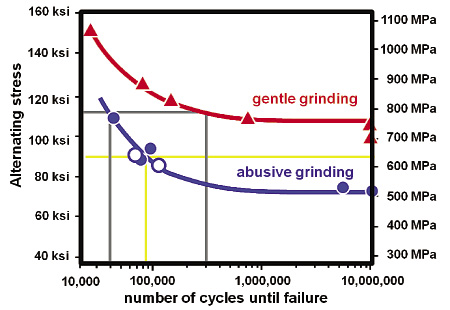
A shop seeks insight from our Ask the Grinding Doc columnist, Dr. Jeffrey Badger, regarding the premature fatigue failure of pistons that seem fine when they go out the door. Could grinding be the culprit for these pistons cracking after just 5 weeks?
At a trade show, a company displayed a grinding wheel with slots, where coolant is poured into the center of the wheel and then ejected into the grinding zone. What's your take on this design?
A company running a centralized coolant system with neat oil seeks help from the Grinding Doc. The shop's oil supplier is promising great things if the shop switches to a newer oil product. But it seems like such a grand undertaking.
The Grinding Doc tackles a common mistake made by shops using CBN wheels is that they choose a grit size that's too large and then take drastic actions to cope with it.
Dear Doc: I grind fine threads into hardened stainless steel with a fine-mesh aluminum-oxide wheel. The threads are 0.8mm deep in a 5mm-dia. ID. There are three threads per part. This operation just chews through the wheel, and I get only one part before I have to dress a 0.2mm depth in my 4mm-dia. wheel. What am I doing wrong?
I use resin- and metal-bond diamond wheels and used to manually stick them. Now our machine does it automatically and I don't have the "feel" to determine if the wheel is being stuck hard enough. Is there a way to know how fast I should stick?
Estimating burn depth is tricky. It depends on the thermal conductivity and specific heat capacity of the workpiece material, the maximum surface temperature reached and, most importantly, the time the wheel is in the grinding zone.
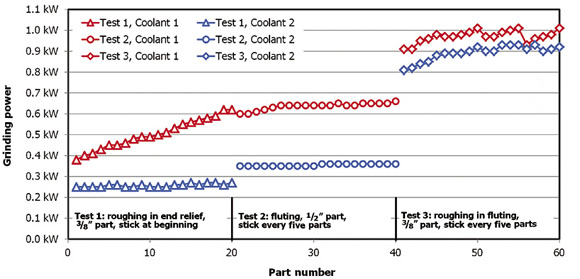
Cutoff wheel manufacturer inquires about a testing program to evaluate his product in the August 2011 Ask the Grinding Doc column in Cutting Tool Engineering.