

Understanding the Identification System for Indexable Inserts
ANSI insert identification codes describe insert shape, clearance, tolerance, type, size, thickness, and edge features. This guide explains how to read the naming system used for indexable inserts.
Quick take: ANSI insert codes matter because they compress shape, clearance, tolerance, type, size, thickness, and edge preparation into one readable naming system. This article is strongest when it is used with insert-geometry and lead-angle references during insert selection.
Related references: Cracking the Code, Getting to know the lead angle, and Insert Geometry Resources.
For practical geometric context, pair the code sequence with lead-angle strategy and cutting-geometry planning in Getting to know the lead angle.
American National Standard ANSI B212.4-2002 covers the identification system for indexable-type inserts for both single-point and multiple-point cutting tools. It was published on October 29, 2002. The earlier editions of the standard are:
- ANSI B212.12.1-1995, Indexable Screw-On Inserts with Partly Cylindrical Fixing Holes
- ANSI B212.12-1991, Turning Tools – Commonly Used Indexable Inserts (ANSI – American National Standard Institute)
According to ANSI B212.4-2002 standard, identification of the indexable insert includes 10 positions denoted by a capital letter. Each position (from 1 to 10) defines a characteristic of the insert in the following order:
-
- – Shape;
- – Clearance;
- – Tolerance class;
- – Type;
- – Size;
- – Thickness;
- – Cutting-point configuration;
- – Edge preparation;
- – Hand;
- – Facet size.
1. Shape
There are 16 standard shapes of indexable inserts, and each shape is identified by a capital letter as follows (Figure 1):
A – Parallelogram 85°;
B – Parallelogram 82°;
C – Diamond 80° (Rhombic);
D – Diamond 55° (Rhombic);
E – Diamond 75° (Rhombic);
H – Hexagon 120°;
K – Parallelogram 55°;
L – Rectangle 90°;
M – Diamond 86° (Rhombic);
O – Octagon 135°;
P – Pentagon 108°;
R – Round;
S – Square 90°;
T – Triangle 60°;
V – Diamond 35° (Rhombic);
W – Trigon 80°.

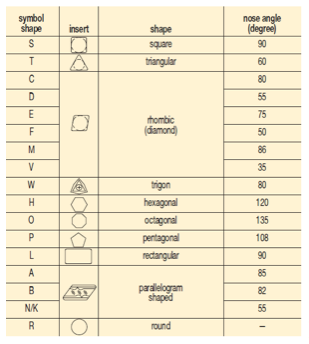
Figure 1: Kennametal Inc. Insert Shape Identification System. Image courtesy of Edmund Isakov.
2. Clearances (relief angles)
Nine relief angle values have been described in ANSI B212.12-1991 standard. These angles are the difference from 90° measured in a plane normal to the cutting edge generated by the angle between the flank and top surface of the insert. Each relief angle is denoted by a capital letter as follows:
A – 3°;
B – 5°;
C – 7°;
D – 15°;
E – 20°;
F – 25°;
G – 30°;
N – 0°;
and P – 11°.
ANSI B212.4-2002 standard added one more capital letter O, which denotes other relief angles for new designs of indexable inserts.
3. Tolerance class
There are 14 tolerance classes that control the indexability of the inserts. Each class is denoted by a capital letter. Letters for tolerances are A, B, C, D, E, F, G, H, J, K, L, M, U and N.
Tolerances on dimensions (± from nominal) are denoted by letters A, B and T. Dimension A is the nominal inscribed circle (I.C.) of the insert. Dimension T is the thickness of the insert. For pentagon, triangle and trigon shapes, dimension B is the insert height, i.e., the distance between one side and the opposite corner (Figure 2).
For all other polygons, dimension B is the distance, measured along the bisector of the rounded off corner angle and a gage roll of nominal I.C. size tangent to the two sides opposite the corner (Figure 2). For example, if a tolerance letter is H, tolerances on dimensions (± from nominal) are: 0.0005″ on dimension A, 0.0005″ on dimension B and 0.001″ on dimension T.
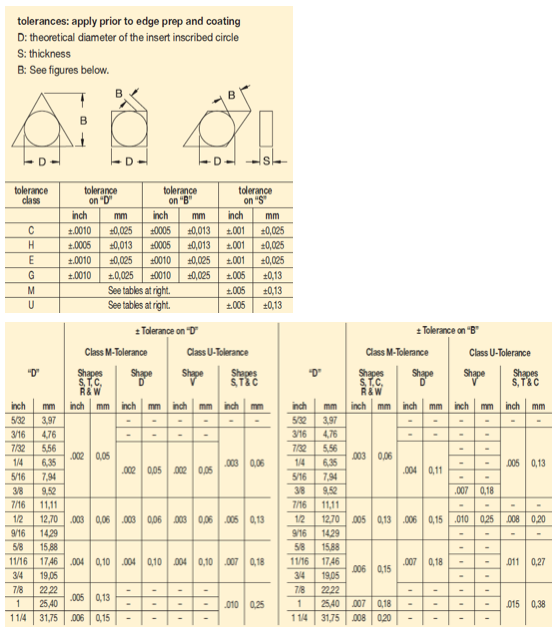
Figure 2: Kennametal Inc. Tolerance Identification System. Image courtesy of Edmund Isakov.
4. Type
The fourth position is a capital letter denoting differences in design of insert, such as the existence of fixing holes, countersinks and special features on rake surfaces. There are 15 standard types in design as follows (Figure 3):
A – With hole, without chip grooves;
B – With hole, without chip grooves, and one countersink (70°-90°);
C – With hole, without chip grooves, and two countersinks (70°-90°);
F – Without hole with chip grooves on two rake faces;
G – With hole and chip grooves on two rake faces;
H – With hole, one countersink (70°-90°) and chip groove on one rake face;
J – With hole, two countersinks (70°-90°) and chip grooves on two rake faces;
M – With hole and chip groove on one rake face;
N – Without hole, without chip grooves;
Q – With hole, without chip grooves, and two countersinks (40°-60°);
Review the print ads from this magazine to continue
This quick advertiser review unlocks the rest of the article and keeps the full-screen reader focused on the ads instead of the page chrome.
Advertisers included in this article experience
Print placements connected to this article
Kennametal
is Better Thinking.
INTRODUCING The Stellram Platform 7792VX High feed milling cutter designed to yield the highest levels of productivity by increasing metal removal rates — as much as 90% — in titanium and other mission-critical metallics. X-Grade Carbide inserts with up to 3 times the normal tool life for high-temperature heat resistant.
is Better Thinking. INTRODUCING The Stellram Platform 7792VX High feed milling cutter designed to yield the highest levels of productivity by increasing metal removal rates — as much as 90% — in titanium and other mission-critical metallics. X-Grade Carbide inserts with up to 3 times the normal tool life for high-temperature heat resistant
Visit Kennametal View this placement in the issue recordPrint ads from this magazine
INTRODUCING The Stellram Platform 7792VX High feed milling cutter designed to yield the highest levels of productivity by increasing metal removal rates — as much as 90% — in titanium and other mission-critical metallics. X-Grade Carbide inserts with up to 3 times the normal tool life for high-temperature heat resistant.
is Better Thinking. INTRODUCING The Stellram Platform 7792VX High feed milling cutter designed to yield the highest levels of productivity by increasing metal removal rates — as much as 90% — in titanium and other mission-critical metallics. X-Grade Carbide inserts with up to 3 times the normal tool life for high-temperature heat resistant
Continue reading
October 2014
R – Without hole with chip groove on one rake face;
T – With hole, one countersink (40°-60°) and chip groove on one rake face;
U – With hole, two countersinks (40°-60°) and chip grooves on two rake faces;
W – With hole, without chip grooves, and one countersink (40°-60°);
X – With dimensions or details requiring detailed explanation, a sketch or additional specifications.
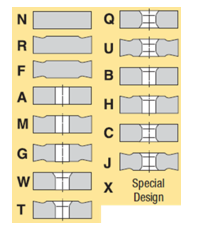
Figure 3: Kennametal Inc. Insert Type Identification. Image courtesy of Edmund Isakov.
5. Size
The fifth position is a significant one- or two-digit number indicating the size of the inscribed circle (I.C.) for all inserts having a true I.C. such as Round, Square, Triangle, Trigon, Pentagon, Hexagon, Octagon, and Diamond. This position designates the number of eighths of an inch in the nominal size of the I.C. It will be a one-digit number when the number of eighths of an inch in the I.C. is a whole number: 1 – 1 ⁄ 8″; 2 – 1 ⁄ 4″; 3 – 3 ⁄ 8″; 4 – 1 ⁄ 2″; 5 – 5 ⁄ 8″; 6 – 3 ⁄ 4″; 7 – 7 ⁄ 8″;
8 – 1″; 10 – 1-1 ⁄ 4″.
It will be a two-digit number carried to one decimal place when it is not a whole number: 1.2 – 5 ⁄ 32″; 1.5 – 3 ⁄ 16″; 1.8 – 7 ⁄ 32″; 2.5 – 5 ⁄ 16″.
On rectangular and parallelogram inserts, the width and length dimensions are used in place of the I.C. A two-digit number designates the sizes of these inserts. The first digit indicates the number of eighths of an inch in the width and the second digit indicates the number of fourths of an inch in the length of the insert.
6. Thickness
The sixth position is a significant one- or two-digit number indicating the number of sixteenths of an inch in the thickness of the insert. It is a one-digit number when the number of sixteenths of an inch in the thickness is a whole number: 1 – 1 ⁄ 16″; 2 – 1 ⁄ 8″; 3 – 3 ⁄ 16″; 4 – 1 ⁄ 4″; 5 – 5 ⁄ 16″; 6 – 3 ⁄ 8″; 7 – 7 ⁄ 16″; 8 – 1 ⁄ 2″; 9 – 9 ⁄ 16″; 10 – 5 ⁄ 8″.
It is a two-digit number carried to one decimal place when it is not a whole number: 1.2 – 5 ⁄ 64″; 1.5 – 3 ⁄ 32″; 2.5 – 5 ⁄ 32″; 3.5 – 7 ⁄ 32″.
7. Cutting-point configuration
The seventh position indicates the cutting point configuration: a radius or a facet. In the case of a radius, the number indicates how many of 1 ⁄ 64 of an inch in the radius: 0 – sharp corner (0.002″ max. radius); 0.2 – 0.004″; 0.5 – 0.008″; 1 – 1 ⁄ 64″; 2 – 1 ⁄ 32″; 3 – 3 ⁄ 64″; 4 – 1 ⁄ 16″; 5 – 5 ⁄ 64″; 6 – 3 ⁄ 32″; 7 – 7 ⁄ 64″; 8 – 1 ⁄ 8″; 10 – 5 ⁄ 32″; 12 – 3 ⁄ 16″ 14 – 7 ⁄ 32″ = 14; 16 – 1 ⁄ 4″; X – Any other corner radius.
In case of a facet, two letters are used. The first letter designates the facet angle: A – 45°; D – 60°; E – 75°; G – 87°; P – 90°; Z – Any other facet angle. The second letter designates the facet clearance angle:
A – 3°; B – 5°; C – 7°; D – 15°; E – 20°; F – 25°; G – 30°; N – 0°; P – 11°; Z – Any other facet clearance angle.
8. Edge preparation
The eighth position is a capital letter that defines edge treatment and surface finish as follows:
A – Honed from 0.0005 to less than 0.003 inch
B – Honed from 0.003 to less than 0.005 inch
C – Honed from 0.005 to less than 0.007 inch
E – Rounded Cutting Edge
F – Sharp Cutting Edge
J – Polished to 4 micro inch finish AA (arithmetic average) on Rake face only
K – Double Chamfered Cutting Edge
P – Double Chamfered and Rounded Cutting Edge
S – Chamfered and Rounded Cutting Edge
T – Chamfered Cutting Edge on Rake face only
9. Hand
The ninth position is a capital letter indicating the hand of an insert: R – Right Hand; L – Left Hand; N – Neutral.
10. Facet size
The 10th position is only used if there are letters in the seventh position. It will be a significant number representing the nominal sixty-fourths of an inch in length of the primary facet: 1 – 1 ⁄ 64″; 2 – 1 ⁄ 32″; 3 – 3 ⁄ 64″; 4 – 1 ⁄ 16″; 5 – 5 ⁄ 64″; 6 – 3 ⁄ 32″; 7 – 7 ⁄ 64″; 8 – 1 ⁄ 8″; 9 – 9 ⁄ 64″; 10 – 5 ⁄ 32″.
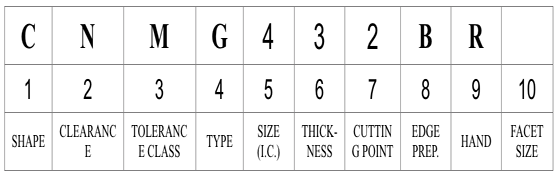
Example identification chart of the indexable insert (Inch Mode). Image courtesy of Edmund Isakov.
Inserts selection depends on workpiece material, chip control, surface finish, tool life, and the machine tool’s power and torque requirements. One of the commonly used indexable inserts for general turning is CNMG 432.
Due to the magazine’s space limitations, the authors provide the following tables showing most popular Kennametal’s indexable inserts only for general turning of steel, cast iron, and nonferrous alloys. These tables don’t cover all Kennametal chip breakers. (Figure 4 and Figure 5 also show Kennametal Inc. insert identification system and chip breaker identification system respectively.)
Table 1: Negative indexable inserts. Image courtesy of Edmund Isakov.
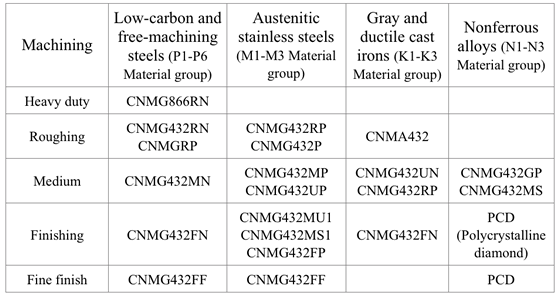
Table 2: Positive indexable inserts. Image courtesy of Edmund Isakov.
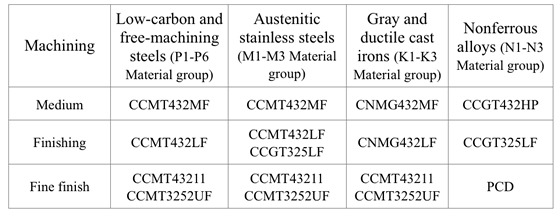
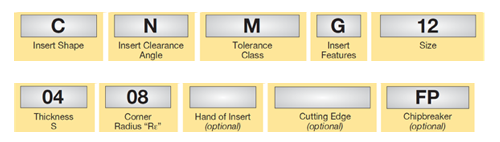
Figure 4: Kennametal Inc. Insert Identification System (Metric Mode). Image courtesy of Edmund Isakov.
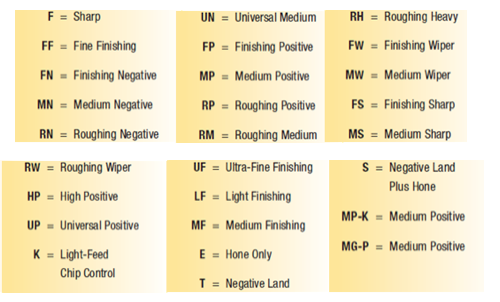
Figure 5: Kennametal Inc. Chip Breaker Identification System. Image courtesy of Edmund Isakov.
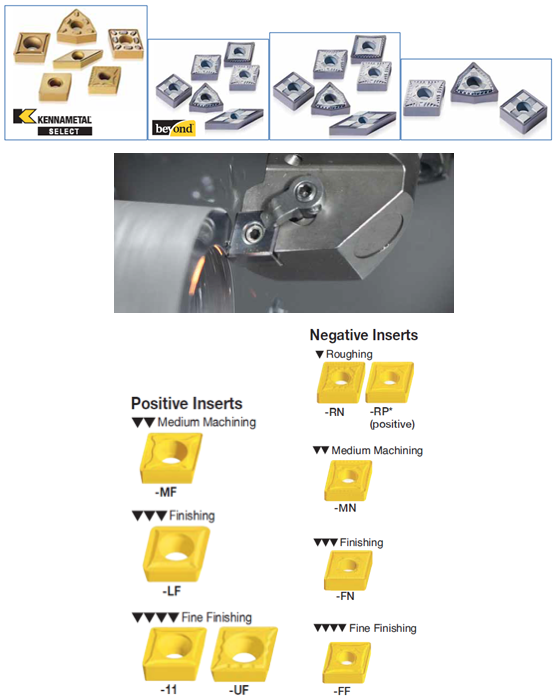
Figure 6: Kennametal Inc. Negative and Positive Inserts. Image courtesy of Edmund Isakov.
About the Authors: Edmund Isakov, Ph.D., is a consultant, writer, and frequent CTE contributor. He is the author of four books “Mechanical Properties of Work Materials” (Modern Machine Shop Publications, 2000); “Engineering Formulas for Metalcutting” (Industrial Press, 2004); “Cutting Data for Turning of Steel” (Industrial Press, 2009); “International System of Units (SI)” the CD-ROM (Industrial Press, 2013); and the software “Advanced Metalcutting Calculators” (Industrial Press, 2005). For more information, call (561) 369-4063, or email: edmundisakov9701@comcast.net. Shi ‘Steve’ Chen is Manager Product Engineering Turning at Kennametal Inc. For more information, call (724) 539-5321, or email: Shi.Chen@Kennametal.com
Related Reading
- For more on indexable cutting tools, see this related guide.
- For more on indexable_inserts, see this related guide.
Glossary terms in this article
Related



 MFGAxis Discussion
Be part of the shop-floor conversation
Like, save, or comment on this CTE story.
MFGAxis Discussion
Be part of the shop-floor conversation
Like, save, or comment on this CTE story.


MFGAxis Discussion