This article describes how one aerospace manufacturer boosted production capacity by partnering with a supplier, which began machining parts formerly made in-house.
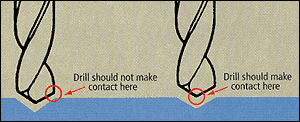
Spot drilling is a time-consuming process, but sometimes it is necessary to prevent drill walk. This article describes the reasons for spot drilling and the economic impact of adding the operation to a job. It also explains why a spot drill is a better choice for the operation than a center drill.
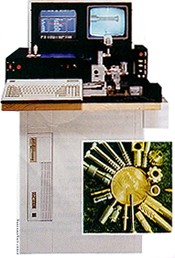
This article describes a self-contained micromachining center. The unit uses PC-based controls and a video system to machine small parts with precision, while giving the machinist a magnified view for setup and prototyping.
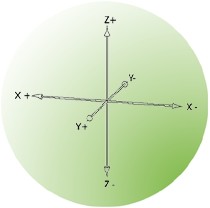
This article reviews the basics of coordinate systems and machine programming as a basis for presetting tools. The process for setting tool offsets is described with an explanation of the G-codes involved. In an accompanying article, the author tells how his company built its own presetter.
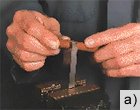
This article describes reconditioning tools through hand honing, a process that can help a tool produce 20 percent more parts. In explaining the art of hand honing, the author reviews the hone materials and honing techniques to be used.
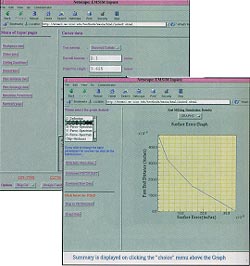
Machinists can now find machining simulators on the Web that can tell them what the results will be for a given set of conditions as well as what set of conditions will produce the results they are looking for. This article describes these simulators and the research consortium that developed them.
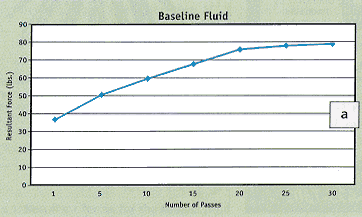
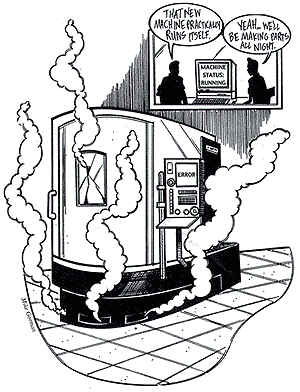
A tool design supervisor makes a case for cautious machining. This article explains how, by extending tool life, less aggressive speeds and feeds can lead to greater economy than a shortened cycle time will yield. Tips for monitoring and recording tool data are also given.
The article looks at concerns being raised over ISO's plans to revise quality standards. An accompanying article discusses a Web site that strongly opposes the announced changes.