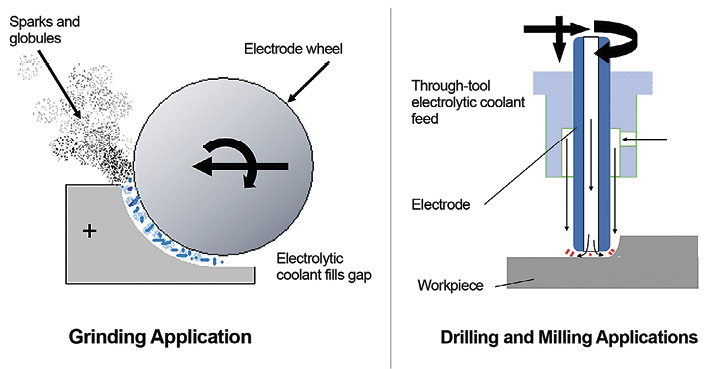
The Look Ahead department covers electro-erosion metal removal with a 5-axis horizontal machining center in the January 2017 issue of Cutting Tool Engineering.
On the one hand, many employers in the manufacturing industry view millennials as being self-absorbed, unfocused, disloyal, addicted to mobile devices and lazy. On the other, most millennials don't view a career in manufacturing as something they want to pursue.
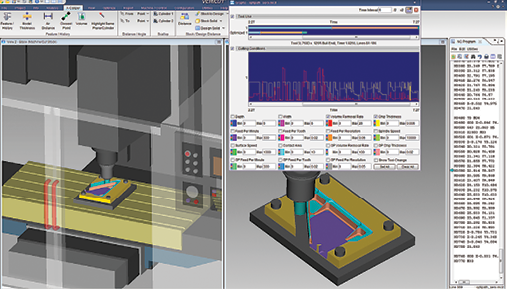
Good optimization software must take into account all the known challenges to optimal machining, which include heat, vibration, deflection, chip buildup, material hardness and a machine tool's horsepower, torque, rigidity, spindle speed, maximum feed rate and accuracy. What's more, end users must also select the appropriate cutting tools and machining parameters.
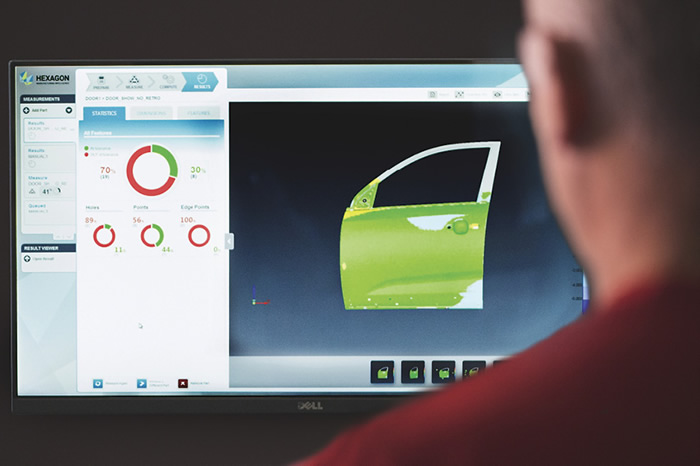
Where is the field of inspection headed and, more importantly, where do the manufacturers that depend on it desire it to head? In 2014, the Coordinate Metrology Society (CMS) combined forces with the University of North Carolina-Charlotte to find out.
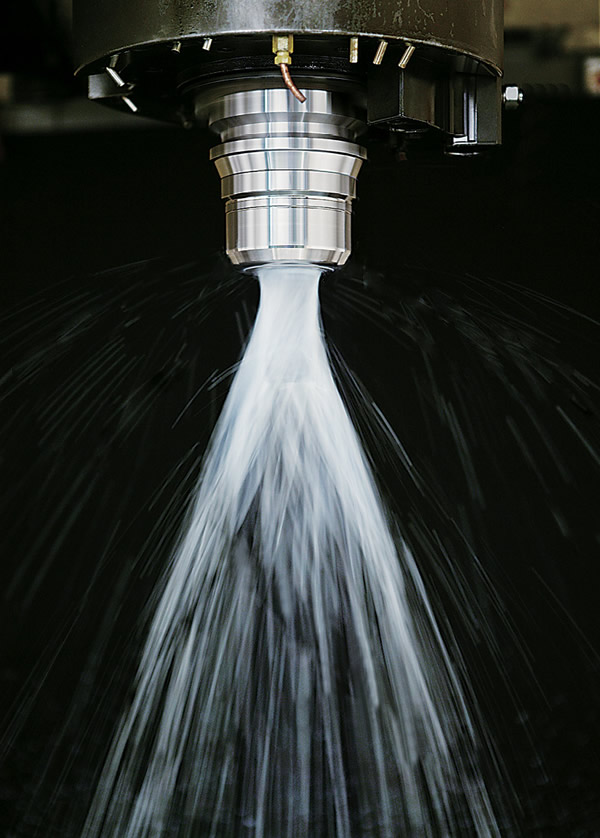
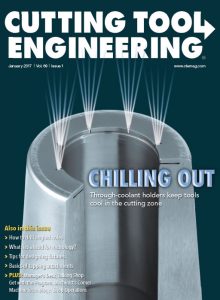
Because through-coolant toolholders eliminate the variances often experienced with external cooling nozzles, the additional cost of such holders, which is sometimes zero, can be easily justified through the reduction of cycle times and improvement of tool life and part quality.
We called them "submarines." Tough, 17-4 PH stainless steel forgings shaped like miniature German U-boats, each requiring several ¼" (6.4mm) through-holes to be drilled at a 25° angle. Each sub was loaded into a jig that held it at the required angle, and a metal plate fitted with hardened steel bushings was then clamped to the top of the jig before the holes were produced with a drill press.
Presented here is the second part of a two-part series of columns about the importance of becoming familiar with CNC programming code. The following describes the steps involved in manually writing a program.
Before CNC lathes, most high-volume turned parts were made on multispindle, cam-driven screw machines. Setup times were long, and great skill was needed to design the cams and grind the cutting tools. However, by being able to perform a dozen or more operations simultaneously, they could produce hundreds—often thousands—of parts per hour.