Skip to content
Operation / Process

Machining

Optional: narrow results to one content type.
Select one or more.
Select one or more.
Select one or more.
Reset

Latest in Machining

Turning Stainless Made Painless
Article March 1, 1997 Mike Castner
Turning Stainless Made Painless
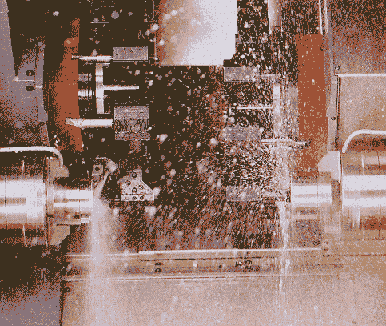
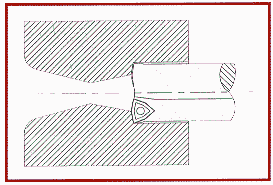
Stainless steel is one of the more difficult materials to cut. This article discusses the problems that can occur when turning various types of stainless steels, the reasons for these problems and ways to avoid them. Advice is given on diagnosing problems based on tool-wear patterns. The article also suggests ways to correct problems once they are discovered.
The Performance Edge: Drilling Performance
Article February 1, 1997 Brent Lindsey
The Performance Edge: Drilling Performance
This article makes the case that a core drill is the best tool for opening existing holes. Being designed for the operation, the two-flute indexable drill can produce more accurate holes with less tool wear and breakage than alternatives such as boring bars, drills or endmills.
The Need for Feed Units
Article February 1, 1997 Tom Lingafelter
The Need for Feed Units
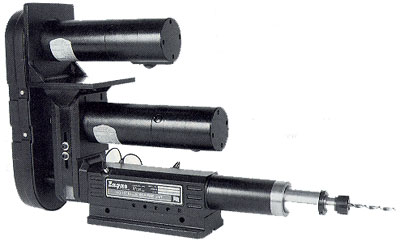
There are several types of feed units for drilling and tapping on the market, varying in capability and the type of drive. This article discusses the difference between units and suggests questions users should ask themselves before selecting a unit. Factors to be considered include the volume of production, cost engineering and tool requirements.
Hole in One: Drilling Performance
Article October 1, 1996 Timothy White
Hole in One: Drilling Performance
Solid-carbide drills made with advanced submicrograin carbide are capable of producing holes that meet tight specifications without secondary operations. This article explains how these tools produce reamer-like finishes while offering extended tool life and shortened cycle times. An accompanying article discusses coatings for solid-carbide drills.
Rigid Rules: General Industry Coverage
Article August 1, 1996 Allen Krenick
Rigid Rules: General Industry Coverage
There are some tapping situations that call for a rigid tapholder and some that call for a length-compensating holder. Often the choice depends on the capabilities of the machine and the CNC driving the tap. This article discusses why a machinist might choose one type of tapholder or the other.
The Good, the Bad and the Retapped
Article August 1, 1996 John Edmond
The Good, the Bad and the Retapped
Internal threads can end up undersized because of the work material's properties or because of changes to the hole's dimensions caused by plating or heat-treating processes performed after tapping. This article explains H- and D-limits and how to use them to specify a tap that will produce the right size thread, regardless of any post-tapping operations.
The Hard Truth: General Industry Coverage
Article June 1, 1996 Leonard Pukaite
The Hard Truth: General Industry Coverage
The fundamentals of wheel dressing and truing are reviewed in this article, which covers the proper maintenance of a wide variety of wheel bonds and abrasive types. The article also discusses different truing techniques and their appropriateness for different uses.
Creep-Feed Exam: General Industry Coverage
Article June 1, 1996 Trevor Howes
Creep-Feed Exam: General Industry Coverage
Researchers at the Center for Grinding Research performed a series of creep-feed grinding tests to determine the causes of the heat damage and striations they observed. The tests involved grinding slots and vertical faces. This report discusses the dynamics behind these problems and suggests ways to avoid them.
Superabrasive Safety: Safety, Standards & Compliance
Article June 1, 1996 Thomas Service
Superabrasive Safety: Safety, Standards & Compliance
Standards governing grinding-wheel safety testing do not cover all superabrasive wheels. This article suggests that these standards should include them. The author explains why as he describes a typical superabrasive wheel and the dynamics of superabrasive wheel failure.
EDM Wire Covers All the Angles
Article April 1, 1996 Christopher Wilkens
EDM Wire Covers All the Angles
With wire EDM, the properties of the wire will have a large impact on the performance of the operation as well as the ease of rethreading. This article discusses the properties that ensure a good spark and reliable performance even when cutting at an angle.

Keep exploring