Skip to content
Product Category

Materials & Raw Stock

Optional: narrow results to one content type.
Select one or more.
Select one or more.
Select one or more.
Reset

Latest in Materials & Raw Stock

Size Matters
Articles June 1, 2000 Alan Richter
Size Matters
The trend toward developing finer and finer carbide grains continues. The author looks at recent developments in the production of nanosized tungsten-carbide grains, which are smaller than 0.2 microns in diameter. Though not used widely at present for the production of cutting tools, some predict that will change as the technology evolves.
Abrasive Personality: Drilling Performance
Articles May 1, 2000 Kimberly R. Pontius
Abrasive Personality: Drilling Performance
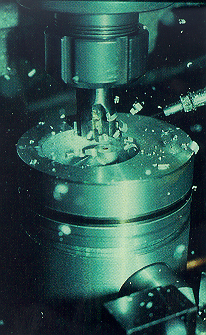
High-silicon aluminum--aluminum that consists of at least 11.8 percent silicon--has qualities such as lightness and strength that appeal to automakers. The abrasives nature of the material, however, makes it difficult to machine. The author offers suggestions for milling, tapping, drilling, turning and grinding high-silicon aluminum.
Dry Run: Drilling Performance
Articles February 1, 2000 Derek Phillips
Dry Run: Drilling Performance
Dry milling and turning grow in popularity day by day, but dry drilling is nanother matter. Because of the nature of drilling, it's more difficult to nperform this operation without coolant. Still, progress is being made, nthanks to research and more sophisticated coatings.n
Machinability of Sintered Steel: Drilling Performance
Articles February 1, 1999 E. Gorzkowski
Machinability of Sintered Steel: Drilling Performance
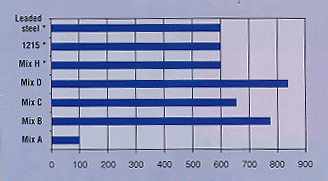
Researchers from Lehigh University report the results of drilling tests conducted using sintered steel samples. The samples were prepared using different machinability-improving additives. The results showed that sintered steel with low-alloy steel and resulferized sintered steel are nearly as machinable as wrought steel.
Adaptive Ceramic Machining
Articles August 1, 1998 Changsheng Guo
Adaptive Ceramic Machining
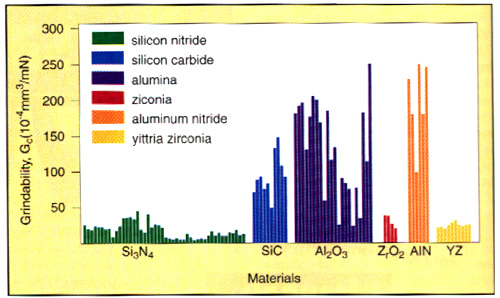
Machining ceramics is considered a difficult and costly operation. With the growing use of ceramics, shops are anxious to find cost-effective ways to work with the materials. This article discusses attempts by researchers to achieve maximum metal-removal rates without damaging the workpiece.
Tantalum and Niobium: Drilling Performance
Articles April 1, 1998 Bernard North
Tantalum and Niobium: Drilling Performance
Tantalum and Niobium are important components in the composition of carbide tools. They are also among the most expensive. This article explores how recent trends in metalcutting and tool usage will effect the supply of these two components.
Countersinking Aircraft Materials
Articles October 1, 1997 William Cleveland
Countersinking Aircraft Materials
This article traces the changes in countersink design and materials that have been made to satisfy the demands of the aerospace industry. The advantages and disadvantages of different types of modern countersinks are discussed.
Turning Stainless Made Painless
Articles March 1, 1997 Mike Castner
Turning Stainless Made Painless
Stainless steel is one of the more difficult materials to cut. This article discusses the problems that can occur when turning various types of stainless steels, the reasons for these problems and ways to avoid them. Advice is given on diagnosing problems based on tool-wear patterns. The article also suggests ways to correct problems once they are discovered.
Ceramics Get Tough: Turning Performance
Articles September 1, 1996 Joseph Halloran
Ceramics Get Tough: Turning Performance
Improvements in cermet and ceramic inserts have made them a good choice for high-speed milling. This article describes how the compositions and designs of these newer inserts make them tough enough to withstand the punishment of a milling operation while maintaining the hardness that makes them wear-resistant.
Powder Particulars: General Industry Coverage
Articles June 1, 1996 Norman Rohr
Powder Particulars: General Industry Coverage
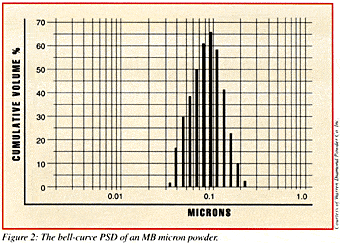
This article describes the shapes and sizes of diamond particles produced through standard manufacturing processes. The uses for these different types of particles are also explained, with an emphasis on particles used in superfinishing powders and slurries.
The Time is Right for Cermets
Articles March 1, 1996 Ronald Biagiotti
The Time is Right for Cermets
Cermet inserts have evolved into cutting tools capable of finish-turning steel reliably at high speeds. This article traces the developments that have led to modern cermets and describes the properties that enhance the performance of these tools. The development of coatings for cermets is also covered.

Keep exploring