Resources
Blind Resources
Explore 35 published CTE resources related to Blind across 4 articles, 25 products, 2 videos, and 4 news items.
4
Articles
25
Products
2
Videos
4
News
Articles
4 articles
Products
25 products
Videos
2 videos
News
4 news items
Browse
Browse all Blind resources
Browse results
Beyond the Ban: General Industry Coverage
The EPA's ban on ozone-depleting chemicals had an impact on the formulation of metalworking fluids containing 1,1,1 trichloroethane. This article looks at the reasons for the ban and the industry's efforts to find replacement substances for the banned chemicals.
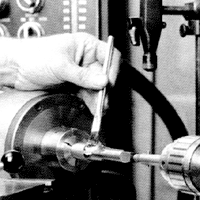
Reassessing Recessing: Turning Performance
Automatic recessing heads feed a cutter out at a right angle to the spindle's rotation axis as downward pressure is applied to the housing. This article looks at the advantages of using these units and reviews the different types of head available, including heads for special applications and multispindle automatics.
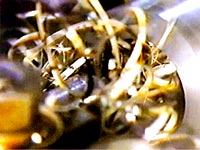
Strictly Boring: Turning Performance
When machinists plan a boring operation, they must rely on general turning data. Typically, this data is developed from OD turning operations, not boring operations. This article provides cutting data and recommendations specifically for boring that take into account such unique problems as boring bar deflection and chips trapped inside the bore.
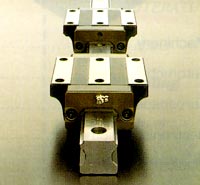
Anatomy of a High-Performance Machine
This article looks at different machine tool components and their impact on the machine's ability to operate at high speeds and feeds. Components covered include motors, drives, bearings, spindle coolant mechanisms, toolholders and CNC.
Milling Inserts Shape Up
Changes in milling practices have placed new demands on the cutting tool. This article discusses the features toolmakers have added to their milling insert geometries to control chips and cutting forces. The article also reviews the milling process and the forces that act on the insert.
Thread Rolling on CNC Machines
Thread rolling produces external threads by forming the profile instead of cutting it. This guide covers where CNC thread rolling fits, why it can outperform cutting, and what shops should watch in setup.
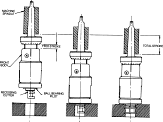
Driving the Tap: Turning Performance
The choice of tapping driver, the component between the spindle and the tap, can affect the quality and accuracy of the threads as well as the rate of wear on the tap and the machine tool. This article discusses how features such as length compensation and self-reversing protect against damage caused by machine and tool errors.
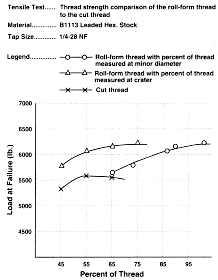
Threads Will Roll: Drilling Performance
Roll-forming taps produce internal threads by displacing the metal under pressure rather than cutting it. This article explains how to perform the operation to achieve good quality threads. Formulas and charts help the user calculate the proper size hole and the size of tap to use for a desired thread.
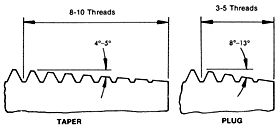
Tapping Deep Holes: Guide to Chip Evacuation and Tool Life
Deep-hole tapping raises chip evacuation, lubrication, and torque risk. This guide covers practical depth limits, tap selection, and process controls for deeper threaded holes.

It’s All Been Arranged
Managers at California's Dowty Aerospace take full advantage of computers to design parts, program machines and track jobs from beginning to end. This shop profile talks about how Dowty has combined this computer-based organization with cell-based manufacturing to maintain efficiencies and keep lines of communications clear.
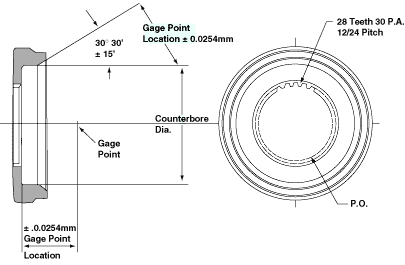
Harder Than Anticipated: Turning Performance
A shop supervisor and education manager recount the evolution of a job that didn't proceed exactly as planned. Because the powder-metal part was harder and its as-pressed dimensions were not as accurate as originally expected, adjustments and improvisations were needed to produce the finished parts as quickly and as cheaply as quoted.

Cracking the Code: Turning Performance
This article reviews the nomenclature that toolmakers use to identify inserts. Both ANSI and ISO codes are described character by character. A chart lists all of the possible choices for each position in the code and what each code letter or number signifies.