


Resources
Tapping Resources
Explore 95 published CTE resources related to Tapping across 40 articles, 43 products, 5 videos, and 7 news items.
40
Articles
43
Products
5
Videos
7
News
Articles
40 articles
Products
43 products
Videos
5 videos
News
7 news items
Browse
Browse all Tapping resources
Browse results
Cold Facts: General Industry Coverage
Cold-forming taps shrink tapping cycle times.
Challenges on Tap: General Industry Coverage
Shops and toolmakers discuss the challenges of tapping.
What’s on Tap?: General Industry Coverage
Tap manufacturers introduce products to improve tapping.
Low-Silicon Lowdown: General Industry Coverage
Simplifying tapping operations on low-silicon aluminum.
Going Deep: General Industry Coverage
Tips for deep-hole tapping in titanium and other aerospace-grade materials. Advice is provided by NIST and the International Titanium Association.
Abrasive Personality: Drilling Performance
High-silicon aluminum--aluminum that consists of at least 11.8 percent silicon--has qualities such as lightness and strength that appeal to automakers. The abrasives nature of the material, however, makes it difficult to machine. The author offers suggestions for milling, tapping, drilling, turning and grinding high-silicon aluminum.
Driving the Tap: Turning Performance
The choice of tapping driver, the component between the spindle and the tap, can affect the quality and accuracy of the threads as well as the rate of wear on the tap and the machine tool. This article discusses how features such as length compensation and self-reversing protect against damage caused by machine and tool errors.
Tapping Deep Holes: Guide to Chip Evacuation and Tool Life
Deep-hole tapping raises chip evacuation, lubrication, and torque risk. This guide covers practical depth limits, tap selection, and process controls for deeper threaded holes.
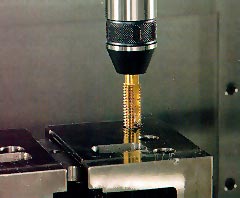
New Twists on Threading: General Industry Coverage
The advent of CNCs made new threadmaking technologies practical. Among these technologies are rigid tapping and thread milling. This article describes the uses, techniques and benefits of these two threadmaking methods.
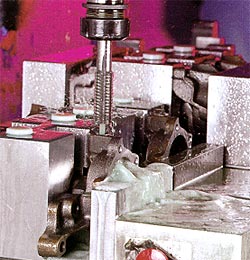
Rigid Rules: General Industry Coverage
There are some tapping situations that call for a rigid tapholder and some that call for a length-compensating holder. Often the choice depends on the capabilities of the machine and the CNC driving the tap. This article discusses why a machinist might choose one type of tapholder or the other.
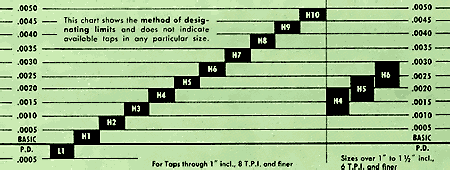
The Good, the Bad and the Retapped
Internal threads can end up undersized because of the work material's properties or because of changes to the hole's dimensions caused by plating or heat-treating processes performed after tapping. This article explains H- and D-limits and how to use them to specify a tap that will produce the right size thread, regardless of any post-tapping operations.
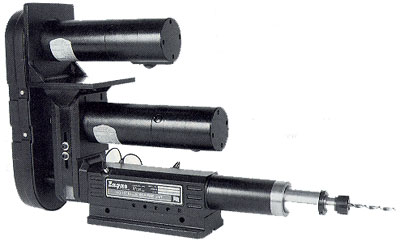
The Need for Feed Units
There are several types of feed units for drilling and tapping on the market, varying in capability and the type of drive. This article discusses the difference between units and suggests questions users should ask themselves before selecting a unit. Factors to be considered include the volume of production, cost engineering and tool requirements.