Fastened for flight: Drilling Performance
Some of the most critical parts found in an airplane are also the smallest and most abundant.
Rivets aren’t sexy like jet engines and flight control systems, but that doesn’t make rivets less important to the well-being of an aircraft. For example, a Boeing 747 has nearly 1.5 million such fasteners, all of which contribute to structural integrity.
Some newer planes, such as the Boeing 787 Dreamliner, require far fewer rivets and screws due to enhanced use of lightweight composite materials. Nonetheless, each fastener must be held firmly in place for an aircraft to be deemed flightworthy. Even a spacecraft, which is expected to endure the extreme speeds and temperatures of interplanetary travel, is fastened together with rivets not all that different from those found on a fishing boat or recreational vehicle.
The most common method of countersinking in aerospace applications is with a spring-loaded microstop. Image courtesy of OSG USA
Give a Hand
A large percentage of these fasteners still are installed manually.
“Several methodologies exist, but the most prevalent is the use of a power drill and spring-loaded microstop, also known as a microcage,” said Linn Win, senior business development manager at OSG USA Inc., Irving, Texas. “The cutting tool itself is typically a piloted 100° or 130° countersink with a threaded shank that screws into the microstop. You set it to the desired depth, place the tool’s pilot into a pre-drilled hole, engage the drill motor and then push down to produce the countersink.”
He described a few methods that are more productive. One is to use a semi-automated drilling unit, which can drill and countersink in a single-shot operation. Also, robotic and fully automated systems not only accurately countersink a hole but install a rivet, commonly known as drill and fill.
Whatever the method, a backing bar or similar type of support — usually placed on the inside of an aircraft — often is needed to keep aircraft skin from deflecting during drilling. In other instances, two or more sections of material may need to be disassembled, cleaned, deburred and then reassembled before rivet installation. Compared with chamfering a hole in a machined part, countersinking fasteners on an aircraft fuselage is complex work.
These operations are made even more complex by the fact that aircraft-makers use a wide range of materials to construct their wares. The all-aluminum skins of yesteryear slowly are being eliminated in favor of composite sandwiches that in some applications include titanium, creating challenges for cutting tool manufacturers.
In addition, each aerospace OEM has its own fit requirements for fasteners, which might vary from plane to plane or even from one specific area to another in an individual aircraft.
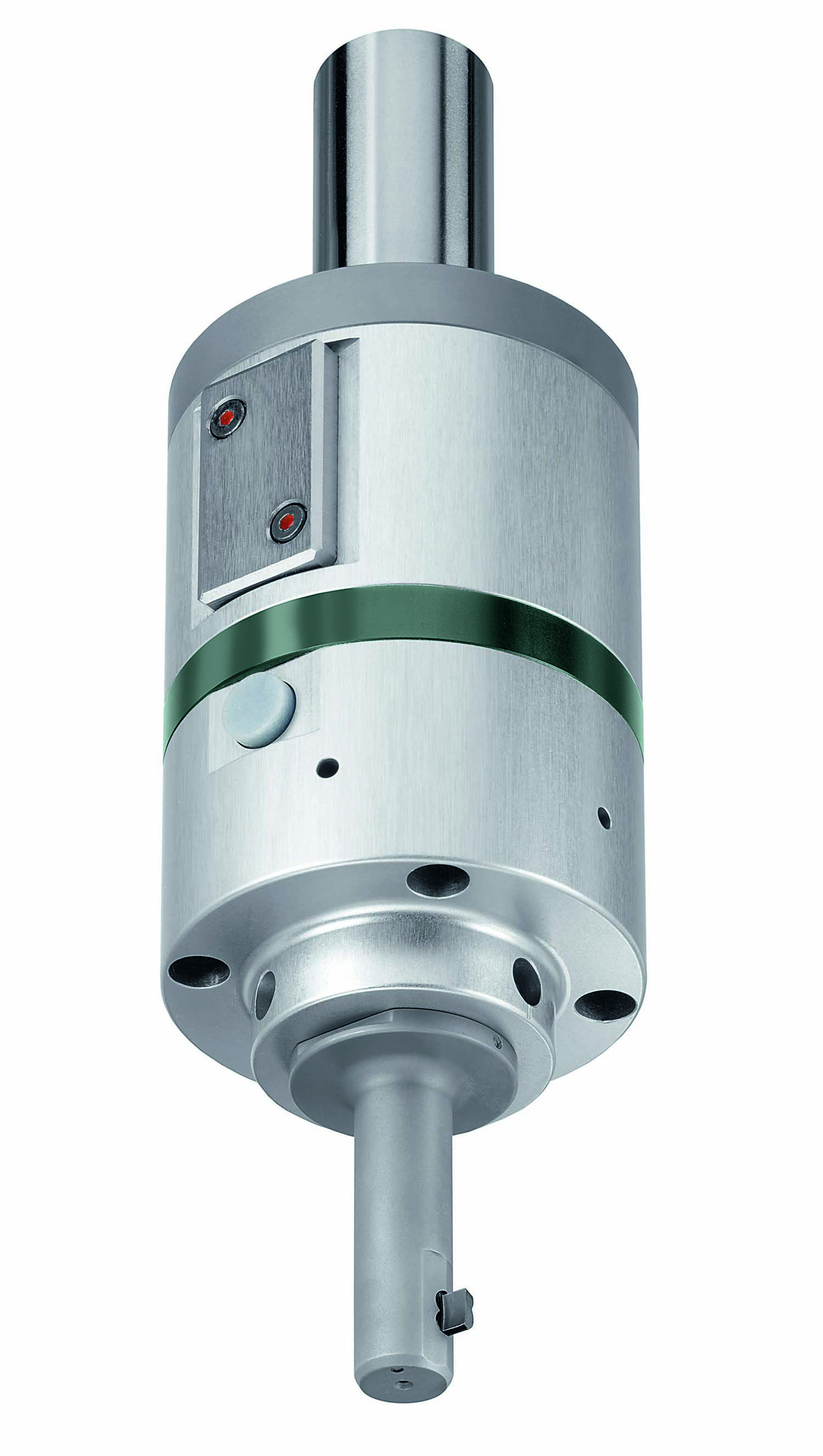
The Solo tool has a retractable, spring-loaded bladeto countersink or counterbore the back of a hole. Image courtesy of Heule Tool
Compensation Quandaries
“The requirements vary greatly based on the size of the plane, the load and stress of a mating section and the manufacturer,” Win said. “Cutting tool manufacturers must therefore deal with a broad range of materials and thicknesses, hole sizes, countersink shapes and depths, as well as different methods of fastener installation and hole prep, making it difficult to standardize cutting tools. Because of this variability, countersinking tools must often be customized to the fastener and its unique application.”
It’s niche work to be sure. But due to the large volume of aircraft being made, never mind the number of countersunk holes in each one, there’s no shortage of high-quality custom and off-the-shelf cutting tools. One example of the latter comes from Heule Tool Corp., Loveland, Ohio. President Gary Brown said the company’s Comp combination countersinking and holemaking tools automatically compensate for the uneven surfaces found on many aircraft parts.
Review the print ads from this magazine to continue
This quick advertiser review unlocks the rest of the article and keeps the full-screen reader focused on the ads instead of the page chrome.