
LaserPlus In-Process Measurement
LaserPlus In-Process Measurement
Thread milling is a versatile, cost-effective process for cutting a variety of threads, parts and workpiece materials on the same machine. This process produces an internal or an external thread by doing a helical interpolation on a CNC machine, which can make helical paths.
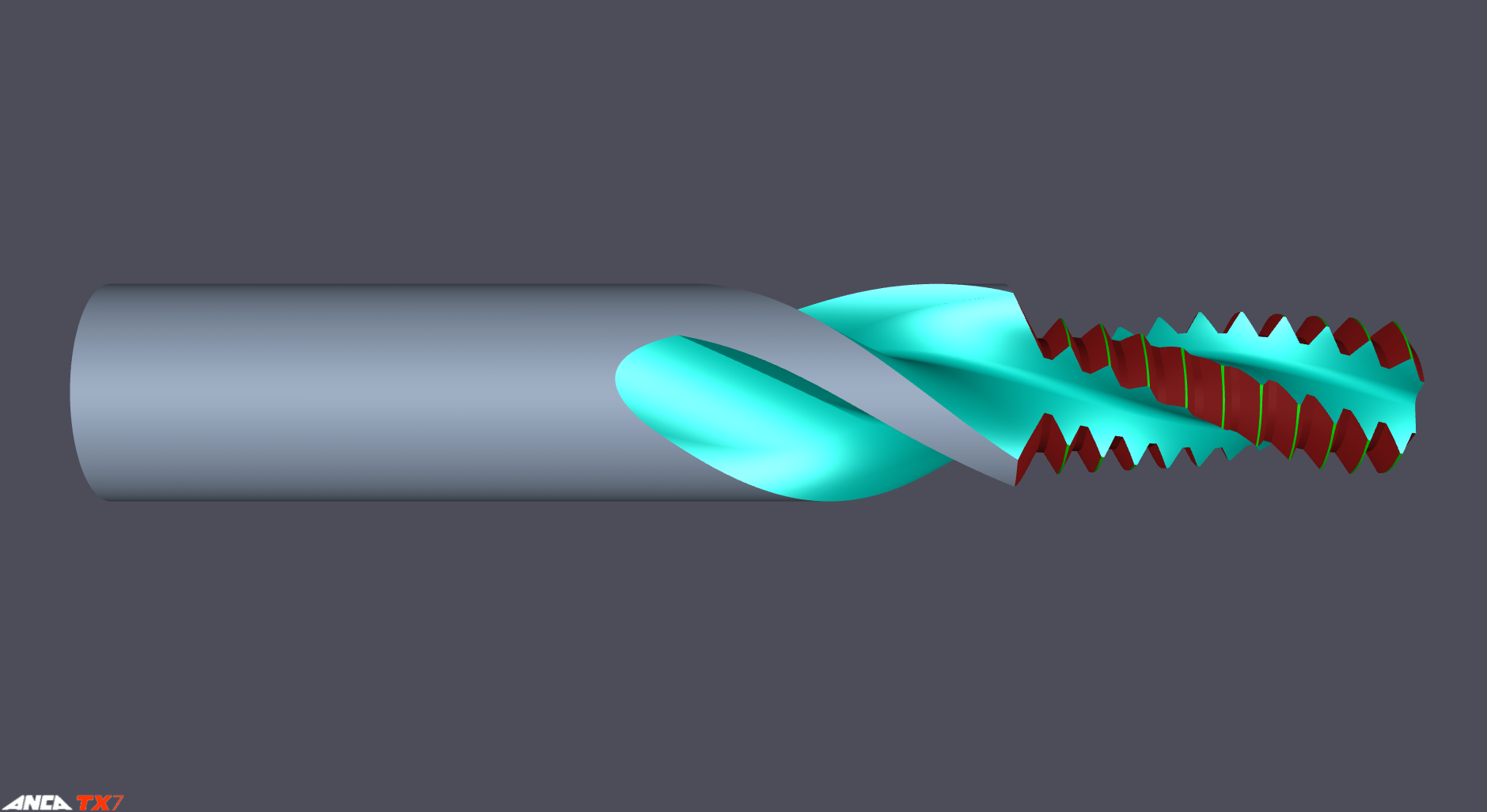
Thread milling is a versatile, cost-effective process for cutting a variety of threads, parts and workpiece materials on the same machine. This process produces an internal or an external thread by doing a helical interpolation on a CNC machine, which can make helical paths.
Thomson Mathew, ANCA product manager said: "Thread mills generate superior burr-free surface finishes and reduce tool inventory costs. Shops can use the same tool for both left and right-hand threads, as well as for different thread tolerances. A broad range of materials and hole diameters can also be thread milled with the same tool. Unlike tapping, threads produced through milling can be machined to full depth at high accuracy, even in hardened materials. Some of the other advantages are faster cycle times and less tool breakage – basically these are a really effective tool."
Advantages of the Threadmill
- Provides a 20 to 40 percent increase in tool life compared to other threading process.
- Increased strength and rigidity specially on hard material when cutting forces are applied.
- Reduces inventory costs of tooling.
- Threadmill Inserts allow for small to larger cutter diameters.
Thomson continued: "Our tool and cutter grinders can effectively manufacture a range of thread milling cutters. Customers wanting to manufacture this cutters in large volume or for lights out manufacturing can make use of the Blum laser for measurement and compensation inside the machine.
"There are so many great applications available that people are not familiar with. For example – 'thrilling.' This is the process of threading and drilling (accomplished in the reverse order). The cutting tool tip is shaped like a drill while the body has a thread-shaped form with a countersink cutter form near the shank. The cutter first plunges to drill the hole and then the thread is circularly interpolated while the chamfer is also formed. The advantage is this process eliminates a tool, toolholder and tool change."
The Blum laser inside the machine can measure and compensate the tool diameter and crest width. There is an option in software to control the upper and lower tolerance for the diameter compensation.
The software has two different operations for thread grinding and cresting. This allows you to choose roughing and finishing wheels for threading and to use number of passes if required. The laser measurement is done after the cresting for diameter and width compensation.