

Resources
Why Resources
Explore 121 published CTE resources related to Why across 47 articles, 19 products, 20 videos, and 35 news items.
47
Articles
19
Products
20
Videos
35
News
Articles
47 articles
Products
19 products
Videos
20 videos
News
35 news items
Tungaloy responds to rising carbide costs
BIG Daishowa Hosts Breakfast & Learn Event
ZOLLER Open House Focuses on Integrating Success
The power of density determination in additive manufacturing
5 reasons why CFexpress is the future of industrial memory cards
Tricks and techniques for specifying surface texture parameters
Browse
Browse all Why resources
Browse results
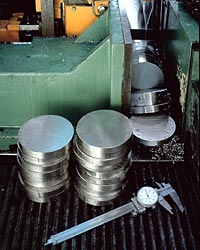
Vital Signs
How to recognize the signs that lead to bandsaw breakdowns.
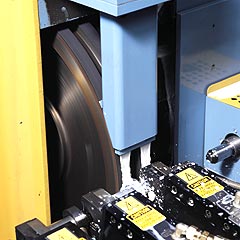
Bond Smart: Trade Shows & Events
Discussion of different types of bonds used to make superabrasive grinding wheels. Author provides tables with price comparisons, physical properties and operating parameters for various bonds.
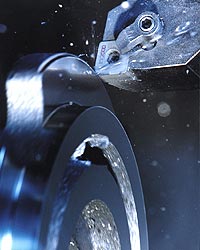
A Break in the Action
The author offers tips about making interrupted cuts while turning. He also discusses the differences between interrupted cuts in turning and milling and various types of materials.

Counting Dollars: Supply Chain & Logistics
Salaries earned by metalworking professionals, including machinists, production engineers, manufacturing engineers and corporate managers. Salaries are broken down by region, size of company and type of shop or manufacturing facility.

Silver Lining: Safety, Standards & Compliance
GE Superabrasives' silver-coated diamond crystal is designed for grinding tungsten carbide. Discussed are the benefits--reduced friction, greater crystal retention and a cooler grinding environment--and how to apply wheels made from the crystal.

Holding On: Drilling Performance
Discussion of different types of toolholders for lathes, including collets, drill chucks, bushings and keyless chucks. Author discusses best holder for different applications, based on his experiences.
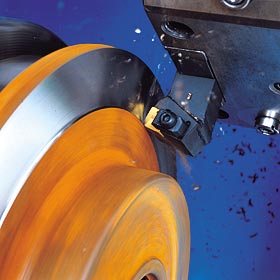
Ceramics Take a Turn: Turning Performance
Author describes applications for the two basic types of ceramic turning inserts–alumina and silicon nitride–as well as the types of parts and materials users have turned with them. Specifics about speeds, feeds and DOCs are given.
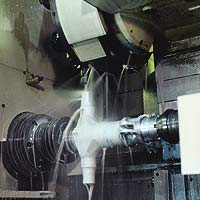
Hands Free: Turning Performance
Shop owners who operate multitask machines talk about the time and cost benefits of producing parts in a single chucking. They also discuss some of the problems they had when adopting the technology. Accompanying Articles focus on a multitask users group and machine that hard-turns and grinds.

Size Matters
The trend toward developing finer and finer carbide grains continues. The author looks at recent developments in the production of nanosized tungsten-carbide grains, which are smaller than 0.2 microns in diameter. Though not used widely at present for the production of cutting tools, some predict that will change as the technology evolves.
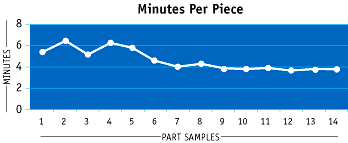
Killing Time: Drilling Performance
One company instituted a comprehensive plan for reducing setup times and saw its average setup time drop from 252 minutes to 39 minutes. The plan involves everything from standardizing tooling to consolidating raw materials to creating families of parts. The author outlines a step-by-step program that readers can apply to their metalworking setup operations.

Double Header
The author discusses the advantages and proper application of twin-cutter boring tools. They're recommended for rough-boring applications on castings, forgings and other jobs requiring a tool that can bore a cored hole. Details are provided on the three basic types of methods for rough boring with a twin cutter: balanced, stepped and full profile.
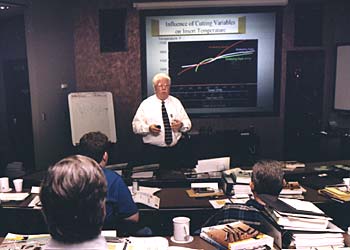
Tool Men
Establishing a good relationship with your cutting tool salesperson can benefit your operation. A good salesperson can help solve problems you don't have time to tackle and offer recommendations for machining difficult parts. The author also addresses what to do when a relationship sours.


