

Resources
Why Resources
Explore 121 published CTE resources related to Why across 47 articles, 19 products, 20 videos, and 35 news items.
47
Articles
19
Products
20
Videos
35
News
Articles
47 articles
Products
19 products
Videos
20 videos
News
35 news items
Tungaloy responds to rising carbide costs
BIG Daishowa Hosts Breakfast & Learn Event
ZOLLER Open House Focuses on Integrating Success
The power of density determination in additive manufacturing
5 reasons why CFexpress is the future of industrial memory cards
Tricks and techniques for specifying surface texture parameters
Browse
Browse all Why resources
Browse results
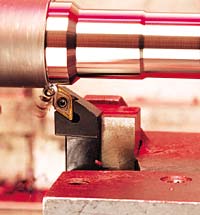
Dry Out: Drilling Performance
As the government publishes ever-stricter regulations for metalworking fluids, more shops try dry machining. The author examines the cost benefits of machining dry and looks at the various types of tool materials designed to enhance dry-machining applications.
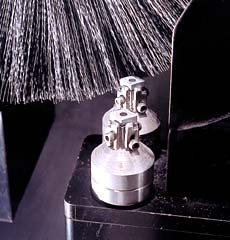
Getting a Better Edge: Design & Engineering
The author, an expert on cutting tool edge preparation, explains the importance of applying the proper edge hone to a tool. He also discusses a brush-type honing machine designed to apply a variable edge--a capability not available with other machines on the market.

Creeping Up
Creep-feed grinding is not as popular a process as it was predicted to become in the late 1980s. But a machine shop that specializes in CF grinding has found great success by using the process. The shop's owner and other CF-grinding experts contend that as workpiece tolerances become tighter and manufacturers begin using more exotic workpiece materials, CF grinding will grow in popularity.
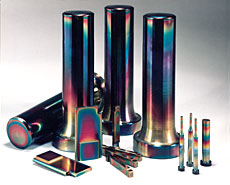
The Coating Edge: Drilling Performance
The author looks at some recent advancements in tool coatings: multilayer, nmultielement, diamond, nanocomposite.n
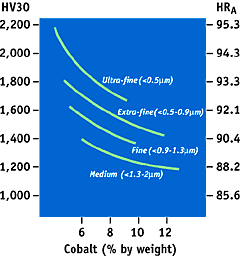
Grade Wise: Inspection Efficiency
Most people know that using the right grade of insert can improve nproductivity dramatically. Few know that the proper grade is also important nwhen utilizing round tools.
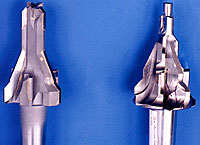
Extreme Drilling
A detailed description of a combination drill that machines six different nhole diameters. Used on a dedicated drilling machine that drills cast iron ncylinder heads, it was developed over a number of years.
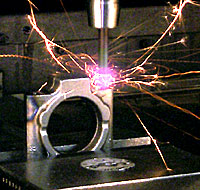
Dry Run: Drilling Performance
Dry milling and turning grow in popularity day by day, but dry drilling is nanother matter. Because of the nature of drilling, it's more difficult to nperform this operation without coolant.
Pecking Order: Drilling Performance
The CNCs on many lathes don't have drill-pecking cycles.
Lowering Your Grades: Turning Performance
Article discusses the disadvantages of carrying too many grades of carbide inserts. Often, using a less-than-optimal grade can save a machine shop money.
Under Pressure: Drilling Performance
Article defines what constitutes a high-pressure coolant-delivery system and offers advice for selecting such a system. Discussed are pumps, system prices and advantages of these systems when cutting metal.
Hard and Fast Rules: Turning Performance
Author describes what he's learned about turning hardened steel. Discussed are the machine tools needed as well as PCBN and ceramic inserts.

Thread Heads: CMM Inspection
Three companies that tap millions of holes annually offer advice for improving the tapping of steel and aluminum. Discussed is coolant application, equipment for tapping and determining speeds. There's also a sidebar on thread milling.


