Operation / Process

Milling

Optional: narrow results to one content type.
Select one or more.
Select one or more.
Select one or more.
Reset
Articles January 1, 2010
Personalizing putters
Productive Times feature Kevin Burns Golf, 408-244-7768, www.kbputters.com. Challenge: Maximize productivity and minimize tool breakage when roughing custom putter heads. Solution: A 5-flute, solid-carbide endmill that minimizes chatter. Solution Provider: Dura-Mill Inc., 800-444-6455, www.duramill.com.
Articles January 1, 2010
Accelerate into HSM
Machine Technology column from the January 2010 issue of Cutting Tool Engineering magazine.
Articles January 1, 2010
Easy to be hard
Milling plastics is just easy enough to be difficult.
Videos December 15, 2009
Thread milling
Rather than using taps to thread steel prior to hardening, a growing number of shops are opting to thread mill heat-treated steel.
Articles October 1, 2009
Turbocharging your toolpath
Get With The Program column in October 2009 issue of Cutting Tool Engineering magazine.
Articles October 1, 2009
A multiple-ton rebuild
Part Time column in October 2009 issue of Cutting Tool Engineering magazine.
Videos September 15, 2009
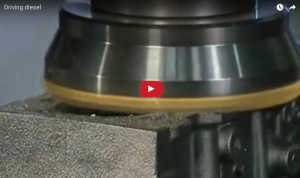
Driving diesel
Watch Sandvik Coromant Co.'s CoroMill 365 cutter mill an engine blockmade of compacted graphite iron in this online complement to our September CTE cover story.
Articles September 1, 2009 Frank Marlow, P.E.
A milling tools overview
An array of milling tools is available, including endmills, facemills and plain mills. Typical milling applications include facing, filleting or edge cutting, profiling, slotting, pocketing and blind slotting.
Articles September 1, 2009 Dr. Scott Smith
Three rules for cutting thin parts
In recent years, monolithic machined aluminum components have been replacing sheet metal assemblies throughout the aerospace industry. The monolithic structures are lighter, less expensive and stronger than their conventional sheet metal counterparts. Machining the components requires fewer special tools, fewer hand operations and less assembly time.
Articles July 1, 2009 Frank Marlow, P.E.
Parts of the milling machine
Unlike lathes, which have been around for thousands of years, milling machines are less than 200 years old. Because they require much more power than hand-driven lathes, the introduction of milling machines had to wait for the invention of industrial water and steam power.