


Resources
Composite Resources
Explore 81 published CTE resources related to Composite across 22 articles, 44 products, 5 videos, and 10 news items.
22
Articles
44
Products
5
Videos
10
News
Articles
22 articles
Products
44 products
Videos
5 videos
News
10 news items
Cellulose-based components mass produced with AP&T press line
CGTech announces worldwide reseller agreement
AM-produced mandrels provide new market opportunities
Composites manufacturing with advanced programming strategies
Composite material cutters offer a growing opportunity for toolmakers
The next generation of surface profilometer for in-process inspection
Browse
Browse all Composite resources
Browse results

X-Treme Machinists: Supply Chain & Logistics
The latest generation to enter the workforce comes to the shop floor with a different set of skills and experiences than their predecessors.
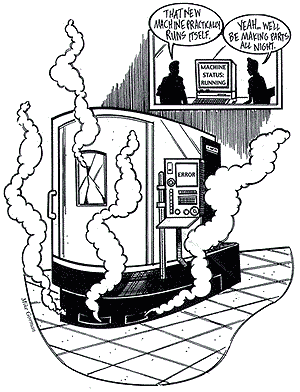
Back Off: Drilling Performance
A tool design supervisor makes a case for cautious machining. This article explains how, by extending tool life, less aggressive speeds and feeds can lead to greater economy than a shortened cycle time will yield. Tips for monitoring and recording tool data are also given.
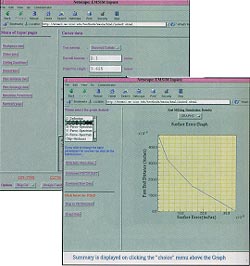
Desktop Machining
Machinists can now find machining simulators on the Web that can tell them what the results will be for a given set of conditions as well as what set of conditions will produce the results they are looking for. This article describes these simulators and the research consortium that developed them.

Hone Improvement: Inspection Efficiency
This article describes reconditioning tools through hand honing, a process that can help a tool produce 20 percent more parts. In explaining the art of hand honing, the author reviews the hone materials and honing techniques to be used.
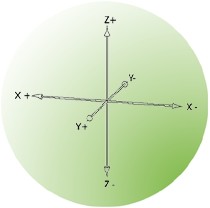
Ready, Preset, Go
This article reviews the basics of coordinate systems and machine programming as a basis for presetting tools. The process for setting tool offsets is described with an explanation of the G-codes involved. In an accompanying article, the author tells how his company built its own presetter.
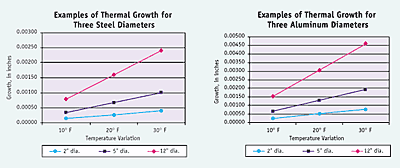
Tolerances Feel the Heat: Inspection Efficiency
With close-tolerance machining, variances in the temperature of the part or gage can lead to out-of-tolerance work. This article describes the compensation systems that have been developed to measure temperatures and make the necessary adjustments to gage readings.
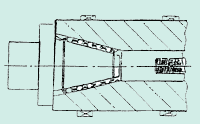
Steep Trouble: CMM Inspection
The steep-taper toolholder shank design remains popular, but it needs updating to keep pace with modern machining practices. This report suggests minor design changes that these researchers say might overcome steep tapers' limitations.

Inserts Show Their True Colors
Insert manufacturers have devised color-coding schemes to help users select the right tool for the job. This article explores the thinking behind these schemes and the toolmakers' efforts to design tools for the specific applications defined in their selection systems.
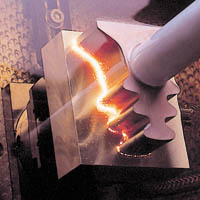
Continual Improvement: General Industry Coverage
With innovations in technology, EDM has found its place as a reasonable alternative to other precision machining operations. This article reviews five recent developments: the introduction of a new electrode material, operations that replace dielectric fluid with gas, the development of electro-conductive powders, the EDMing of nonconductive materials and a method for producing complex part geometries with simple electrodes.

Standard Issues: Safety, Standards & Compliance
The article looks at concerns being raised over ISO's plans to revise quality standards. An accompanying article discusses a Web site that strongly opposes the announced changes.

Through-Coolant Tools Raise Throughput
Routing coolant out through the tip of the tool can provide greater control of temperatures and chips. This article describes the benefits of through-coolant tools and describes the methods of retrofitting machines to accept through-coolant tools.
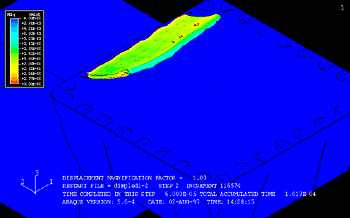
How Simulation Improves Machining Tool Design and Performance
Computer simulations of the cutting process can help tool designers predict the effects of tool-geometry changes. This article describes how one manufacturer is using the most recent advances in computer modeling to reduce the need for producing and testing prototype inserts. An accompanying article describes a commercially available simulation program.