



Resources
Composite Resources
Explore 81 published CTE resources related to Composite across 22 articles, 44 products, 5 videos, and 10 news items.
22
Articles
44
Products
5
Videos
10
News
Articles
22 articles
Products
44 products
Videos
5 videos
News
10 news items
Cellulose-based components mass produced with AP&T press line
CGTech announces worldwide reseller agreement
AM-produced mandrels provide new market opportunities
Composites manufacturing with advanced programming strategies
Composite material cutters offer a growing opportunity for toolmakers
The next generation of surface profilometer for in-process inspection
Browse
Browse all Composite resources
Browse results

Pipe Tapping: Guide to Taper Pipe Threads
Pipe tapping is one of the more demanding threading operations because taper threads raise alignment, sealing, and tool-load requirements. This guide reviews the tools and techniques used to produce taper pipe threads reliably.

Fixturing Advances Hold New Promise
This article reviews the fixturing innovations users are beginning to see on the market. Some of the discussion focuses on the design criteria that has emerged out of an ongoing NIST-funded study.
Single-Pass Bore Finishing: General Industry Coverage
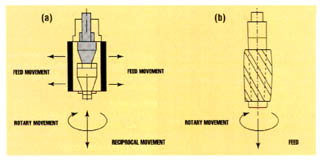
Superabrasive bore finishing can achieve results in one pass that rival the finishes produced in several passes by other bore sizing operations. This article recounts how a number of shops have used superabrasive tools to finish bores with a higher degree of quality and a lower overall cost per piece.
The Secrets of HSK Toolholding
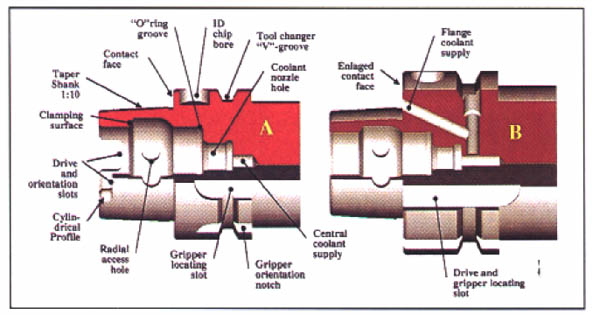
HSK toolholding affects rigidity, accuracy, and repeatability. This guide explains the practical reasons shops choose HSK and what they need to understand before standardizing it.
Manual Mills Get CNC Makeovers
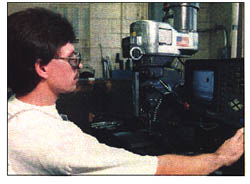
A manual milling machine can be retrofitted with a CNC system for about one-fourth the cost of a brand new CNC machine. This article discusses the pros and cons of retrofitting and provides guidance to determine when retrofitting is the most appropriate solution.
Opening the Door to Greater Control
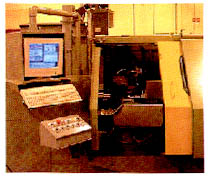
This article charts the gradual move by CNC manufacturers from proprietary hardware-based machine controllers to open, software-based systems. The article also reviews recently developed controllers that represent steps in the direction of totally open controls.

Precision In Their Pocket: General Industry Coverage
Researchers using computer simulation and refined probing techniques attempted to mill a pocket as accurately as possible. This report tells how the researchers used their high-tech tools and how close to perfection they came.

Flowing Together: General Industry Coverage
Tramp oils, which are machine lubricants and hydraulic fluids that find their way into the coolant, can seriously hinder the coolant's performance. This article discusses the properties and components of machine maintenance fluids that can ensure their easy separation and removal from the coolant.
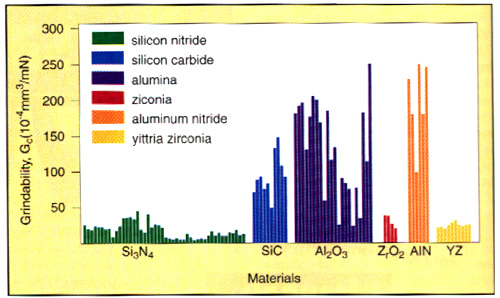
Adaptive Ceramic Machining
Machining ceramics is considered a difficult and costly operation. With the growing use of ceramics, shops are anxious to find cost-effective ways to work with the materials. This article discusses attempts by researchers to achieve maximum metal-removal rates without damaging the workpiece.
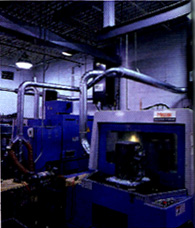
Are Metalworking Fluids a Threat to Health?
Representatives of management, labor and the government are working together to arrive at a workable regulation to reduce shop-floor exposure to metalworking fluid mist. This article reviews the debate and looks at ways shops can reduce their own workers' exposure.

Speed Tapping: Drilling Performance
Tap and tapholder manufacturers have introduced technology to speed up the inherently slow tapping process. This article reviews a number of innovations, including tension/compression holders for rigid tapping, self-reversing tapping heads and quick-change tapholders.
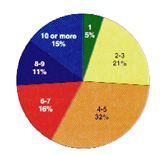
Purchasing Holds the Reins: Supply Chain & Logistics
This report of a Cutting Tool Engineering survey charts the shift in the way shops are purchasing tools. As the survey's findings indicate, an increasing number of tools are being bought directly from manufacturers and many shops are narrowing down the number of tool suppliers they do business with.


