

Resources
Why Resources
Explore 121 published CTE resources related to Why across 47 articles, 19 products, 20 videos, and 35 news items.
47
Articles
19
Products
20
Videos
35
News
Articles
47 articles
Products
19 products
Videos
20 videos
News
35 news items
Tungaloy responds to rising carbide costs
BIG Daishowa Hosts Breakfast & Learn Event
ZOLLER Open House Focuses on Integrating Success
The power of density determination in additive manufacturing
5 reasons why CFexpress is the future of industrial memory cards
Tricks and techniques for specifying surface texture parameters
Browse
Browse all Why resources
Browse results
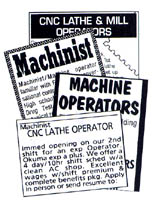
Staffing Shortage Stymies Metalcutting Shops
An exclusive survey finds shops struggling to locate and hire skilled labor. This report of the survey's findings also reveals the most popular techniques to ease staffing woes.
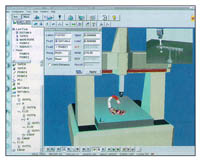
CMM Made Easy
Next-generation CMM software offers users a simple interface, the ability to program the machine directly from CAD data files and the opportunity to write programs off-line. This article describes the latest advancements in CMM software and shows how older machines can be retrofitted to take advantage of the software's features.
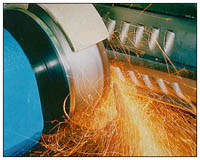
Learning With an Edge: General Industry Coverage
Using his students as researchers, an industrial-arts teacher sets up an experiment to test claims being made for tool resharpening using cubic boron nitride wheels. The experiment taught the students how to keep a log of tool conditions, use and sharpenings as they gathered data for their study.
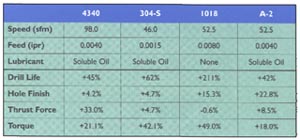
Cryogenics Goes Deeper: Drilling Performance
A new cryogenic tool treatment subjects tools to minus-320-degree temperatures by immersing them in a bath of liquid nitrogen. This article details the procedure and offers test results from the laboratory and the field that show how the treatment can extend tool life.

Pipe Tapping: Guide to Taper Pipe Threads
Pipe tapping is one of the more demanding threading operations because taper threads raise alignment, sealing, and tool-load requirements. This guide reviews the tools and techniques used to produce taper pipe threads reliably.
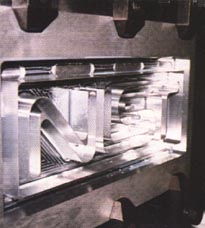
Fixturing Advances Hold New Promise
This article reviews the fixturing innovations users are beginning to see on the market. Some of the discussion focuses on the design criteria that has emerged out of an ongoing NIST-funded study.
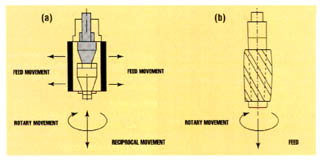
Single-Pass Bore Finishing: General Industry Coverage
Superabrasive bore finishing can achieve results in one pass that rival the finishes produced in several passes by other bore sizing operations. This article recounts how a number of shops have used superabrasive tools to finish bores with a higher degree of quality and a lower overall cost per piece.
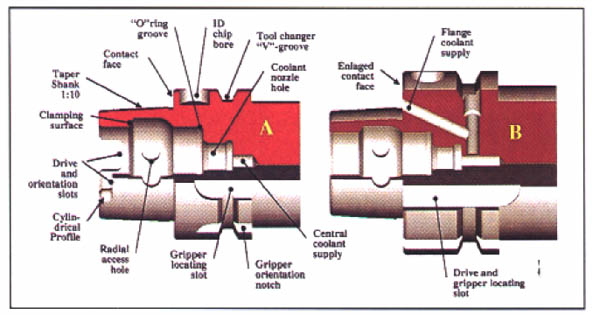
The Secrets of HSK Toolholding
HSK toolholding affects rigidity, accuracy, and repeatability. This guide explains the practical reasons shops choose HSK and what they need to understand before standardizing it.
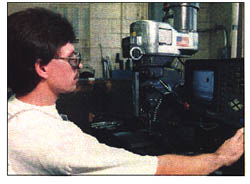
Manual Mills Get CNC Makeovers
A manual milling machine can be retrofitted with a CNC system for about one-fourth the cost of a brand new CNC machine. This article discusses the pros and cons of retrofitting and provides guidance to determine when retrofitting is the most appropriate solution.
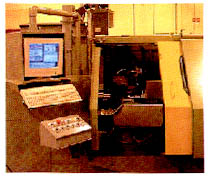
Opening the Door to Greater Control
This article charts the gradual move by CNC manufacturers from proprietary hardware-based machine controllers to open, software-based systems. The article also reviews recently developed controllers that represent steps in the direction of totally open controls.
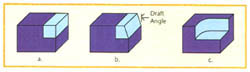
Precision In Their Pocket: General Industry Coverage
Researchers using computer simulation and refined probing techniques attempted to mill a pocket as accurately as possible. This report tells how the researchers used their high-tech tools and how close to perfection they came.

Flowing Together: General Industry Coverage
Tramp oils, which are machine lubricants and hydraulic fluids that find their way into the coolant, can seriously hinder the coolant's performance. This article discusses the properties and components of machine maintenance fluids that can ensure their easy separation and removal from the coolant.


