

Resources
Why Resources
Explore 121 published CTE resources related to Why across 47 articles, 19 products, 20 videos, and 35 news items.
47
Articles
19
Products
20
Videos
35
News
Articles
47 articles
Products
19 products
Videos
20 videos
News
35 news items
Tungaloy responds to rising carbide costs
BIG Daishowa Hosts Breakfast & Learn Event
ZOLLER Open House Focuses on Integrating Success
The power of density determination in additive manufacturing
5 reasons why CFexpress is the future of industrial memory cards
Tricks and techniques for specifying surface texture parameters
Browse
Browse all Why resources
Browse results
Lights on: Drilling Performance
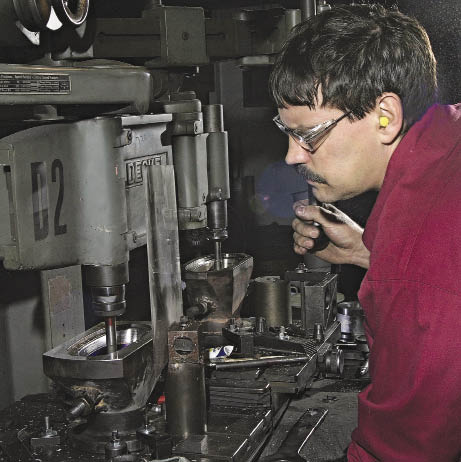
Quality Mould Inc., a maker of molds for glass products such as lamps and headlights, thrives by leveraging its skills and using advanced technology.

60 years for Kaiser AG
In 2008, Heinz Kaiser AG celebrated its 60th anniversary, a year that also marked a change in the ownership of the company. On Jan. 1, 2008, Chris Kaiser, Karlheinz Kaiser and Gabriela Brasher-Kaiser assumed ownership of the company from their father, Heinz Kaiser, who founded Kaiser AG in 1948.
Making the glass mold
U.S. moldmaking has been hit hard by overseas competition. Makers of molds for glass products face added pressure because alternate materials—mostly plastics—are replacing many glass applications. Quality Mould Inc., one of a handful of independent glass mold shops remaining in the U.S., machines molds for pressed-glass products.
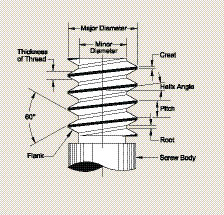
Thread history and measurement: Safety, Standards & Compliance
March 2009 Shop Operations column
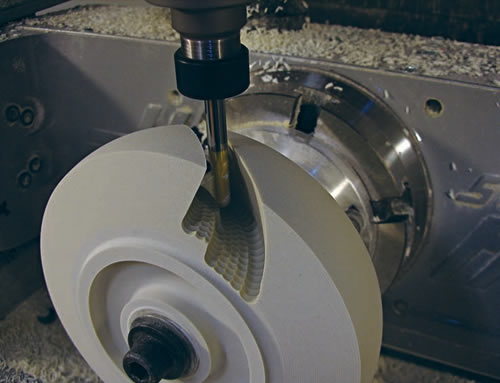
The impeller–quintessential example of 5-axis machining
March 2009 Get With The Program column
Buying pre-owned machine tools
March 2009 Machine Technology column
Quick connection: Drilling Performance
March 2009 Part Time column.
Strong Marketing is Always Critical
Manager's Desk
Now is the Time for Opportunity
Machinist's Corner

Online U.: 5-Axis Machining
Today's Web-based training programs can get machine operators ready to cut metal r before they ever lay hands on a real tool.
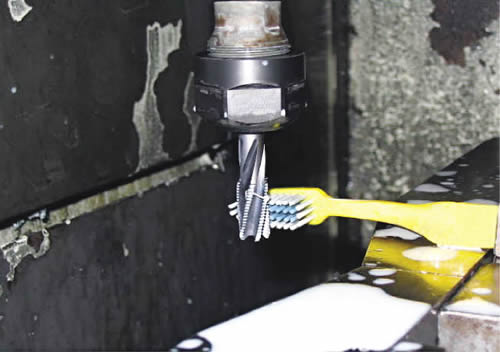
Combating Tool Decay
A parts manufacturer finds that brushing the cutting edges of tools with nylon bristles extends tool life, improves part quality and reduces manufacturing costs.
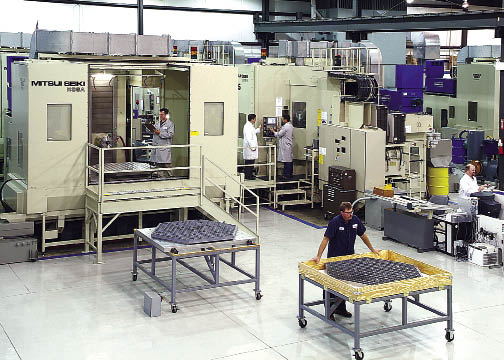
Looking for Something Special: CMM Inspection
Exploring the ins and outs of specifying and ordering a flexible specialty machine tool and having a machine builder produce it.


